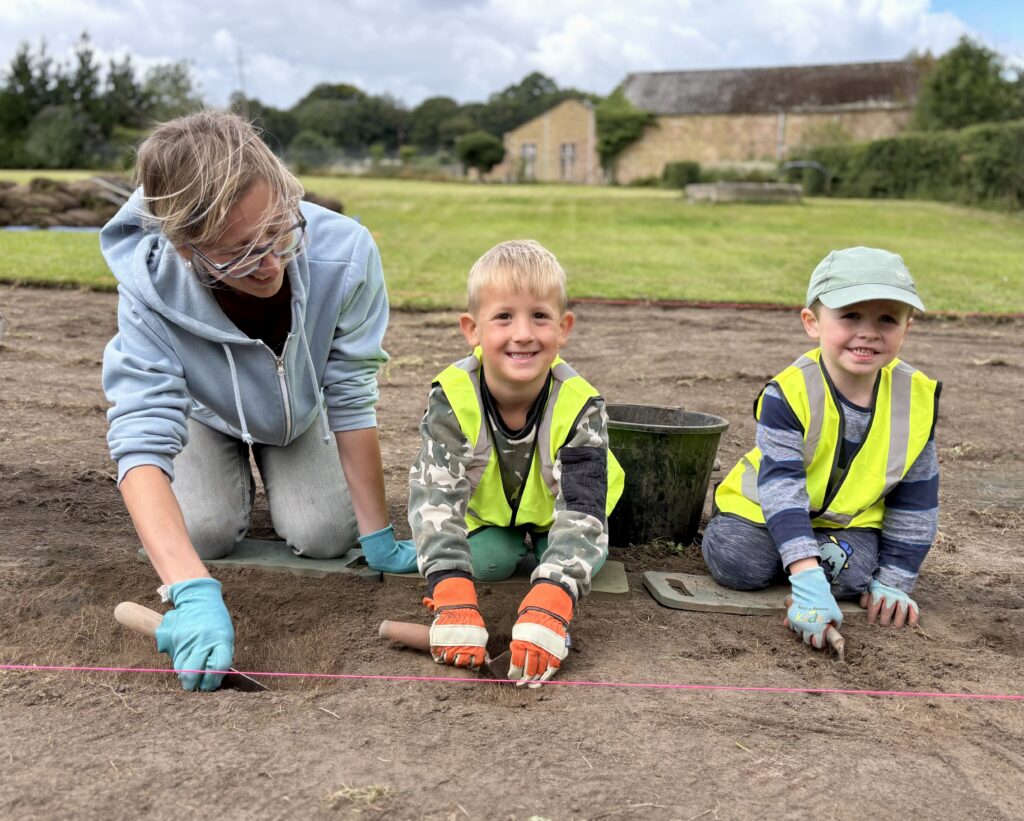
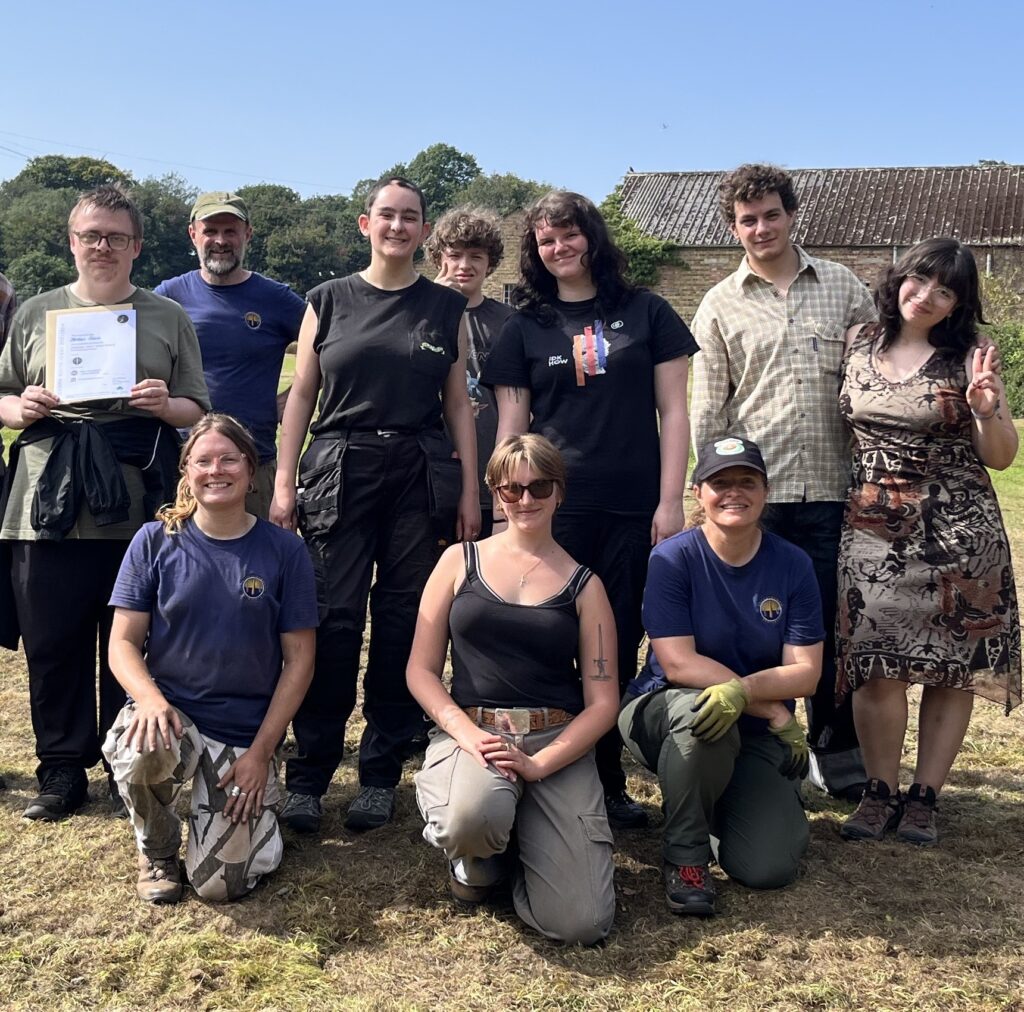
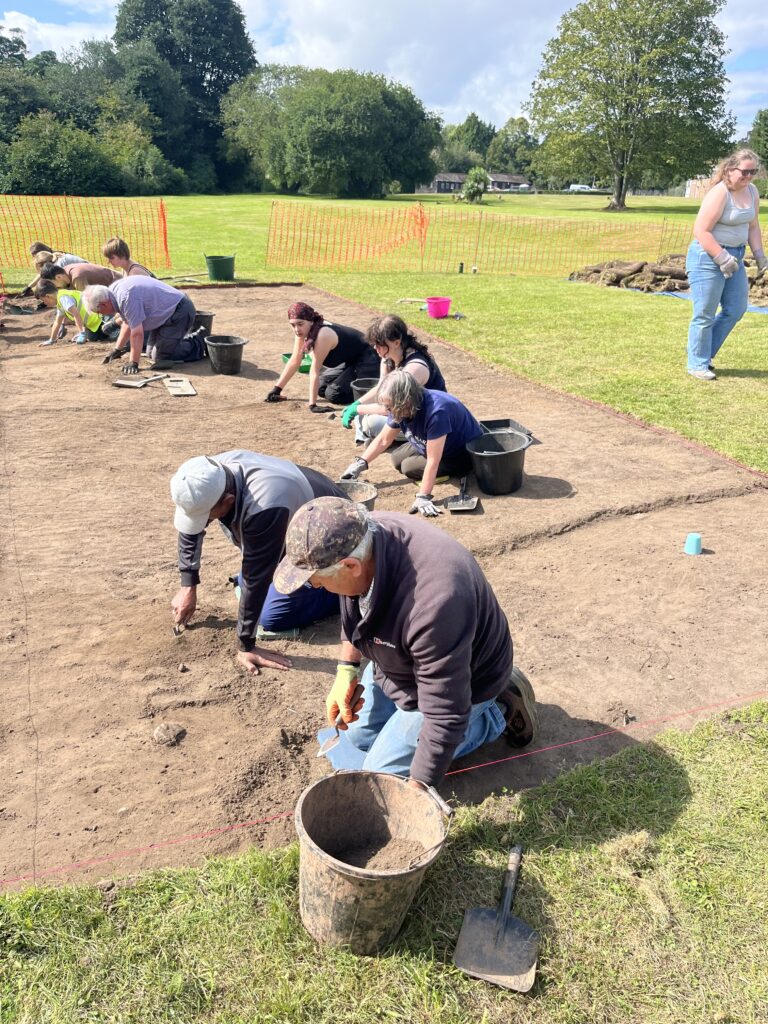
On a hot and windy August day, the Big Dig broke ground to uncover the archaeology, stories and surprises lying in wait under our excavation site at Newbattle Abbey College in Dalkeith. Archaeology Scotland staff were joined by community members of all ages and backgrounds who put in a huge effort over the eight days of the dig, working together to find out more about their local heritage while learning new archaeology skills.
“Being able to be active in a way that suits my abilities while letting me learn new things and meet new people has helped boost both my confidence and mental health.”
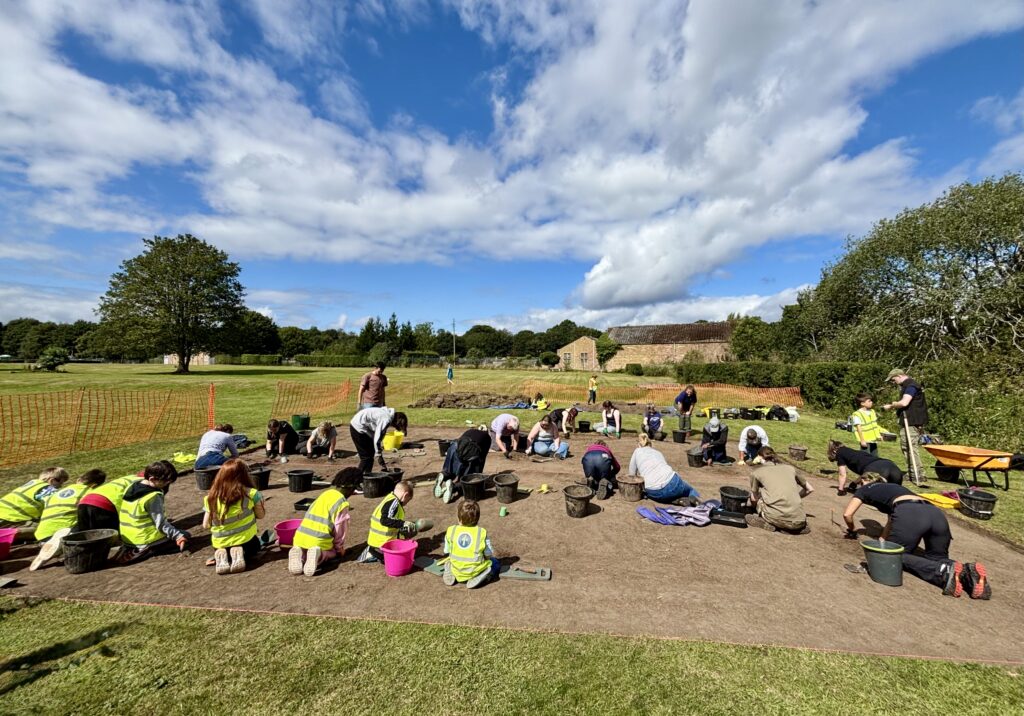
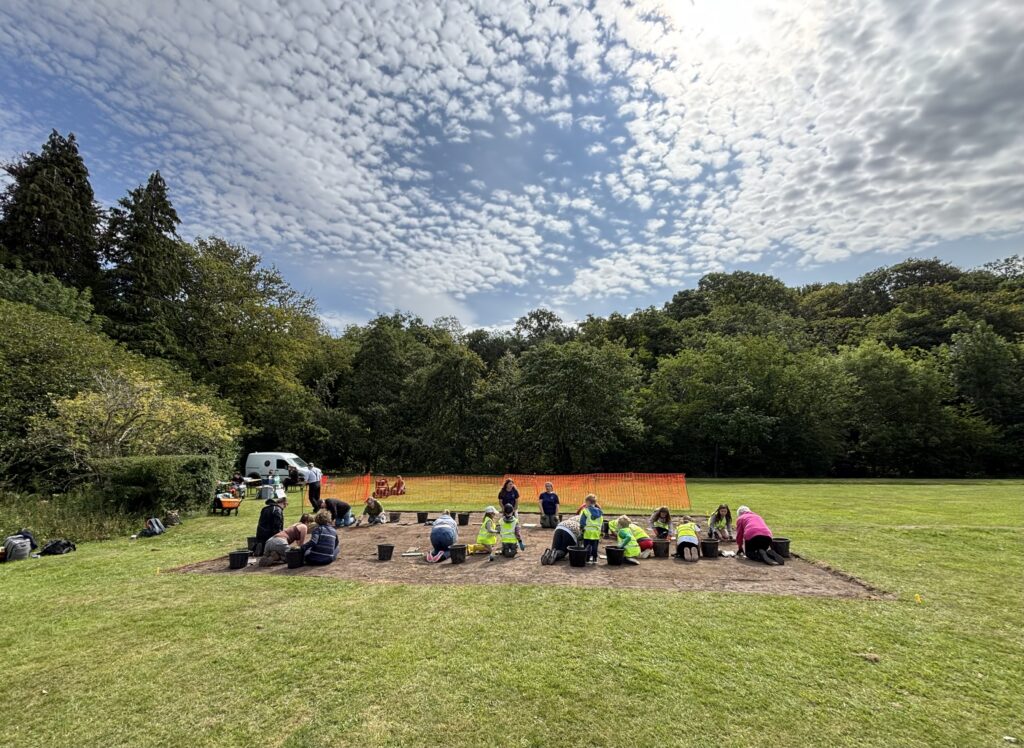
With an incredible team of over 250 participants, the site was a hive of activity, chat, laughter and, of course, plenty of archaeology to get stuck into! We had a fantastic week of digging, one very hot day of backfilling and re-turfing and the archaeology did not disappoint.
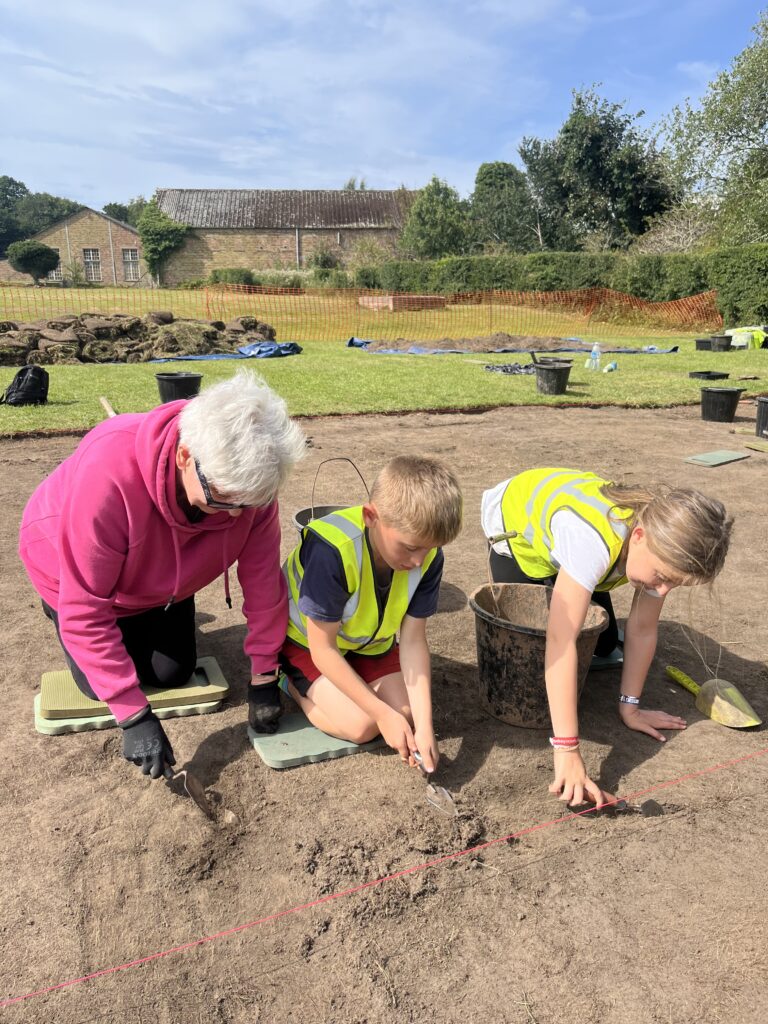
Intergenerational communities working together
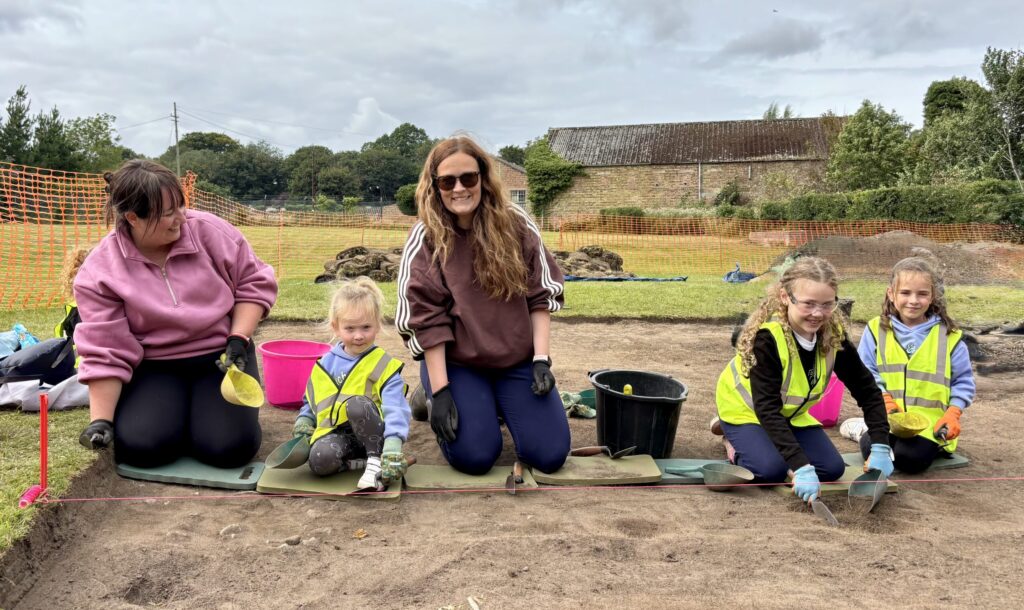
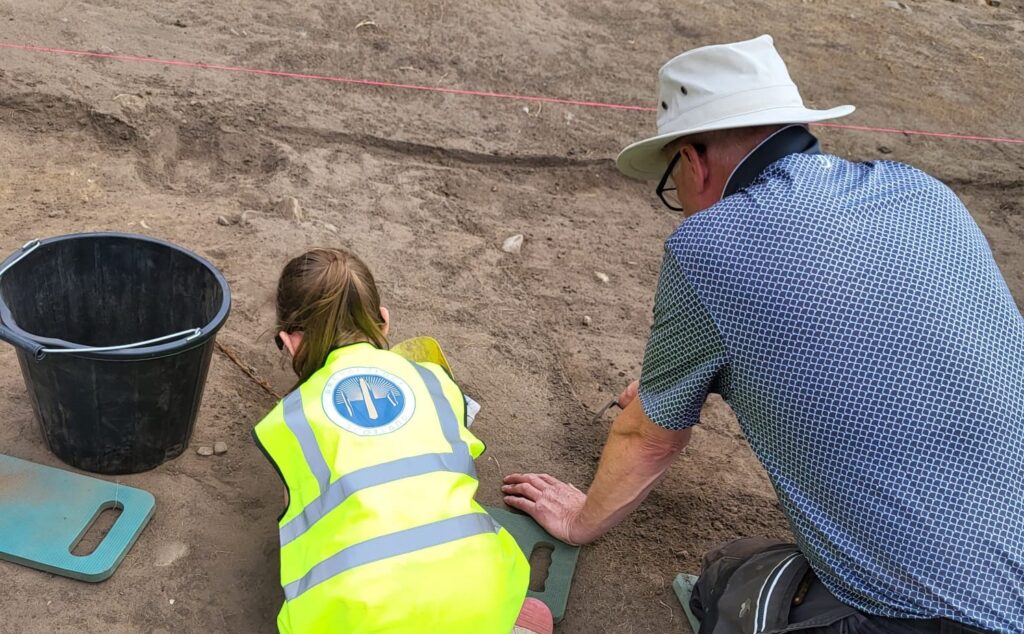
“It was lovely to get to know different people across generations, I made friends with a woman in her 70s and a 6 year old girl.”
Each participant supported the project with their local knowledge, personal experiences and skills. Participants included members of local communities, as well as students and groups, including Edinburgh Young Carers. There were many reasons why people took part – for a fun family learning activity, to find out more about local history, to try something new in retirement, to meet people and get outside, and to improve their wellbeing and support their mental health.
We wanted the dig to be a place of intergenerational learning, which Generations Working Together describe as “the way that people of all ages can learn together and from each other to gain skills, values and knowledge. Beyond the transfer of knowledge it fosters reciprocal learning relationships between different generations and helps develop social capital and social cohesion in our ageing societies.”
Our aims for the dig
- Identify, investigate and record part of the practice trench to learn more about who, when and why it exists, and to compare with our findings from last year.
- Create an accessible and inclusive site for all people, including neurodivergent participants.
- Improve wellbeing through engagement with archaeology.
- Connect individuals through intergenerational practice and strengthen social connections.
- Offer an open, inclusive and flexible fieldwork opportunity for University of Edinburgh students.
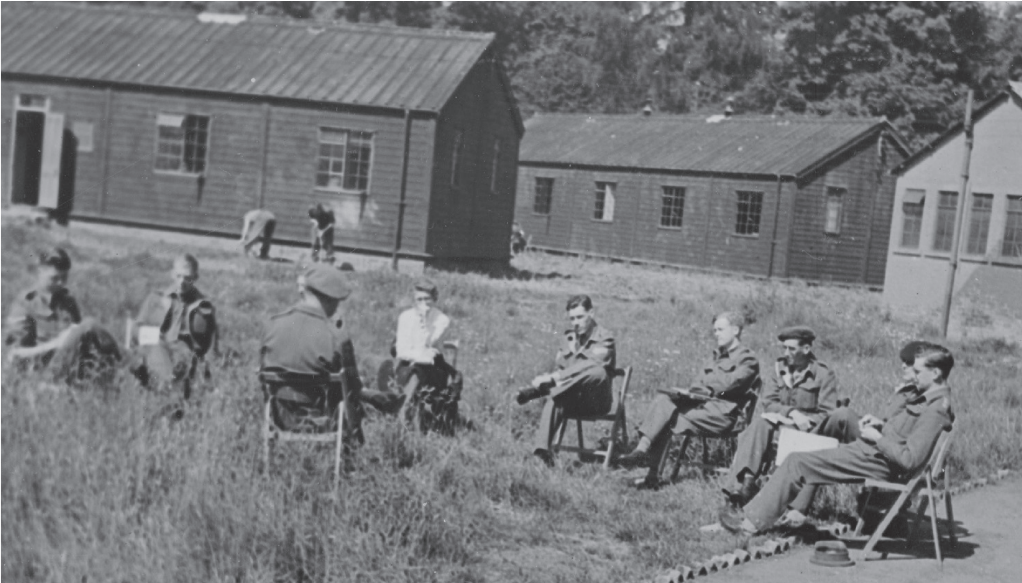
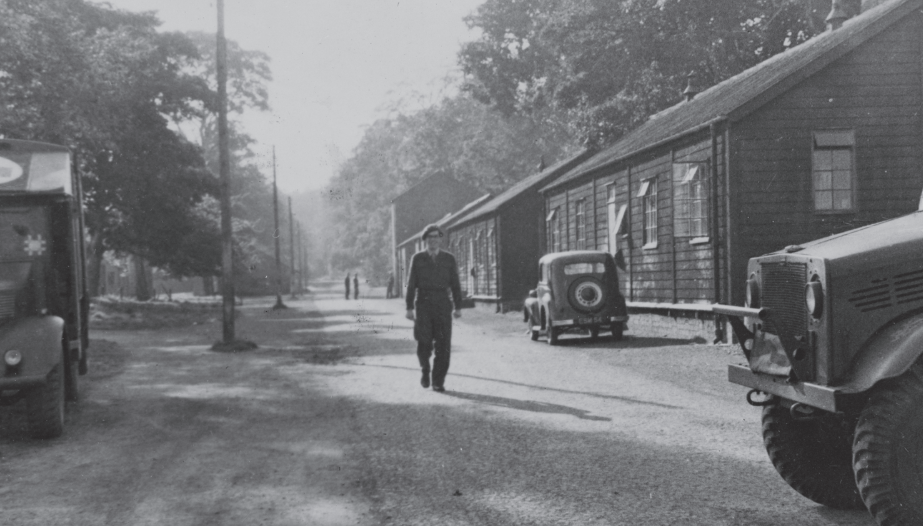
© Imperial War Museum – Collection: MRS. IMPSON – IWM 7605-02
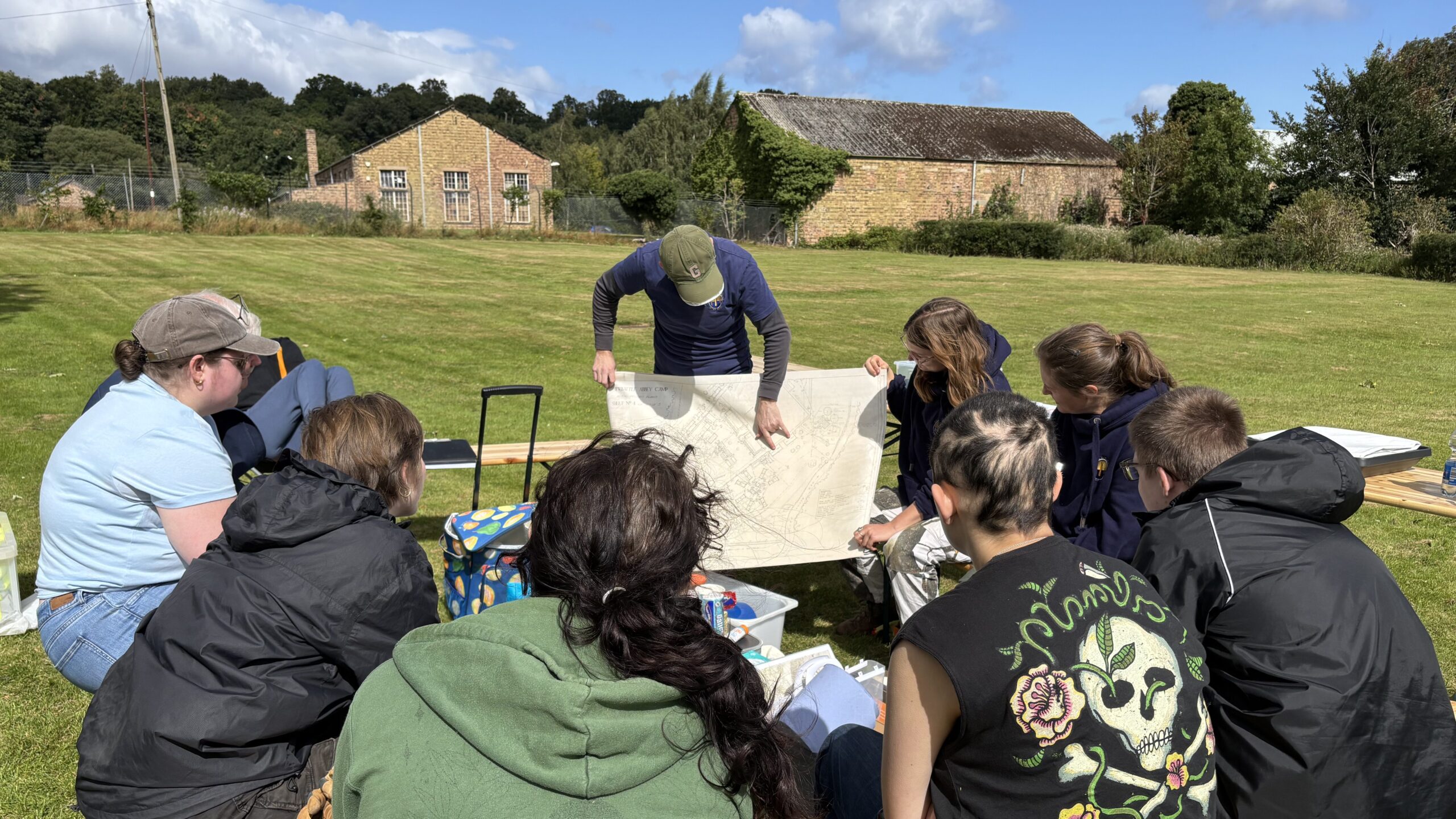
What were we looking for?
During the Second World War, Newbattle Abbey College was used as a training camp for the Royal Army Medical Corps and women in the Auxiliary Territorial Service. Polish troops were stationed nearby and trained on the adjacent golf course. Last year, our Big Dig uncovered a Second World War practice trench, complete with wooden planks at the bottom. Last year’s dig also revealed evidence from the Medieval period to 1985. You can read more about how the site was found, as well as last year’s dig on our blog.
This year, we wanted to investigate another intriguing feature along the (now confirmed) practice trench, that had been identified by a LiDAR scan of the area.
What did we find?
With some tough conditions of hard, dry and dusty ground, we uncovered a corner of the practice trench, as well as a reinforced bank, earlier fence and lots of artefacts old and new. Once we had located the trench, we dug a slot through it and recorded it. This 3D scan shows a tell-tale wooden board at the bottom, as well as what appears to be a vertical ‘revetment’ at the top to avoid the bank eroding, that has since disintegrated or been removed.
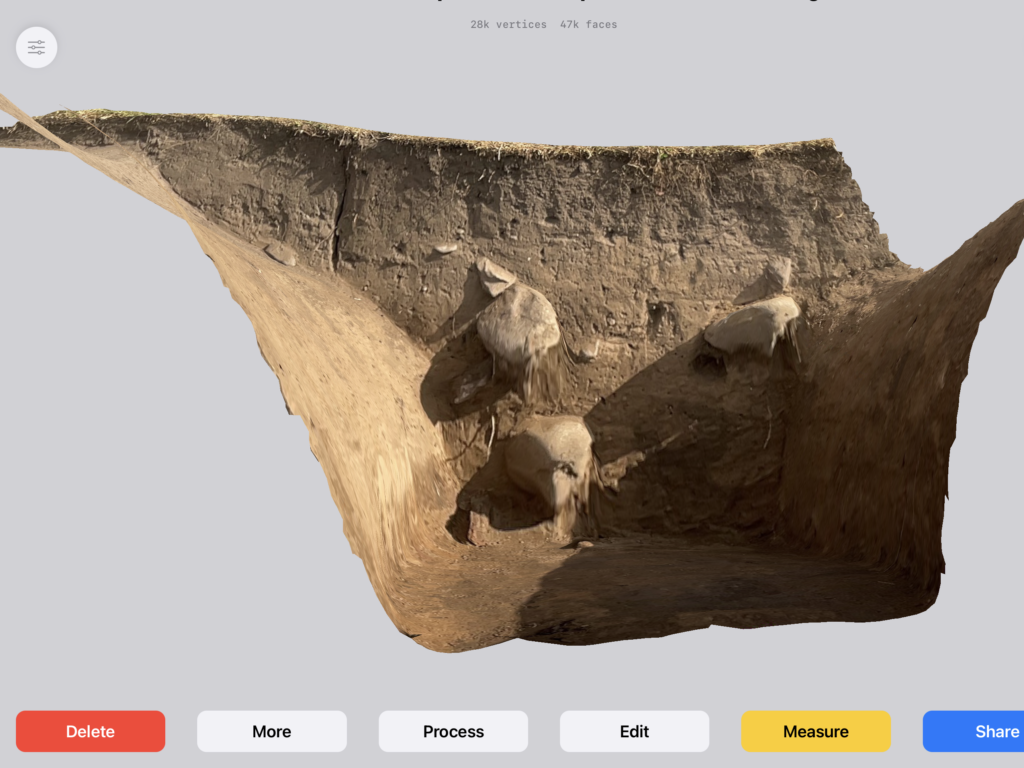
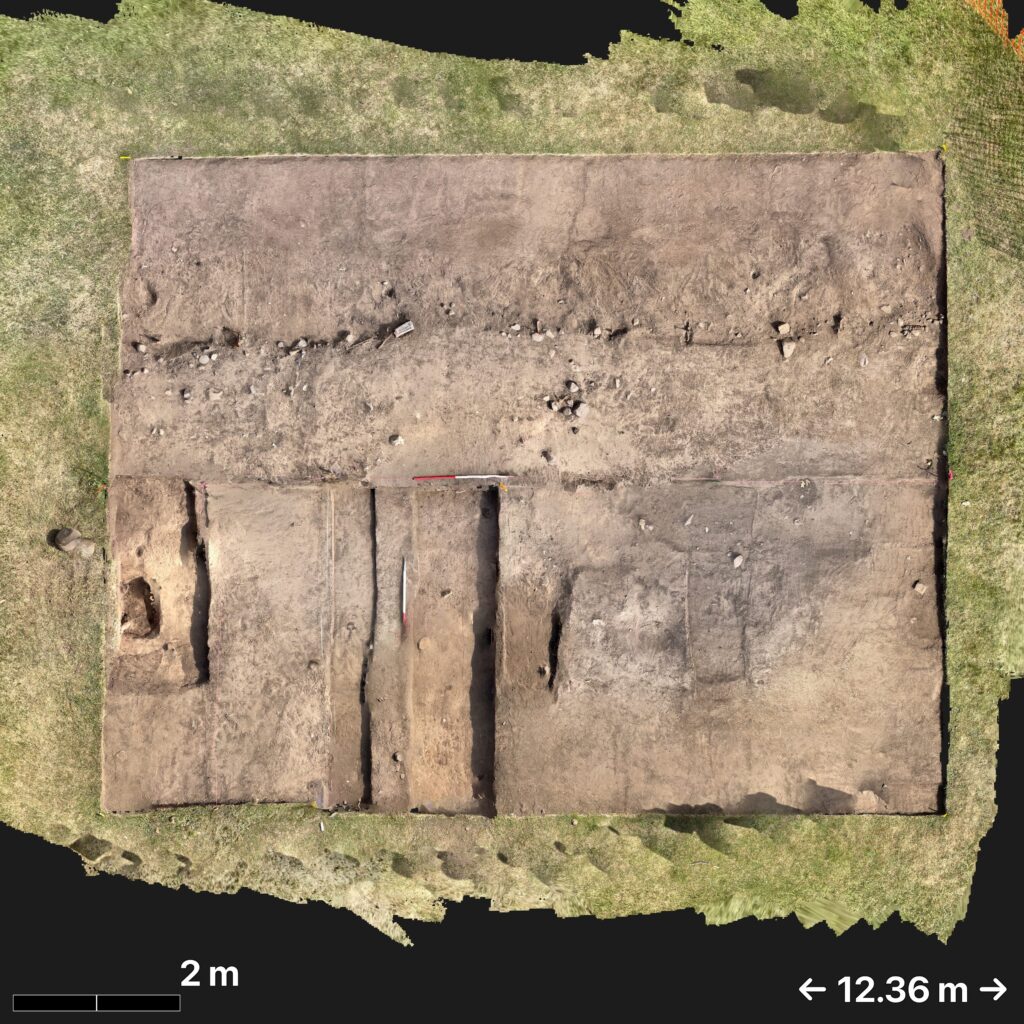
Interestingly, we found that the bank had been reinforced with not only bricks, stone and industrial waste, but it aligned with an earlier feature of an iron fence, which was marked on maps from the 1800s.
Photo: Bank and fence is L-R line across the upper half of this image, with stone and brick.
A closer look at the artefacts
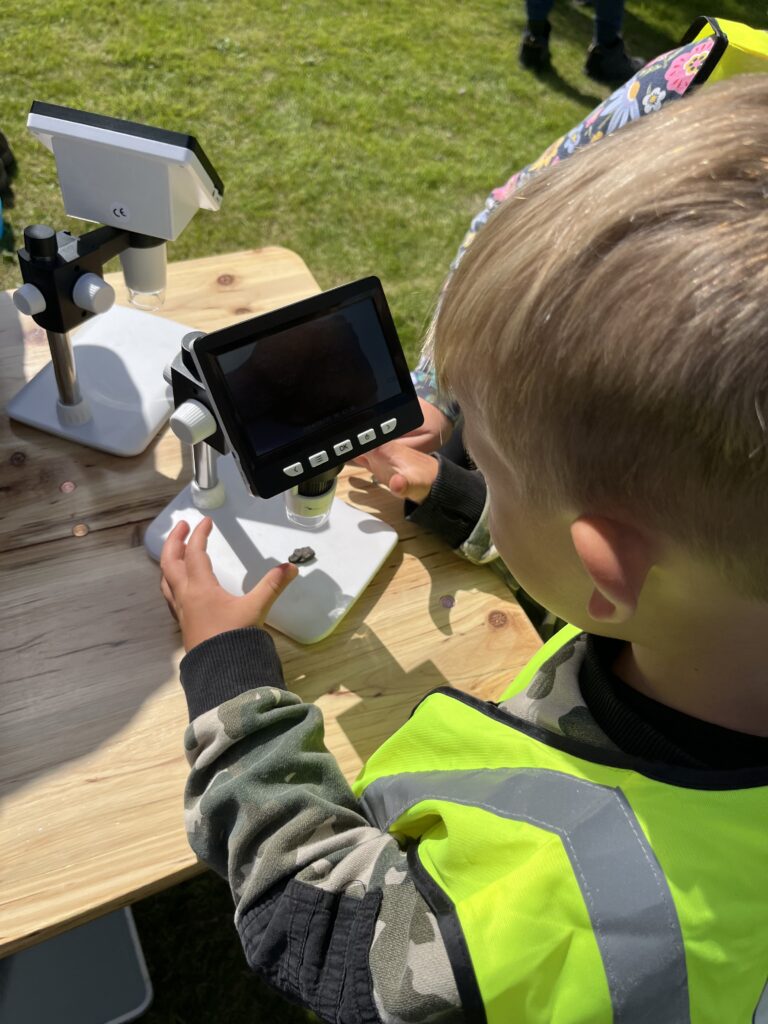
Many finds were identified by participants and passers-by using their expertise in the local heritage, and invaluable life experiences. Over the week, participants and passers-by brought along finds to identify and share, with mini-museums popping up around the trench to everyone’s delight.
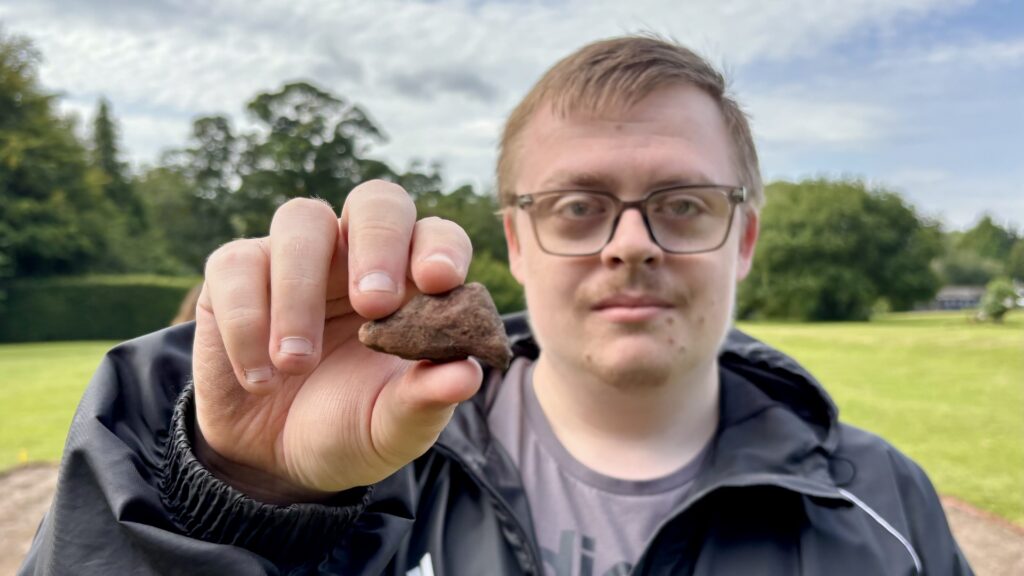
One of the most unassuming looking finds, might possibly be a sherd of Medieval Red Ware. Medieval Red Ware is thicker and coarser than the Medieval Green Glaze pottery we found.
We also had a special finds display of last year’s finds, historical artefacts and replicas.
On the last day, participants sorted and categorized finds, identified materials and uses and imagined what stories the objects could tell us.
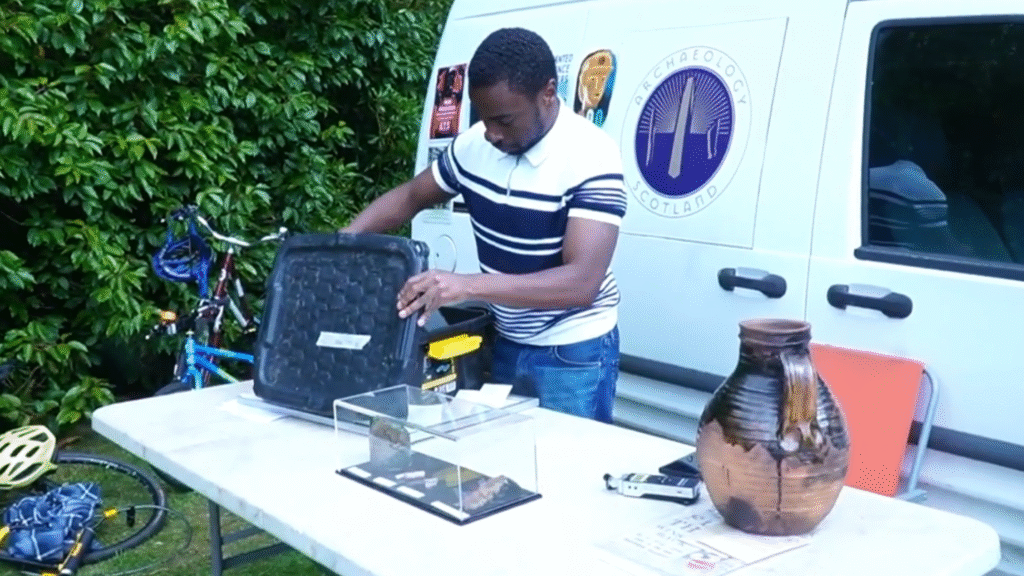
Here is what we found:
- Pottery – including medieval green glaze, which could date back to when Cistercian Monks lived in the Abbey, as well as more recent ‘blue and white’ pottery.
- Glass – from windows and bottles, including a beautiful piece of an ‘onion bottle’
- Metal – and lots of it! Lots of iron included nails and fittings, and some copper wire and copper sheaths.
- Bricks and building material – bricks from Shotts and Niddrie, a lot of sandstone and some sandy mortar.
- Industrial waste – a lot of material, including charcoal, coke and slag (waste from heating materials such as metal)
- A clay pipe stem
- A coin – a 2p from 2006
Community knowledge sharing
“We really enjoyed being part of something so exciting in our local area – connecting us to our history.”
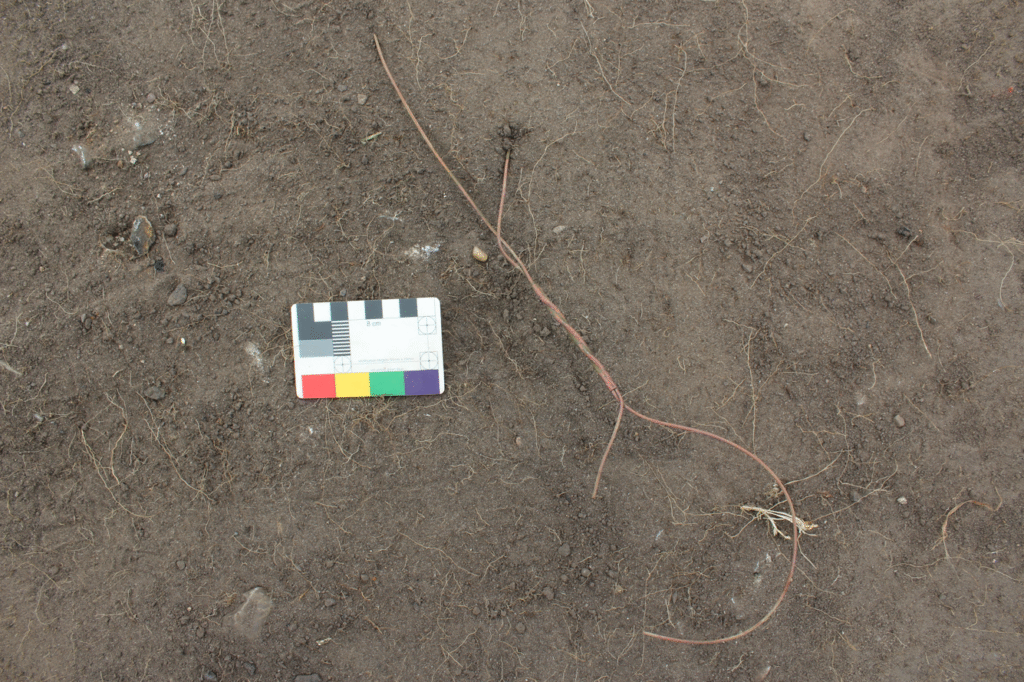
A local community member helped identify the original telephone communications wire, connecting copper sheaths and bakelite signal cover. From his experience training with BT in the past using materials just like these, he explained how the communications system worked across the whole site.
His expertise was highly valued and confirmed a theory from a University of Edinburgh student who had correctly suggested the wire had been used for communications, and had identified telephone wires on the original 1942 plan loaned to us by Newbattle Abbey College.
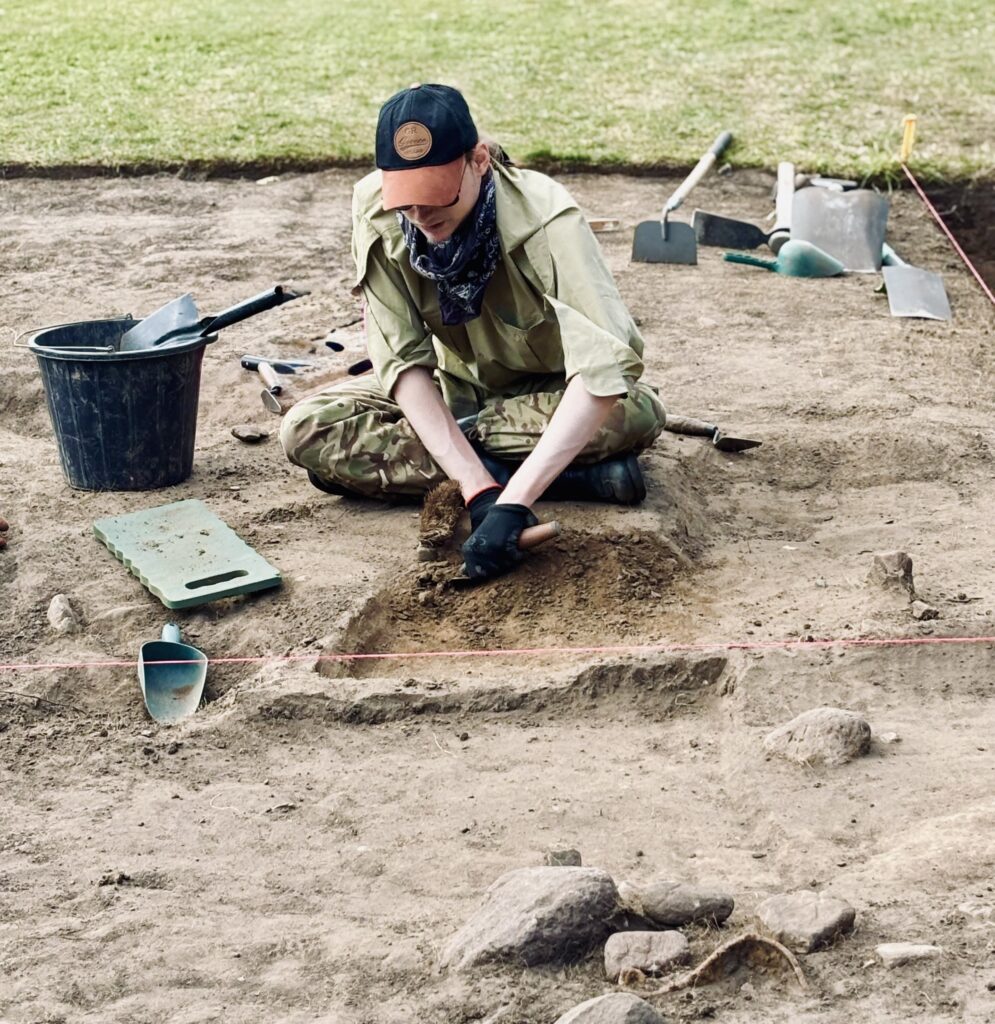
No experience needed!
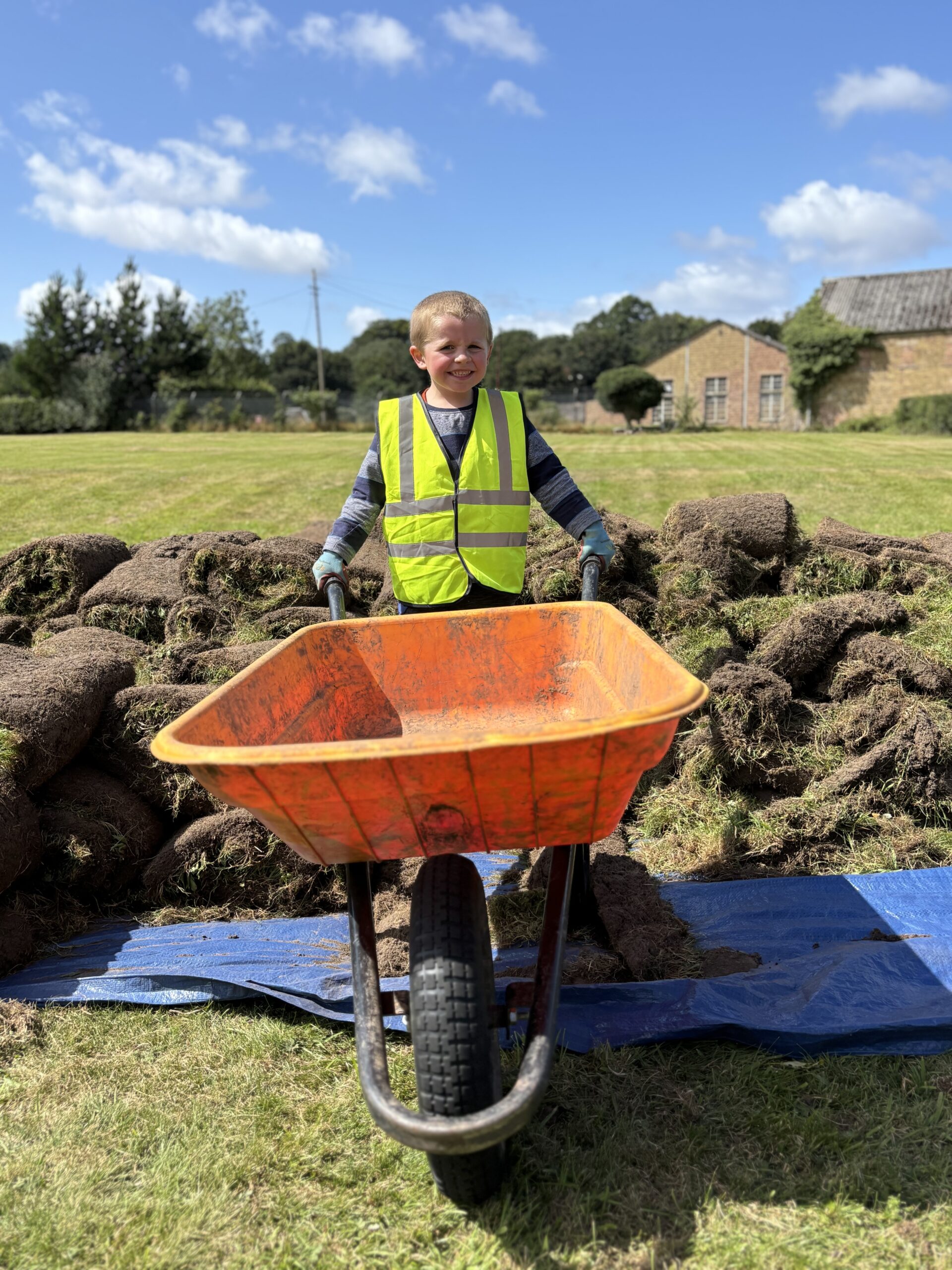
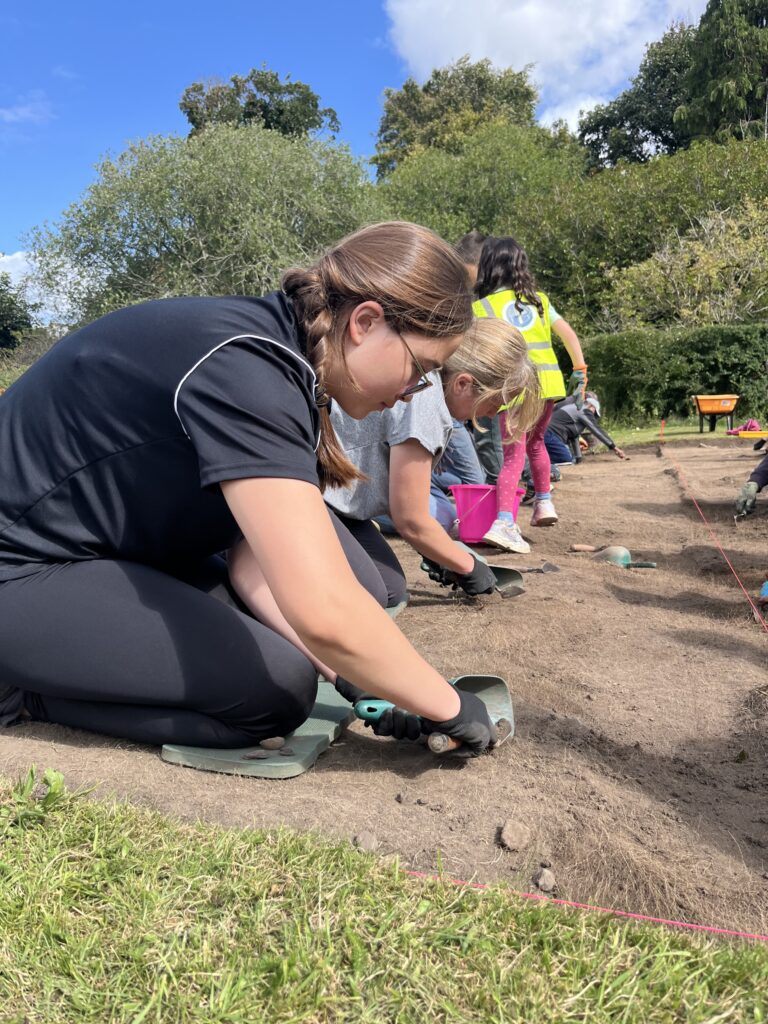
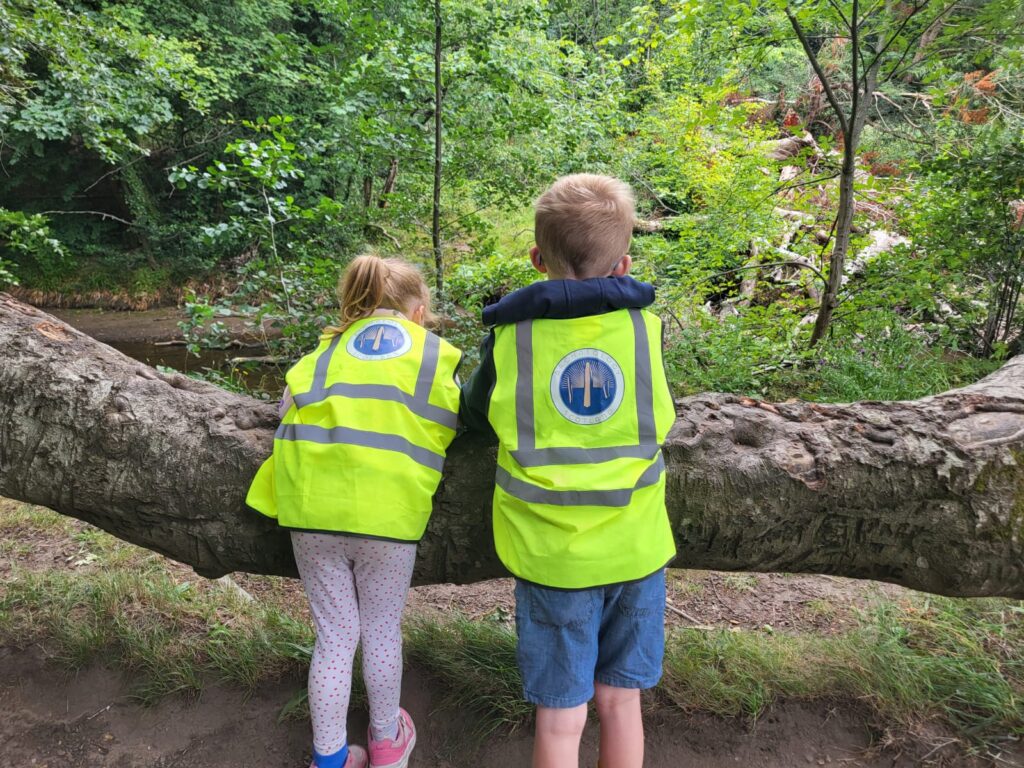
There was no lower or upper age limit to our dig, with participants of all ages bringing unique interests and contributions. We welcomed many young archaeologists to site with over 117 under 18s participating
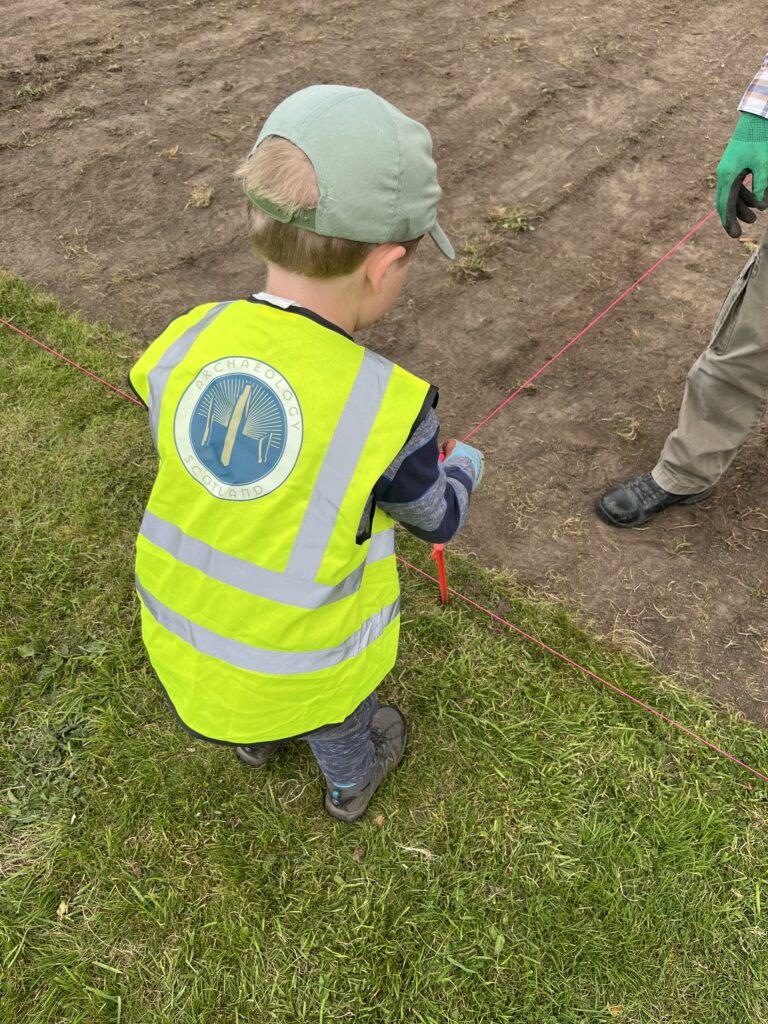
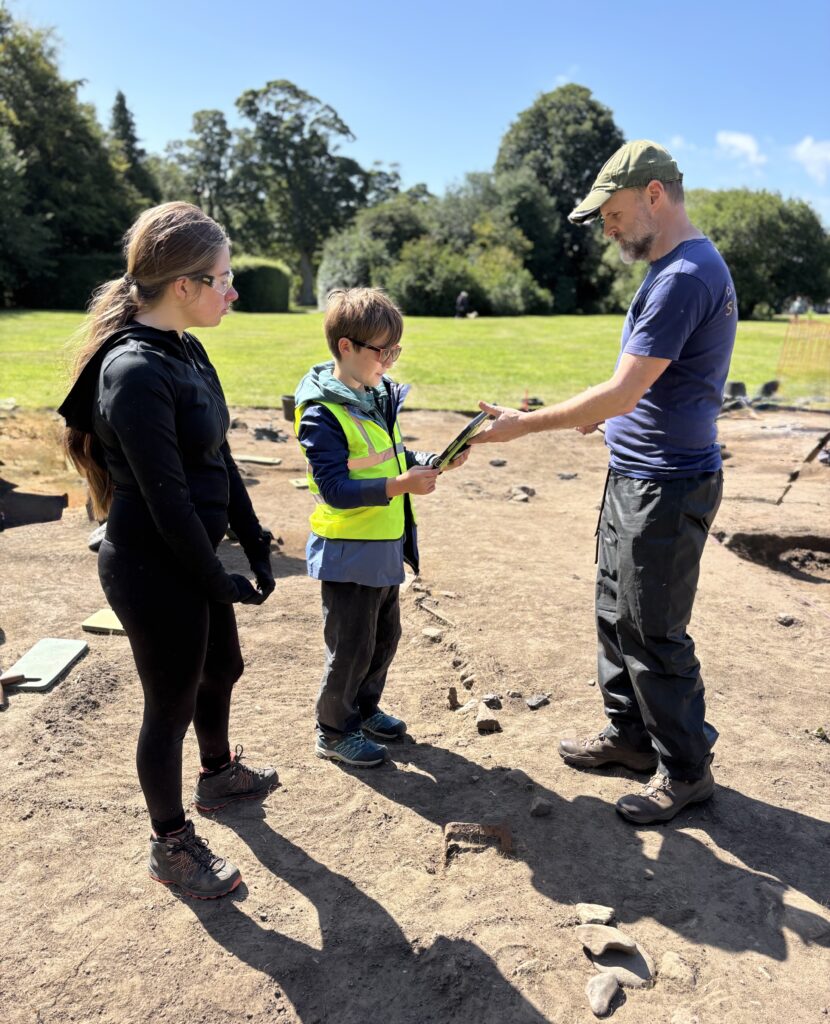
Our youngest archaeologists where invaluable members of the team and they didn’t just help with the digging, they also:
- helped set up the trench
- used magnets to check people’s finds trays for metals.
- tirelessly supported everyone by emptying their buckets and wheelbarrowing away their spoil.
Young Archaeologists’ Club
On the Saturday we were joined by two winners from the Young Archaeologists’ Club, Dig It competition. They spent the day with us, excavating and recording the archaeology on site. You can read their blog about their time digging with us on the YAC website
Brownies
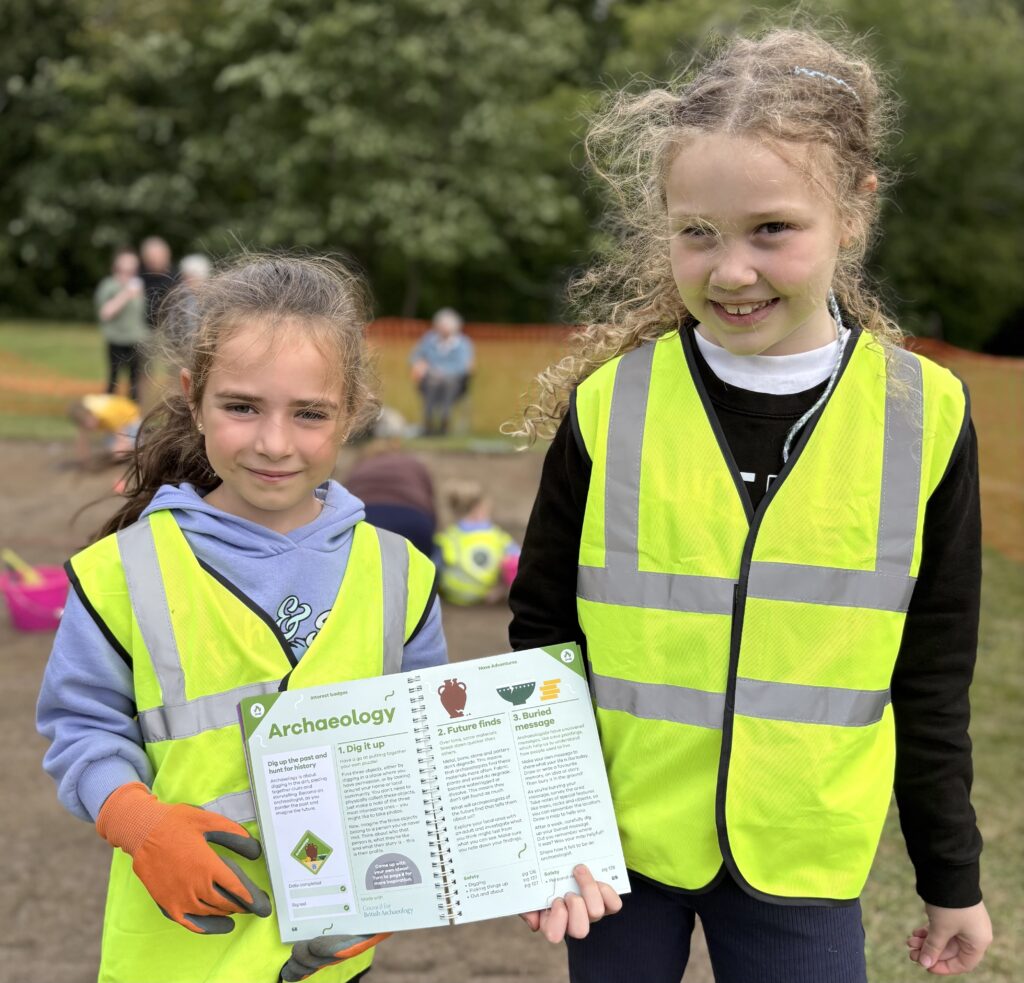
We also welcomed Brownies working towards their Archaeology badge. They found interesting objects, interpreted who they might have belonged to in the past and explored how materials survive in the archaeological record, hands-on! We hope they enjoy receiving their well-deserved Archaeology badge.
Stories from more recent times
We also found lots of more familiar and recent objects. You might not think of these as valuable artefacts, but their value lies in the stories they can tell us. They’re often easy to identify and date too.
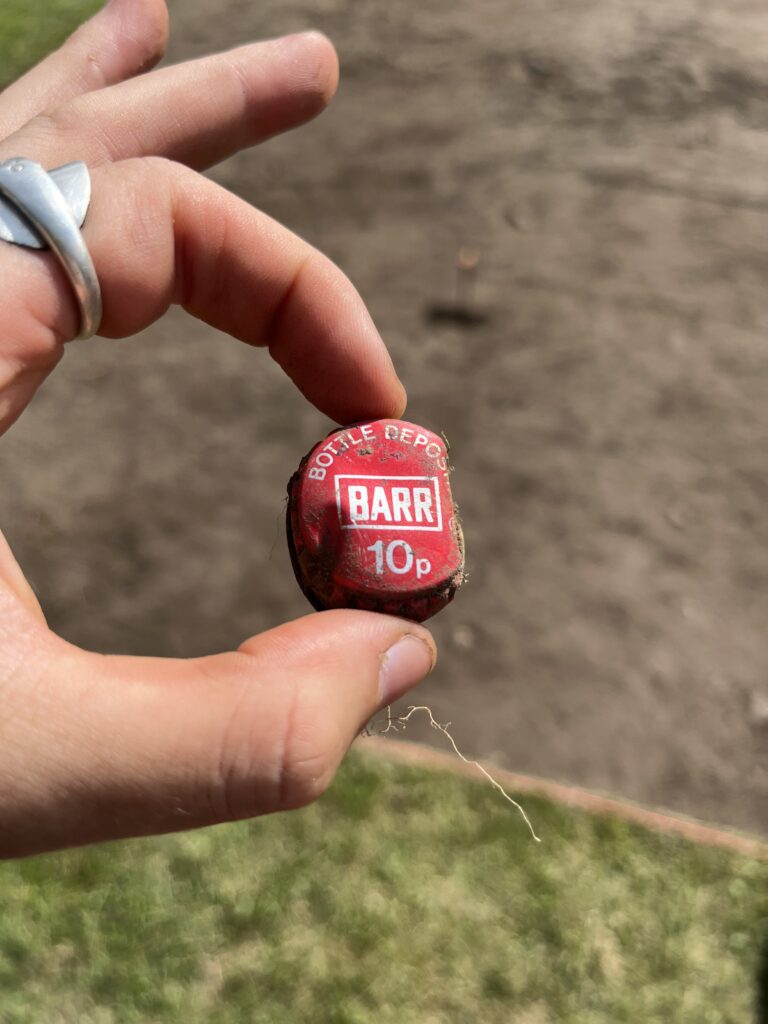
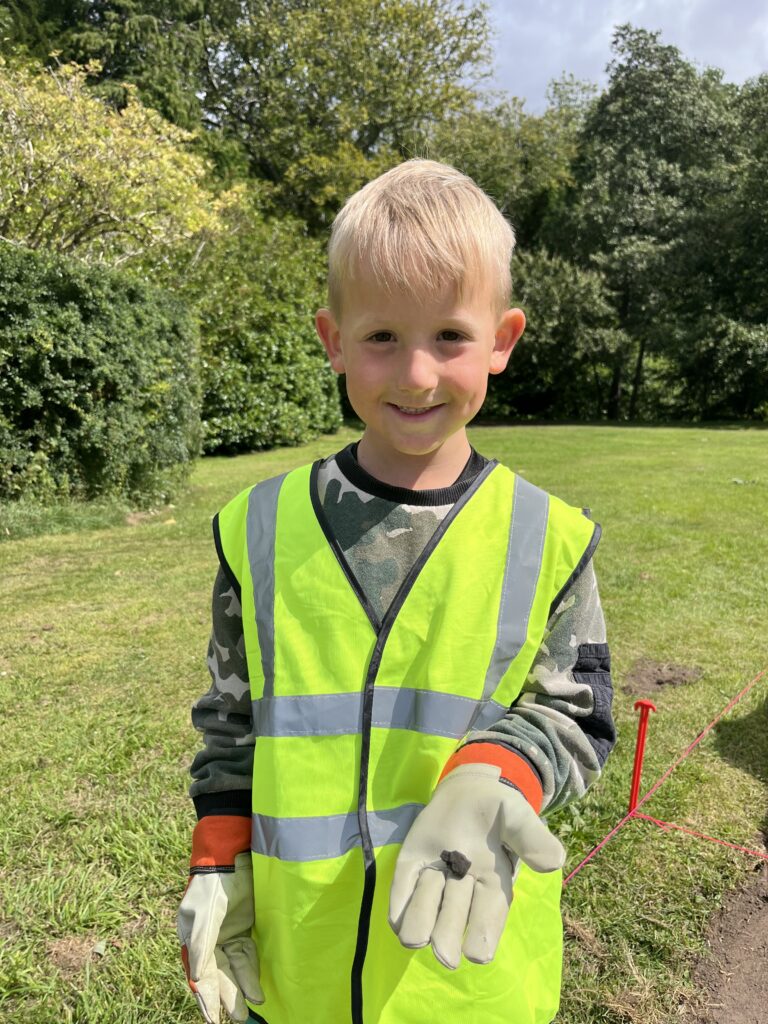
The find in this photo was instantly recognisable – a metal Barr screw top bottle cap, likely from a glass Irn Bru bottle. The text on the cap ‘bottle deposit 10p’ tells us it was from a time, not so long ago, when customers could return their glass bottles to the retailer to get their deposit refunded. The logo (pre-1993) and the ‘10p’ help date this find. After running for over 100 years, the deposit scheme ended in 2015. With a bottle deposit scheme due to start again soon in Scotland, this find is all the more relevant!
One young participant helped identify this piece of plastic. They thought the ‘ch’ could be from ‘chicken’ – and they were right! This little piece of plastic was probably from a chicken and mushroom pot noodle from the early 2000s. Pot Noodle is currently updating its packaging, with paper due to replace plastic in late 2026.

Community, accessibility and inclusivity
“I loved the community feeling, everyone was really lovely. There was a shared feeling of making progress together without competition or needing to overwork. I loved the reminders to take breaks to drink water and stretch.”
At the heart of the dig were the core aims to benefit community, support wellbeing, and make the dig accessible and inclusive to all. The dig reached new audiences, with 84% of those who gave feedback taking part in an archaeological dig for the very first time.
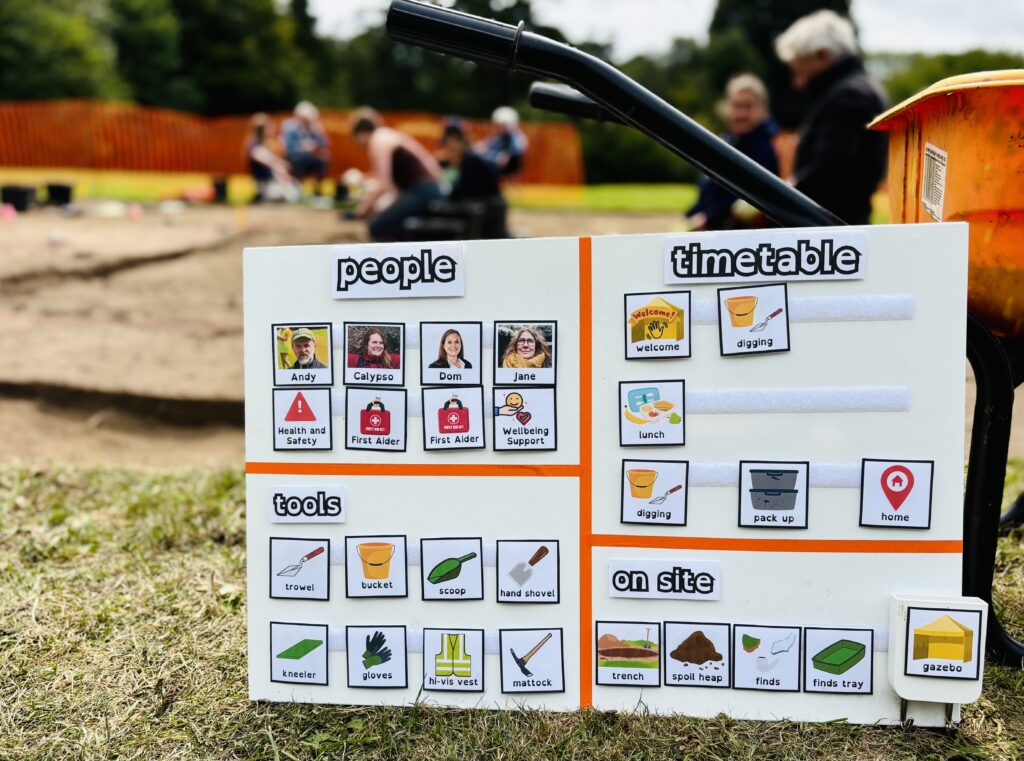
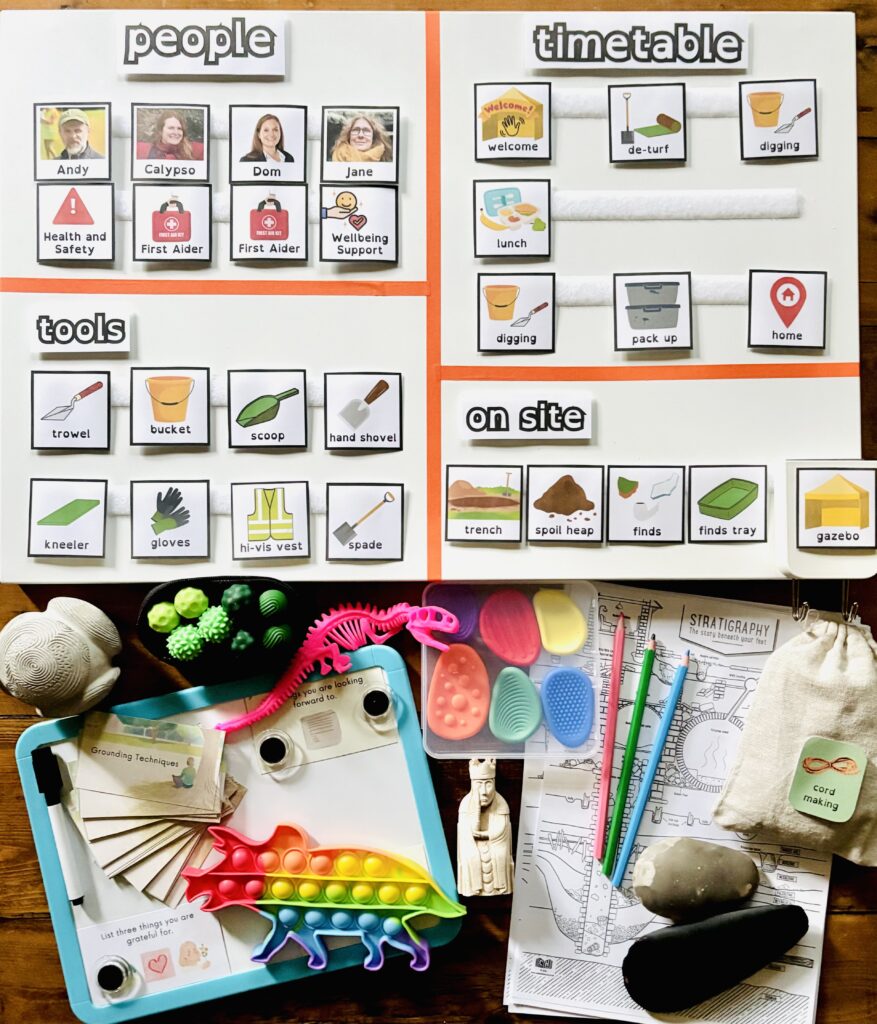
Archaeology Scotland’s Learning Team developed resources to improve access for neurodivergent participants.
How we created an accessible dig:
- Pre-dig communication via email, everyone was responded to personally.
- Creating a ‘social story’ which was sent to each person before they came to the dig, explaining visually what to expect on site.
- Delivering a local drop-in session, pre-dig, where people could come and find out more, ask any questions, look at finds and maps and try a mock excavation.
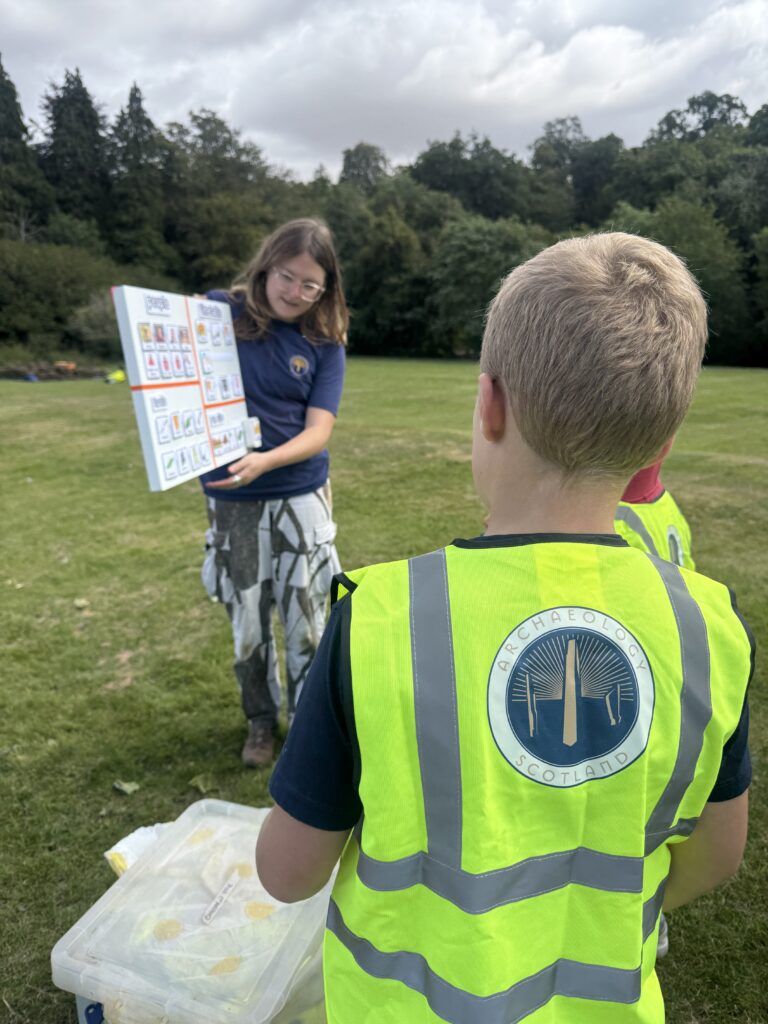
- Sharing a visual timetable during dig inductions.
- Making it clear that there is no experience, or minimum time commitment necessary, and making sure participants are comfortable.
Wellbeing
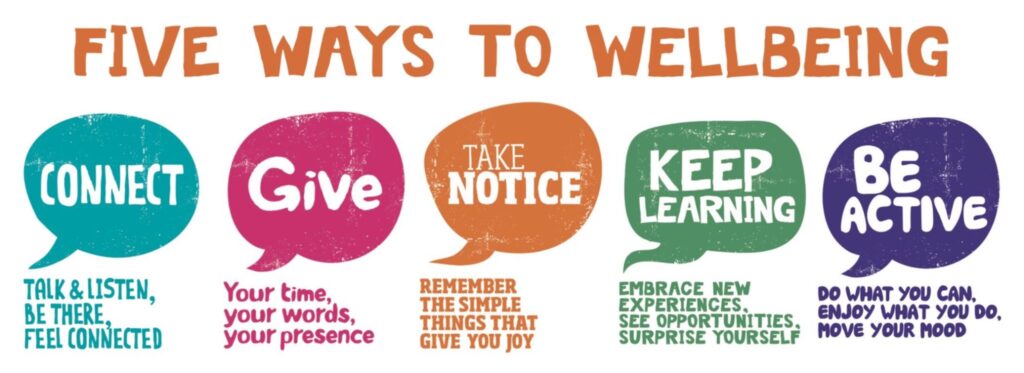
Archaeology is known to have positive impacts on wellbeing, and taking part in a community dig provides an opportunity to use each of the ‘Five ways to wellbeing’.
88% of participants who gave feedback reported they had used at at least one of the five ‘ways to wellbeing’ during the dig.
We placed wellbeing at the core of the dig. For the first time on site, we had:
- A named ‘Wellbeing Support’ member of staff. The names and roles of staff were introduced at induction, and visible on our visual timetable.
- An archaeology themed ‘Sensory box’ that was available to all.
- Displayed a wellbeing resource with signposts to support.
- Explanation about quieter areas around site for taking breaks.
Participant feedback
When taking part in the dig, participants met and talked with different people, felt connected to past and place, and felt the positive impacts on their wellbeing. What stood out in the conversations on site and in feedback were five interrelated themes: Community, Wellbeing, Learning, Accessibility and Inclusivity, and Intergenerationality.
Participant feedback below, highlights what people enjoyed about participating in the dig and its impact on their wellbeing:
Community
- “The community was wonderful!”
- “It made me feel a very welcome and valued part of the community.”
- “Meeting enthusiastic people and getting the chance to try digging.”
- “The experience was fantastic and it was great meeting new people.”
- “It was just good to be part of something with nice people.”
- “It was nice to meet some new people.”
- “It was nice to meet new people from different walks of life and chat with them.”
- “The dig has improved my conditions and made me a stronger person to get out and socialize more.”
- “Chatting to new people.”
- “I met a lot of interesting people.”
- “I could see positive interactions between the participants.”
- “I feel that I’m one of the team not volunteers.”
- “It made me feel curious and helpful that I could be a helping hand to a larger project. My kids enjoyed helping, meeting new people and learning about archaeology.”
Learning
- “Learning something new.”
- “Learning about archaeology and local history.”
- “I absolutely loved this project. It made me feel confident and excited to learn. It made me feel like I want to participate in more volunteering opportunities.”
- “Gave me an insight into a possible career when I leave school.”
- “Learning about the history of Newbattle Abbey.”
- “Finding medieval pottery and learning about the history of the area.”
- “Learning about how a dig actually works, and getting hands on experience too.”
- “Finding out more about local history and getting to feel more involved in it.”
- “Learning about how to excavate a site.”
- “Talking to the archaeologists and learning new stuff about how to dig and what was found.”
- “Being out in the open air, doing something totally different, learning more about archaeology.”
- “It was also amazing to learn so much and help a cool cause.”
- “I also enjoyed beginning to explore something I had always been interested in (archaeology).”
- “I also liked the chance to speak to staff with much more knowledge and experience than me.”
Wellbeing
- “I’d had a busy week attending to the needs of others, so it was great to spend time in the open air indulging my passion of history.”
- “It made me feel really grateful and made me happy to show up.”
- “I felt very encouraged and appreciated for my efforts.”
- “This has helped my mental health which has been very bad with PTSD. It also allowed me to get out in a safe environment, relax and enjoy my days there learning a new skill and letting my medical conditions go to the back of my mind.”
- “I think (the 5 ways to Wellbeing) were all extremely well embedded in the activity.”
- “It was relaxing to spend a couple of hours excavating, I didn’t expect that.”
- “We liked being active and outside and continuing learning about things while on summer break.”
- “Found the experience very rewarding and relaxing in this very busy world.”
- “I loved the experience and felt really excited to share it with others.”
Accessibility and inclusivity
- “Inclusive comms materials were fantastic, both via email before the dig, and signage on the day.”
- “The team onsite were very engaging with the children and explained everything very clearly about the dig and what to expect.”
- “Staff were brilliant and catered for my medical conditions and looked after me extremely well.”
- “The communication both in advance and on the day was really clear and well thought out. The induction was helpful and engaging. The people running it were ready to listen and help.”
- “(Staff) were so friendly and approachable it was easy to see how (the 5 ways to wellbeing) would be integrated in the archaeology.”
- “Taking part in the Big Dig has been great for me as someone who normally struggles to interact with others outside of my pre-existing relationships. Being able to have a setting where many of us were in the same boat of being new to archaeology made me much less afraid of speaking to new people and building rapport. It was also a great way to get involved in the local community and learn about local history that I previously had no knowledge of.”
- “Staff were awesome, my son struggles to listen to instructions and can get easily frustrated when he meets a challenge. Staff were great at making sure he knew what he was doing, and sharing their knowledge in an understandable way. They communicated with him in a low demand and relaxed way… it all added to the nice atmosphere of the day.”
- “Thank you to (staff) for making the Big Dig such a welcoming environment where you never felt silly asking questions even if they felt silly to you. I can’t wait for future digs in the area!”
Intergenerationality
- “It was lovely to get to know different people across generations, I made friends with a woman in her 70s and a 6 year old girl.”
- “I enjoyed seeing my children getting excited about finding something beneath the ground.”
- “It was also a lovely way for my son and I to bond over our shared love of all things historical. He is neurodivergent and has decided he wants to be an archaeologist. This experience has made him even more keen!”
- “It was good to spend time working together learning a new thing with my children.”
- “We attended the dig with young children and the team helped to really engage the children in the dig and would check in on what they’d found helping them to learn the history of why the dig was happening and how to get the most out of the dig.”
- “It was lovely to see the grandchildren participate in something exciting and different.”
- “It was wonderful to participate in something new and different involving the whole family.”
- “The children really enjoyed the dig and were interested to hear the history behind it and enjoyed the dig itself. We had two 3 year olds with us who were excited when they uncovered something even when it was just a worm. Even us adults enjoyed getting dirty and helping the kids with the dig.”
Their feedback has been fantastic, and it is thanks to each participant for giving their time, bringing their unique perspectives and skills, sharing their thoughts and experiences and working together as an intergenerational team, that the benefits to wellbeing, learning and community connection were so big.
A big thank you
We would like to thank everyone who participated in the dig.
And thanks to our supporters and funders who made the dig and its impacts possible: The University of Edinburgh, AOC Archaeology Group, Historic Environment Scotland, Newbattle Abbey College and The Ironmongers’ Company.

Want to find out more or get involved?
- Join Archaeology Scotland as a member to support community projects like the Big Dig.
- Subscribe to Archaeology Scotland’s newsletter.
- Get involved in an event near you during Scottish Archaeology Month in September.
- Stay up to date with archaeology news, updates and opportunities in Scotland by following us on Social Media:
–X/Twitter
–Facebook
–Instagram
Further reading and information:
Wellbeing
Neurodiversity
The Big Dig and Newbattle Abbey College
- A documentary highlighting the role of Newbattle Abbey during WWII: Sharing Our Heritage
- Blog: The Big Dig: A community excavation with big aims, big finds and big impact! | Archaeology Scotland
Practice Trenches in Scotland