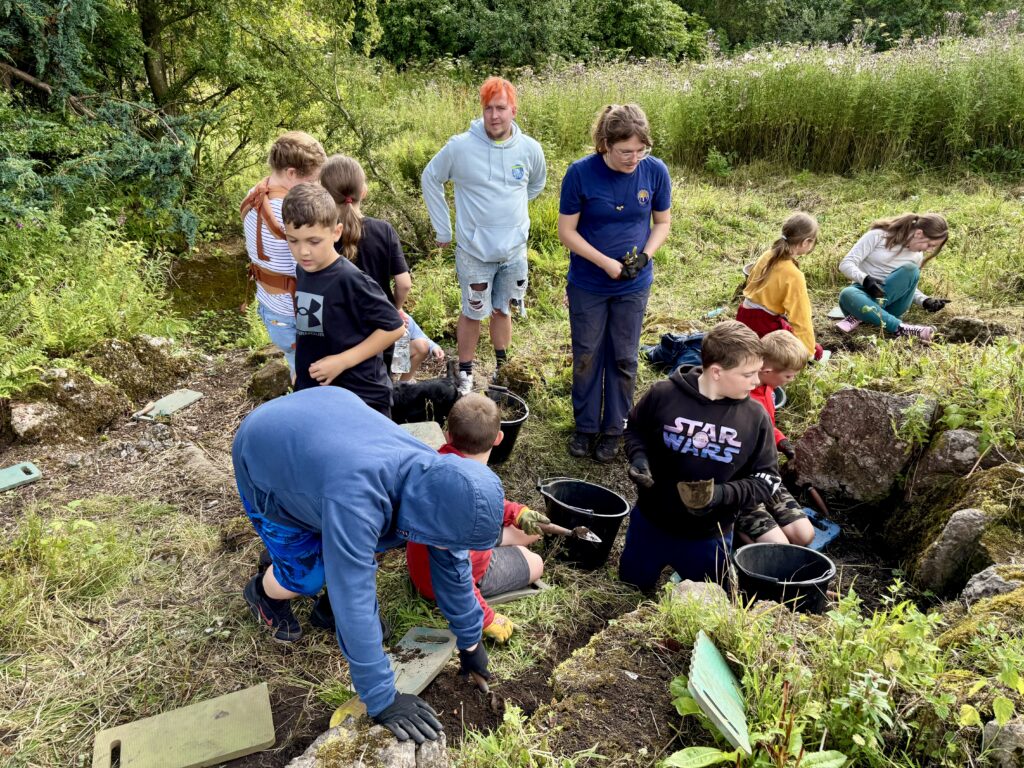
During a very warm, humid week in July 2025, 18 young people from Stirling Young Carers participated in an intergenerational 10-workshop Attainment through Archaeology project at Bannockburn House with Stirling Field and Archaeological Society.
The young people explored and investigated this local heritage site alongside members from the local archaeology society. They gained hands-on archaeology experience, improving their understanding of the past, developing new skills and increasing their confidence before sharing their learning with others through a dramatic presentation, site tours and the creation of a comic. The young people earned Bronze Heritage Hero Awards for their valued and unique contributions to this project.
The aim of the project was to build and support intergenerational community connection and collaboration by working with the young people and the local archaeology society together, in partnership, learning together. Groups involved in this project:
Stirling Young Carers
Stirling Young Carers service supports carers aged between 7 and 17. They offer support and guidance, and organise activities and trips.
Stirling Field and Archaeological Society
The Society have been undertaking archaeological excavations across Bannockburn House’s grounds, involving the local community. We worked with them to excavate and record an area in the beautiful grounds. The Society aims to inform and educate its members and the wider public in environmental subjects affecting the Stirling area, relating to natural history, local history and archaeology.
Bannockburn House Trust
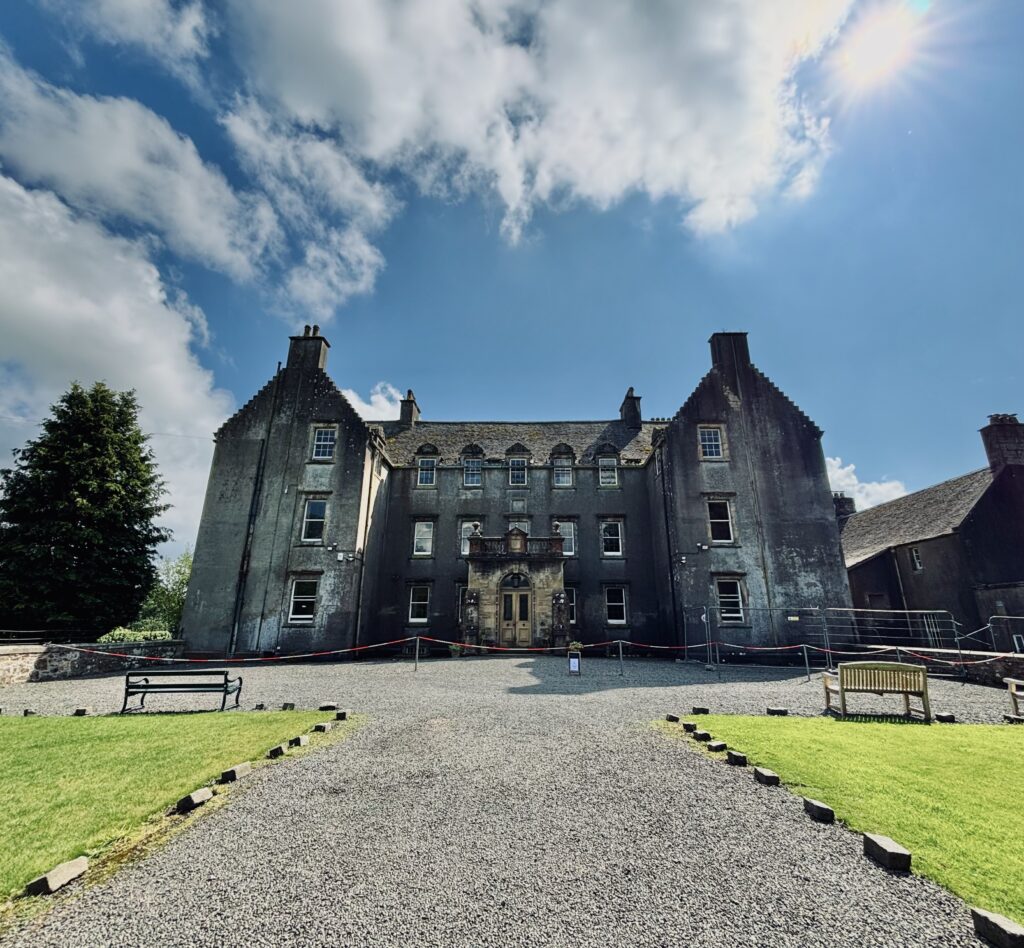
The main aim of Bannockburn House Trust is to safeguard the property, its grounds, architecture and history for future generations. You can find out more about their research, work, Master Plan and how to get involved by visiting their website, or following them on social media.
Introduction to Archaeology
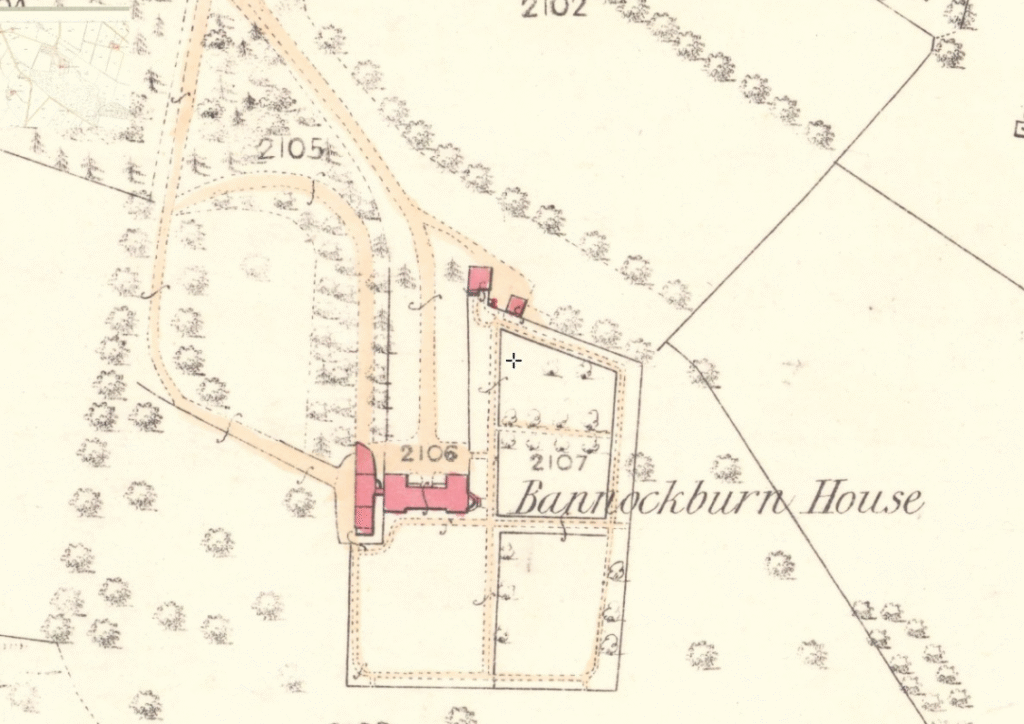
The young people had a hands-on introduction to how archaeologists find out about the people who lived in the past, by playing a ‘rubbish game’ and handling real artefacts and replicas. We discussed their materials, what they could have been used for and how old they might be. The group had their first glimpse of the site from above, using aerial photos and historic maps to locate places they knew nearby, before focusing in on Bannockburn House, its outbuildings, ground and gardens, looking for signs of change over time.
Exploring Bannockburn House
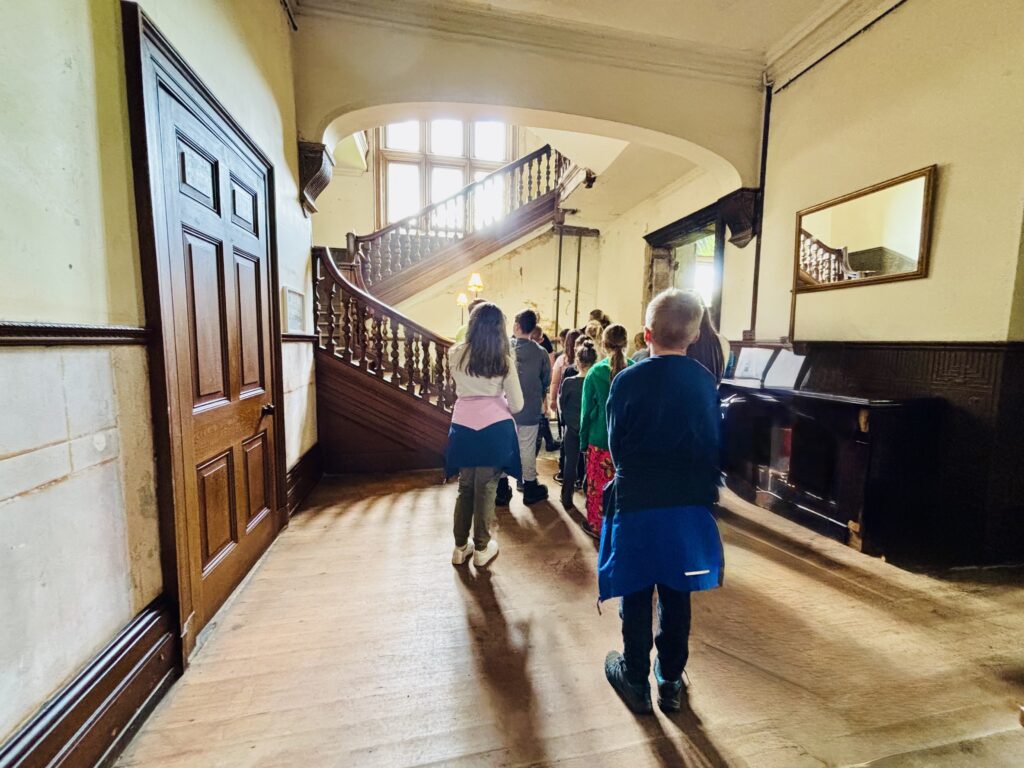
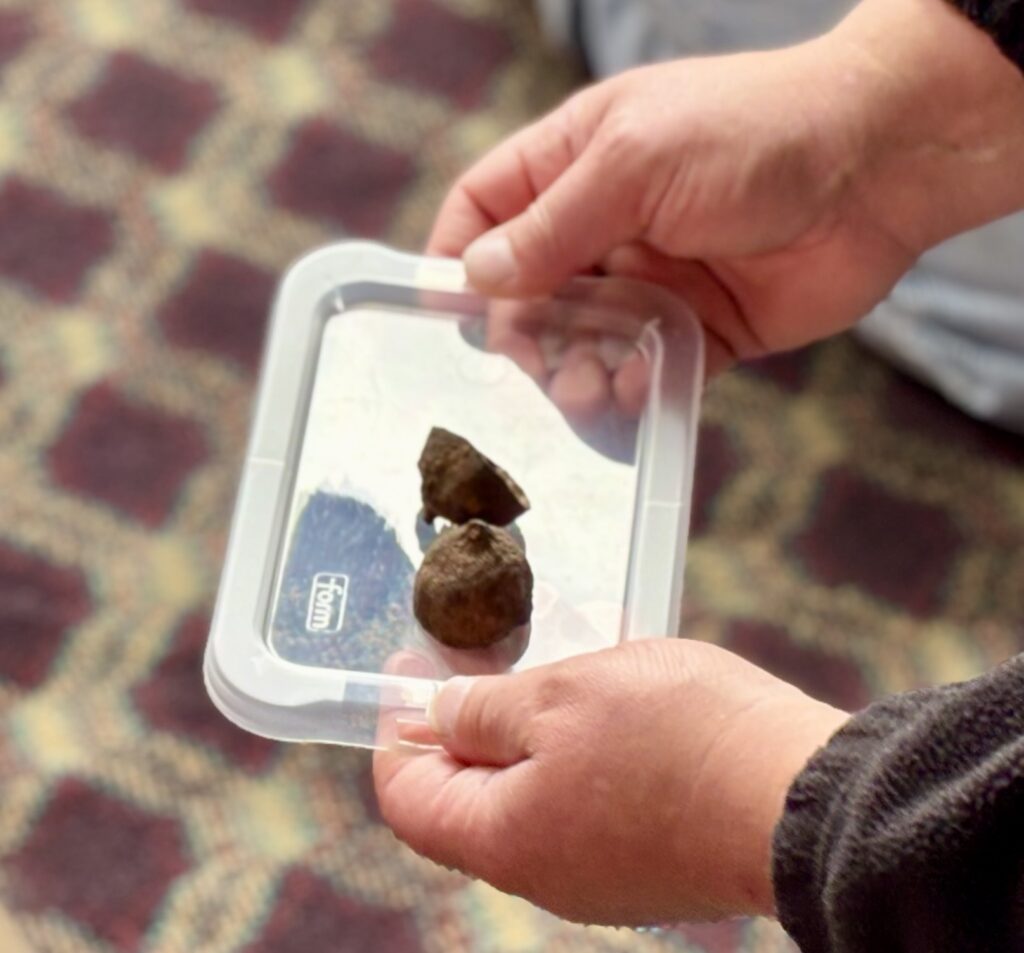
After getting to grips with how an archaeologist finds out about the past, the group had a brilliant tour of Bannockburn House, and a closer look at some of the artefacts that have been found at the site, including 19th century pottery and what might be the oldest lemon in Scotland!
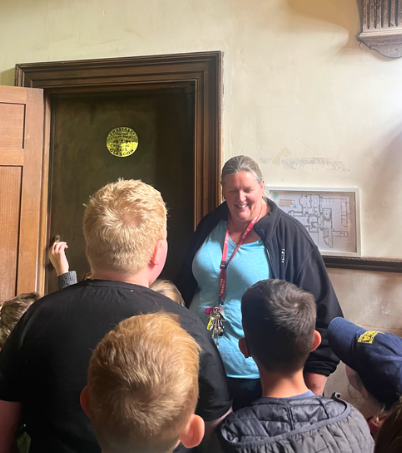
The engaging house history tour by Cat from Bannockburn House Trust brought the past owners of the house to life and captured the imagination of the group. They asked questions, shared local knowledge and were also given a comic about the history of the site, to take home. We got a behind-the-scenes view of the work being done to preserve and repair the historic building and its features. Since 2017, Bannockburn House Trust have been working hard to safeguard the property and its grounds for future generations.
Exploring the archaeology
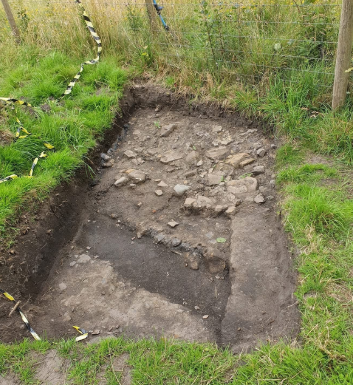
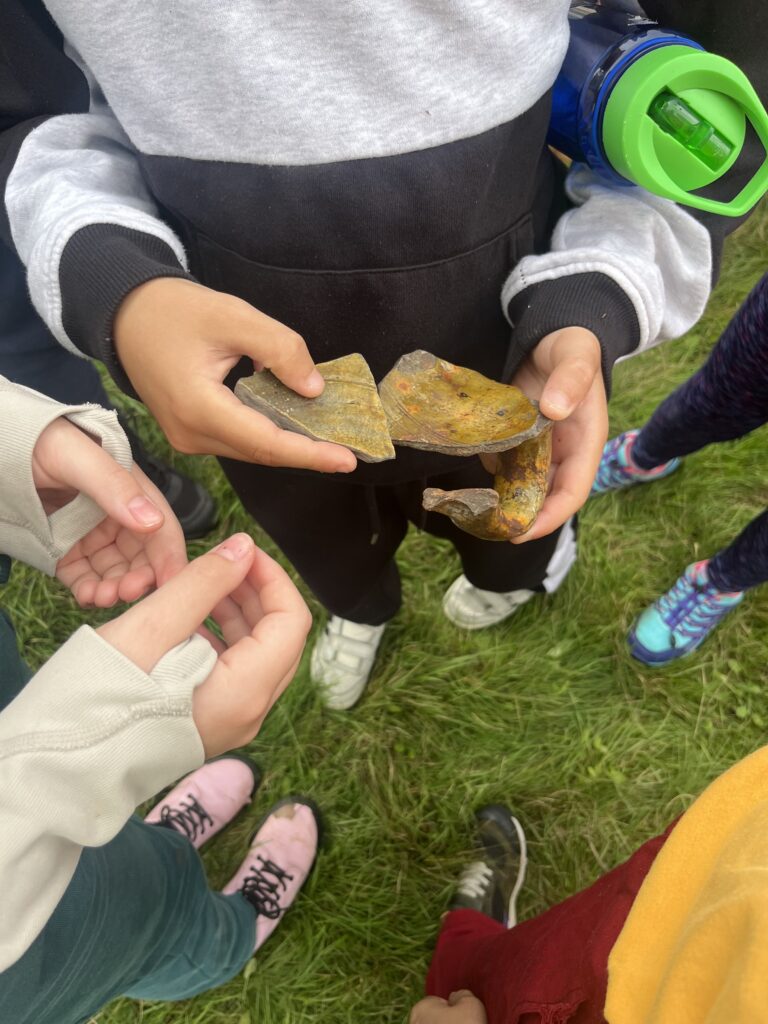
Stirling Field and Archaeological Society (SFAS) welcomed us to their excavation and shared more of the coal mining history of the grounds. They explained how they investigate the area using maps, historical records and excavation. SFAS pointed out features in their dig site, including a coal mine shaft, road, trench and drainage pipe. They explained how archaeologists carefully remove layers of soil called ‘contexts’, and how the finds from each context tells us about what was happening here in the past.
The group got to hold some of the finds from the site, including coal and pottery. One young person recognised the pottery SFAS had found and compared it with one of the artefacts they remembered from our very first handling session. Their pottery identification skills were correct, it was a piece of Medieval Green Glaze Ware. SFAS gave the group a great taste of what they would be doing, and what they might find. They explained how our project would contribute to the overall site excavation.
Our excavation
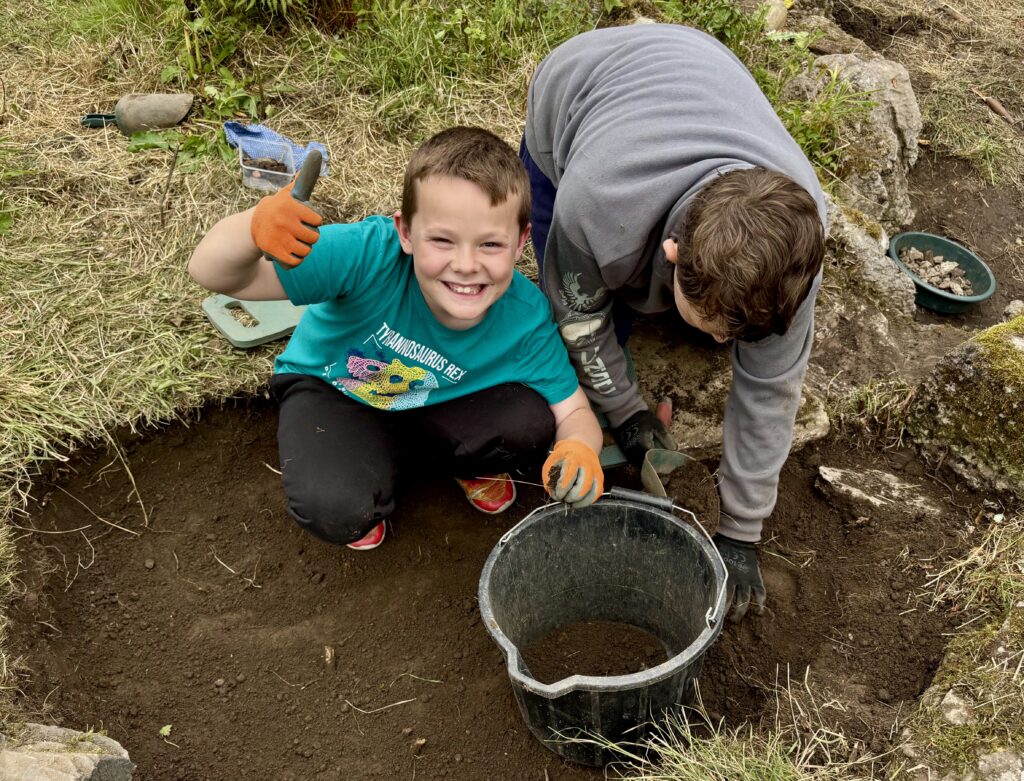
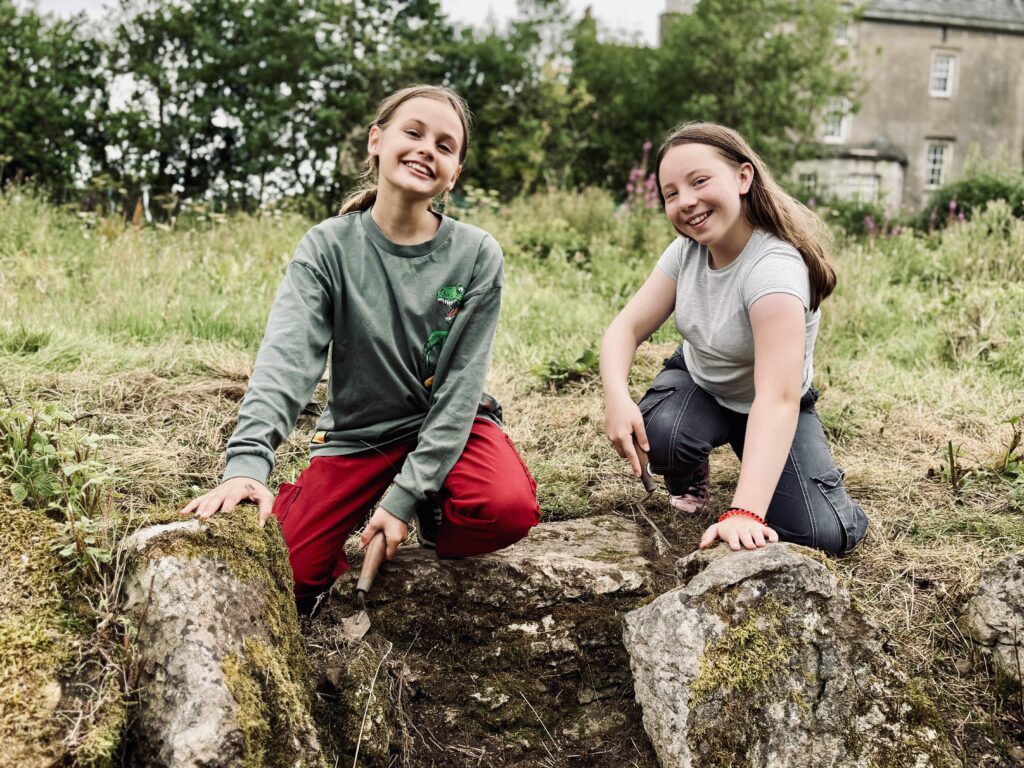
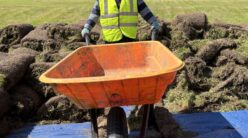
Stirling Field and Archaeological Society tasked the group with investigating a new area – a Victorian Water Garden and Rockery, named ‘Clementina’s Garden’. The young people were trained to use the tools correctly and made aware of all the hazards on an archaeological excavation before starting to dig. We carefully used trowels to excavate and uncover the feature and finds. We gently washed some of the finds and recorded what ‘context’ they came from.
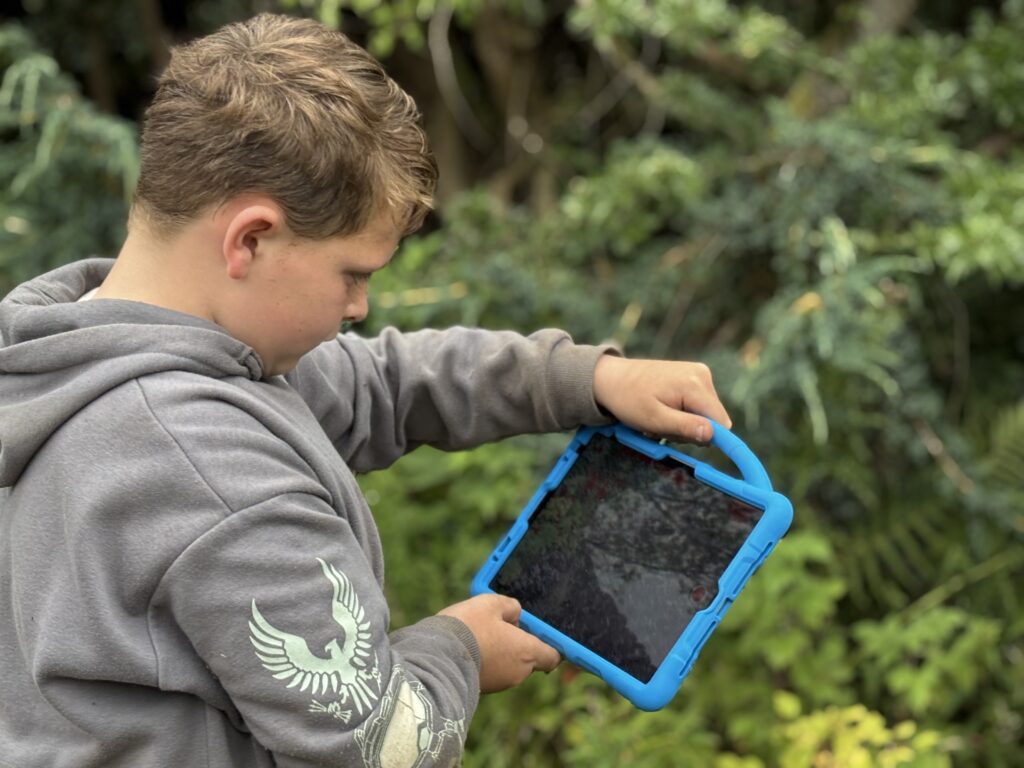
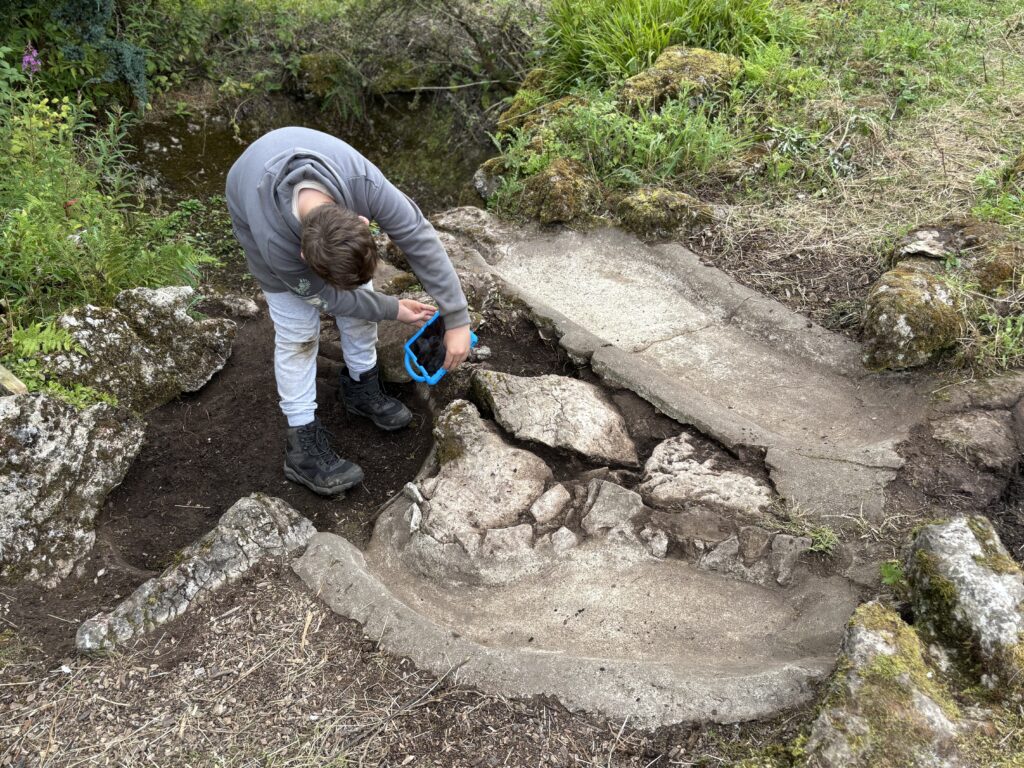
As well as uncovering finds, we recorded the ‘contexts’ (different layers of soil) these were found in, completing ‘context sheets’. It is important to record contexts to provide a bigger picture of what was happening in the area, and when. We measured depths of specific features, and took recording photographs and made 3D models using photogrammetry.
What did we find?
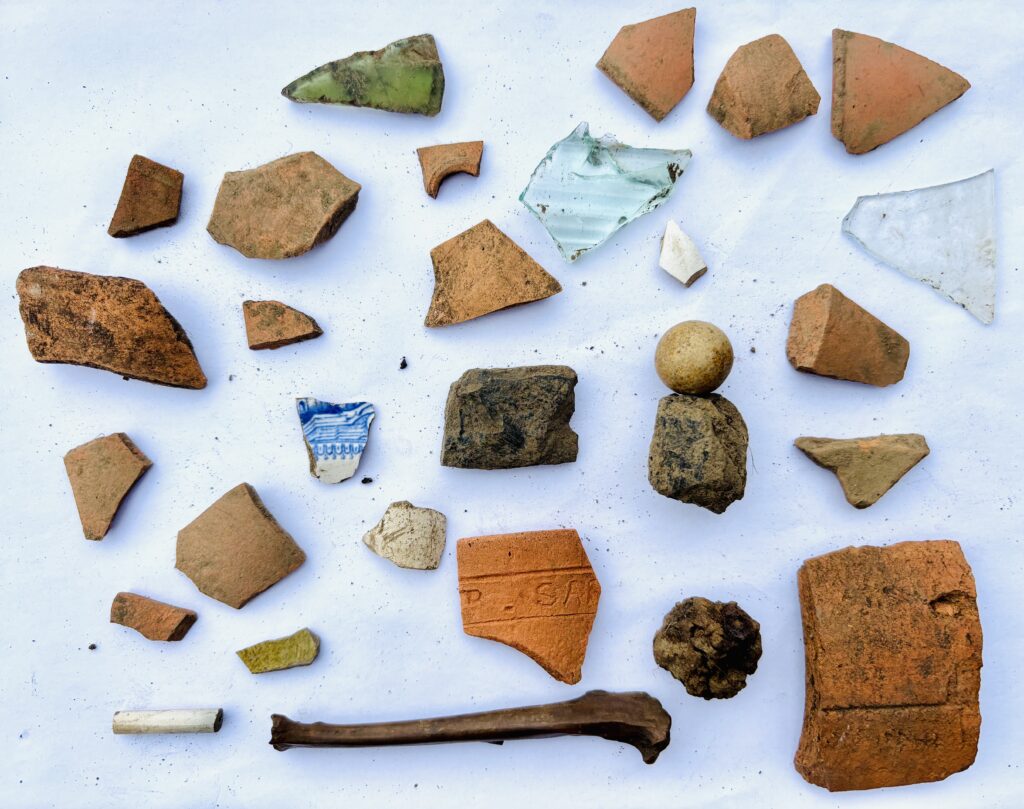
- Pottery – ‘Blue and white’ sherds (pieces of pottery), ‘terracotta’ sherds, likely from plant pots, including one sherd with ‘SAN’ and one sherd with a curve that could have been a hole, part of a water pipe. And a piece of pottery that might be Medieval Green Glaze Ware!
- Clay Tobacco Pipe stem and bowl sherd
- Marble (Stoneware, Saltglaze)
- Animal bone – Leg bone from a rabbit or hare
- Glass – sherds of different colours and thicknesses, some flat (window pane) and some curved (bottles), one with letters ‘JEYE’
- Coal and Slag – hundreds of small pieces of coal and lots of slag (industrial waste made when heating materials like metals)
A closer look at some of our finds:
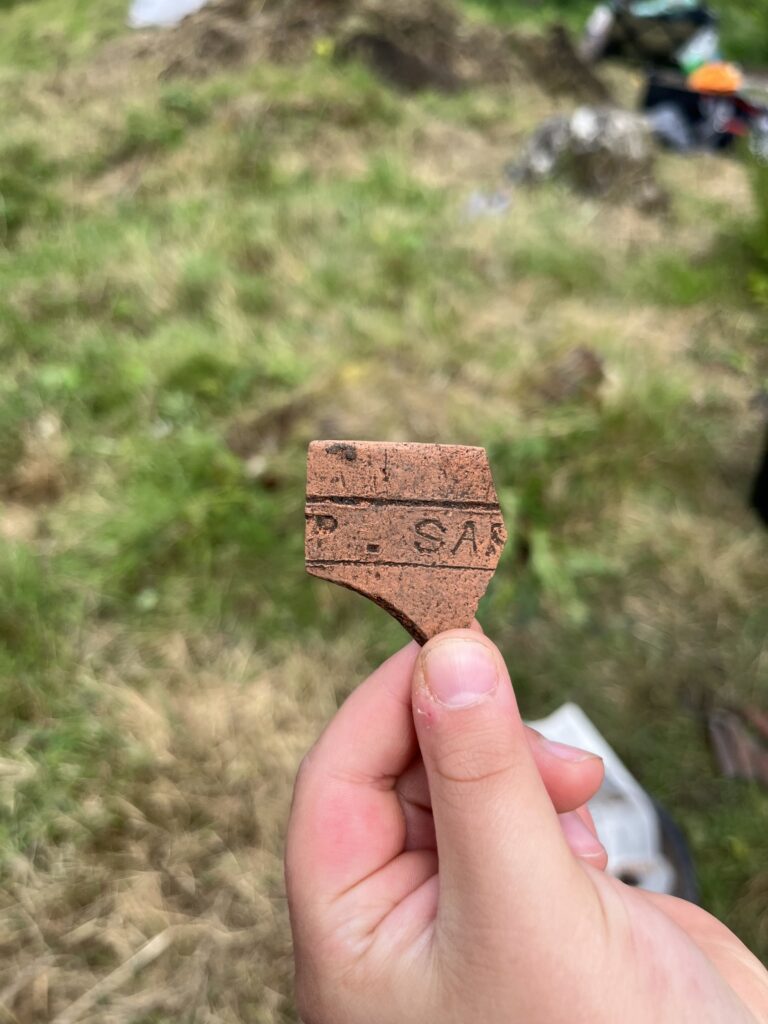
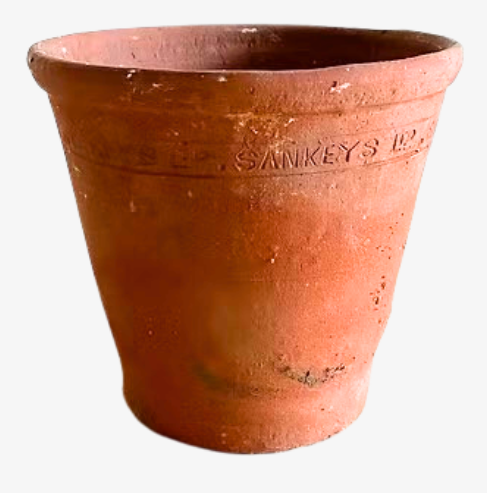
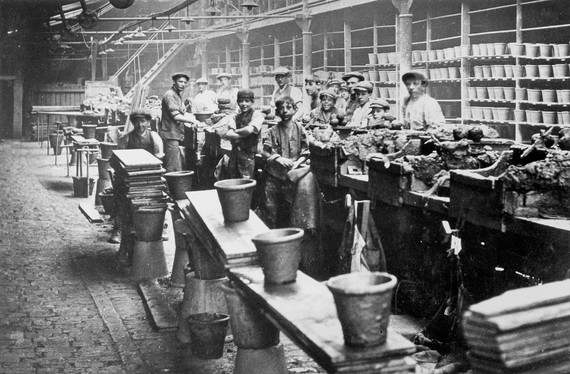
Find: Handmade stamped ceramic flowerpot sherd (clay). Possibly Richard Sankey & Son Ltd, Bullwell
Date: 1895-1939
In the mid 1800s, gardening grew in popularity and demand for flowerpots boomed! Founded in 1895, Sankey and Sons Ltd was based in Nottingham (England, producing 60,000 handmade clay pots a day. Each pot was handmade and stamped with a rolling “SANKEYS LTD” stamp, until 1939 when they used moulds instead. This sherd could have had a long life at Bannockburn before ending up in our context as Sankey Bullwell made the highest quality flowerpots! Each pot is unique, and stamps changed over time. However records were destroyed by fire in 1980.
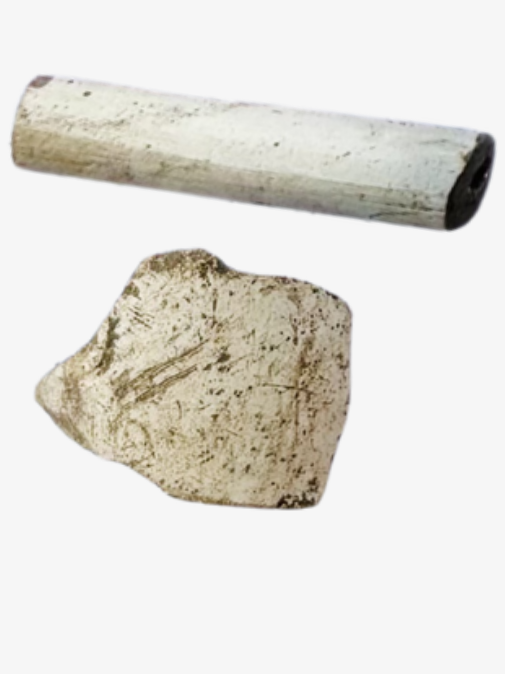
Find: Clay Tobacco Pipe stem and bowl sherd
Date: Likely 1800s
Pipes like these were first used in the late 1500s when tobacco was introduced to Europe, and were used until the early 1900s. Pipes were made using moulds and sometimes had stamps or decorated bowls. People would smoke, break off the ‘stem’ every so often, and throw them away after using them, like a disposable vape. European tobacco use drove colonialism through enforced labour of enslaved African people on tobacco plantations.
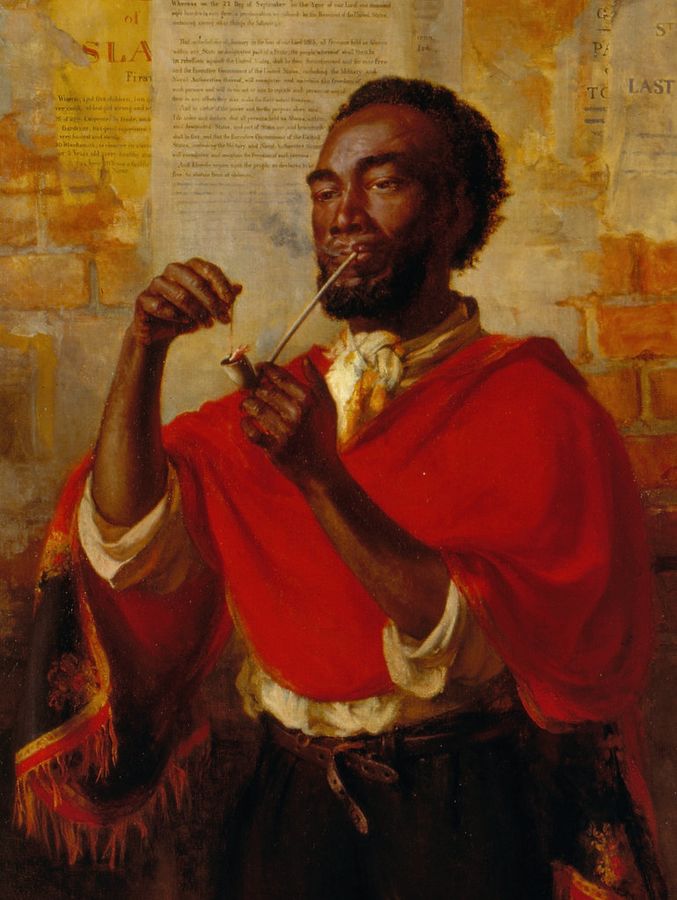
The Pipe of Freedom – Painting by Thomas Stuart Smith, 1869
This painting shows a man lighting a clay tobacco pipe. You can see the long ‘stem’ and bowl containing tobacco that he is lighting with a match. He is standing in front of a wall with the remains of posters. A ripped yellow poster for an auction of enslaved people has been partially covered by a copy of Abraham Lincoln’s 1893 Emancipation Proclamation – “all persons held as slaves within any State … shall be then, thenceforward and forever free”. You can see this painting at The Stirling Smith Art Gallery & Museum, which was founded by the painter.
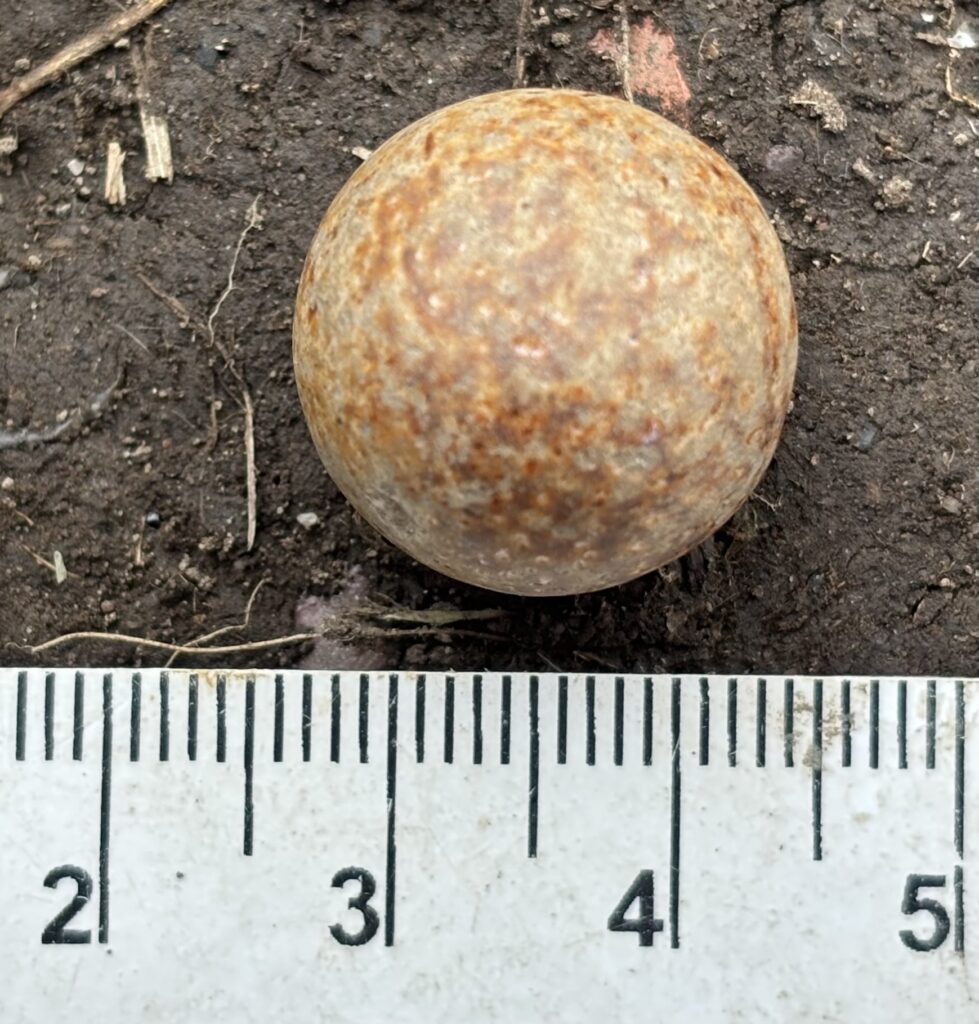
Find: Ceramic ball
Date: Possibly 1800s or earlier
This ball may have been a marble. It is made of clay, possibly stoneware (very hard), and has a brown salt glaze, which looks a bit like orange peel. This glaze is made by throwing salt into the kiln during the hottest part of the firing process. Some stoneware salt glaze marbles have been recorded from the 1600s and 1700s, including in colonial America.
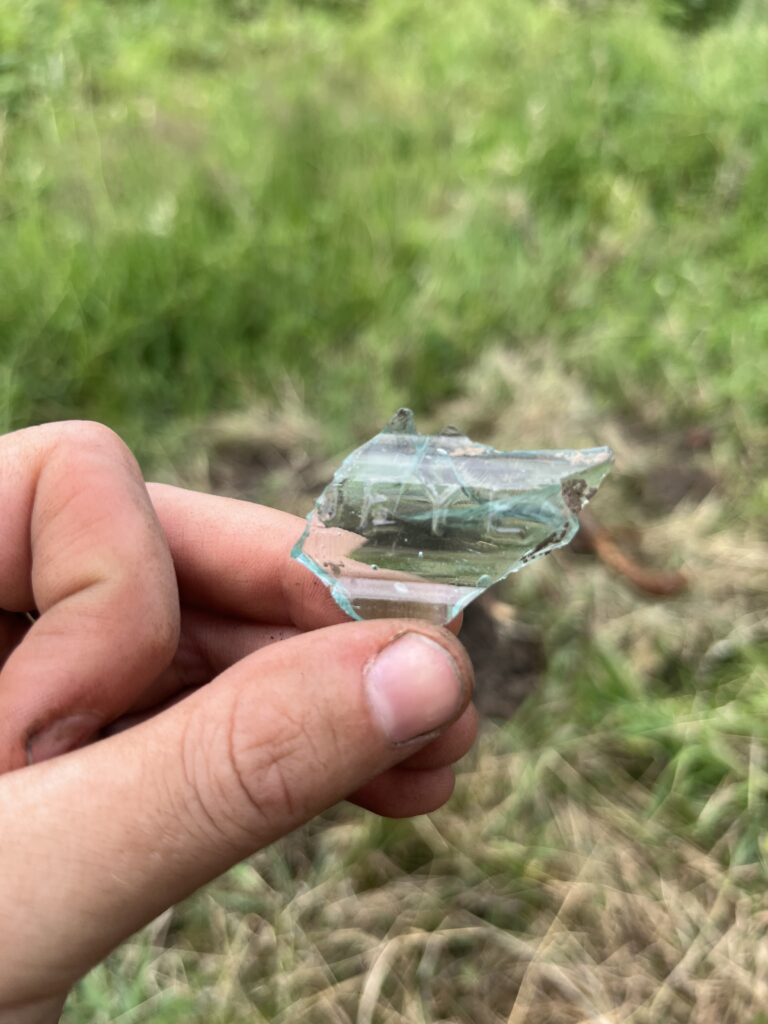
Find: Jeyes Fluid Glass Bottle
Date: Late 1800s – early 1900s
Jeyes Fluid was first patented in 1877 by a chemist. It was used as a disinfectant and cleaning product and by gardeners to clean paths, pots, greenhouses, drains, and remove moss and weeds. As the group was excavating a Victorian Water Garden and Rockery, we thought it could have been used by the gardener to clean the feature in the past, or broken and thrown away by a maid working at the house.
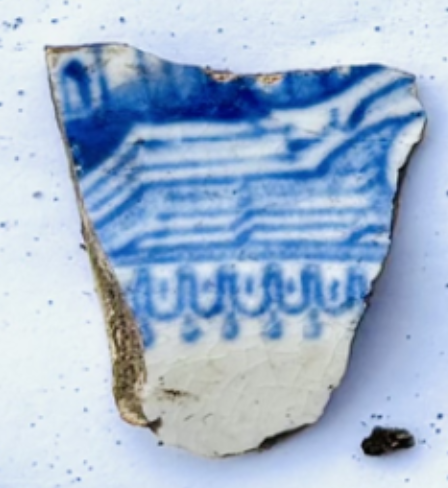
Find: ‘Blue and White’ Ceramic plate(?) with blue transfer print under glaze
Date: Possibly 1800s
This type of pottery is called ‘Blue and White’ and was very popular in the 1800s. It was mass produced and printed, rather than painted or made by hand. ‘Chinoiserie’ patterns were inspired by popular painted designs found on Chinese export porcelain. People liked patterns that showed ‘exotic’ or ‘Classical’ landscapes, as well as animals, country houses and botanical prints.
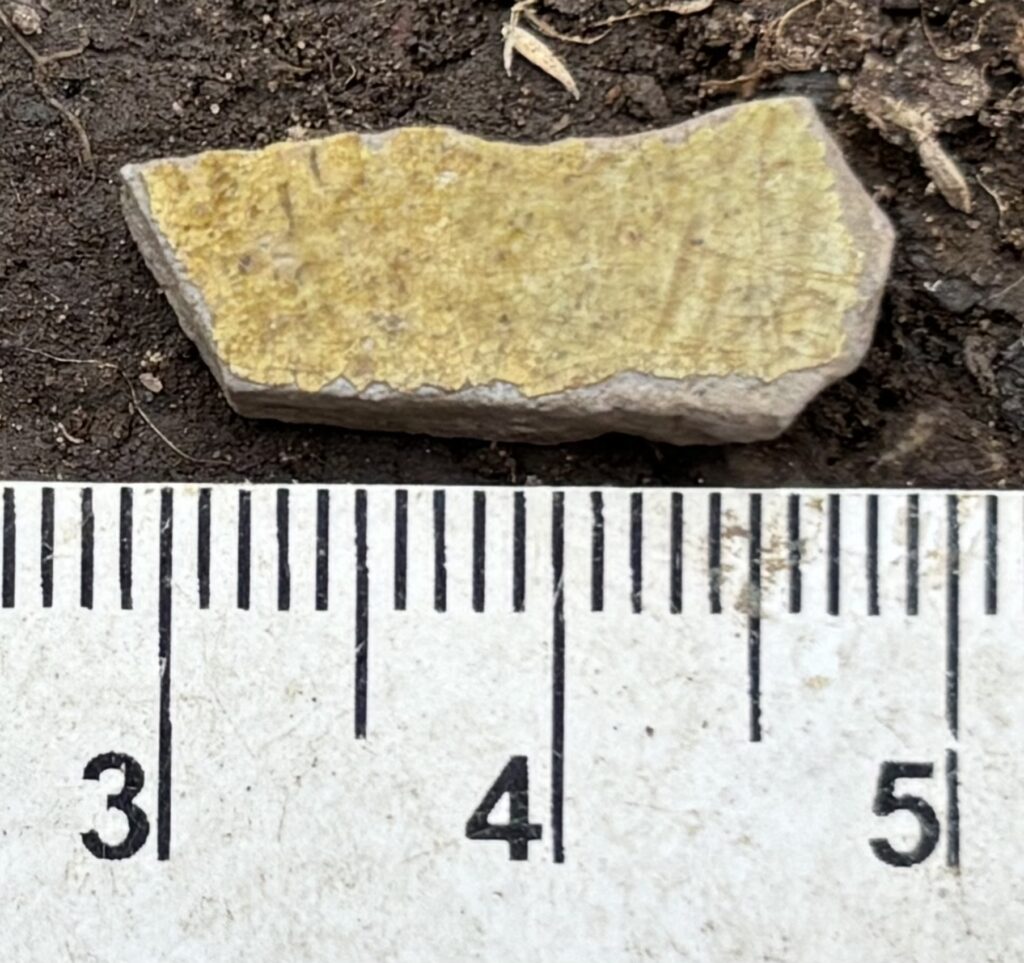
Find: Possible Medieval green glazed pottery
We were thrilled to find what might be a fine sherd of green glazed pottery, made during the Medieval period. It has a mustardy-green shiny glaze on one side and the ‘fabric’ (clay the pottery is made of) is thin and grey. This type of pottery sometimes had decorations including faces. This type of green glazed pottery was produced for many centuries, so we don’t have an accurate date for this piece yet. We were pleased to find this sherd after being shown a similar find by SFAS.
Pottery making inspired by our finds
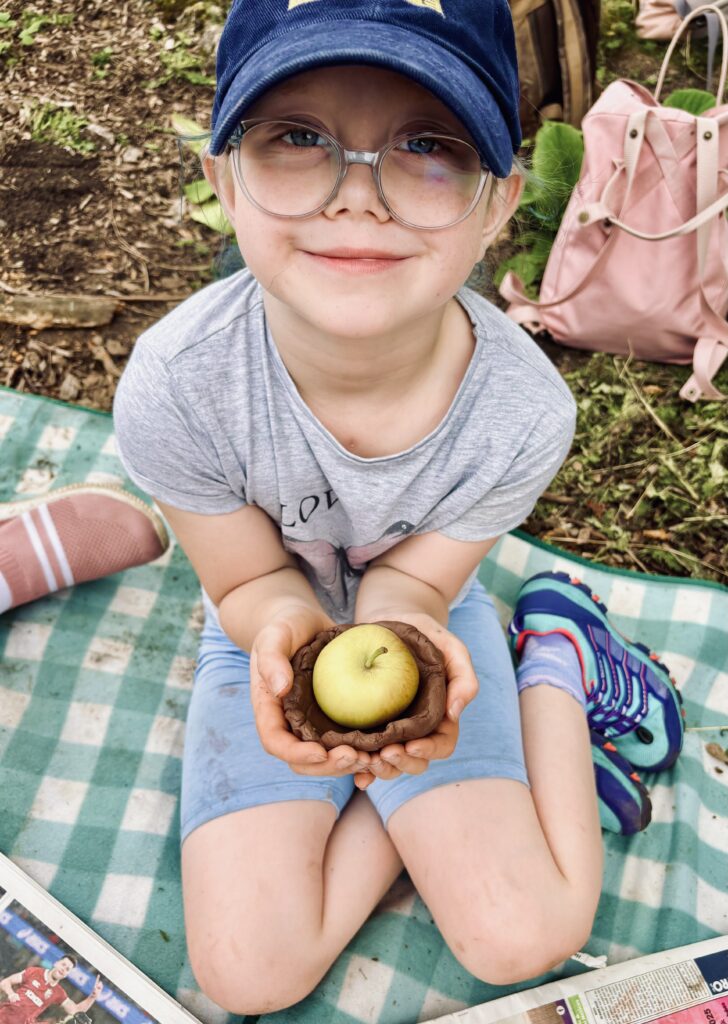
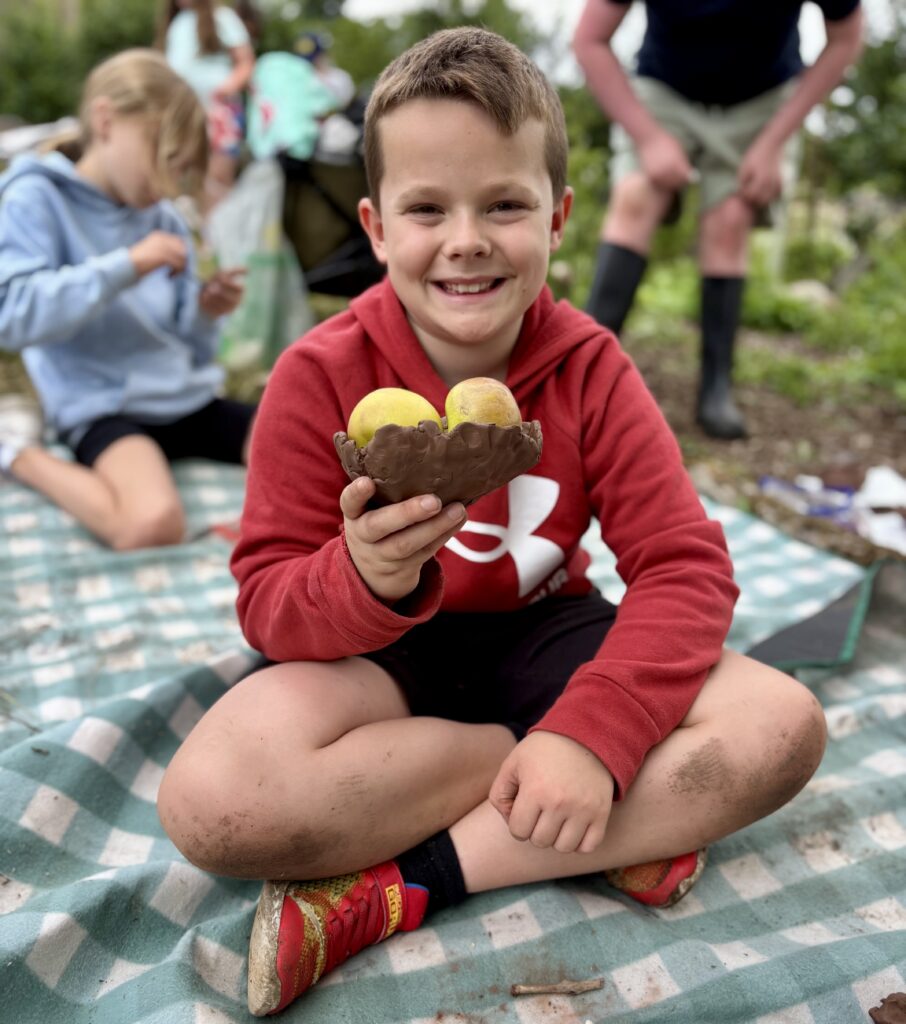
Participants were set a challenge of making a clay pot big enough to hold some “gathered” apples from the orchard. They experimented with techniques for pottery making without the use of a wheel, and decorated their pots using natural materials. Using letter stamps, some young people marked their pottery with their name, just like the ‘Sankey’ pottery sherd we found. The original ‘Sankey’ stamp would have been a wheel stamp rolled around the pot.
Heritage Interpretation
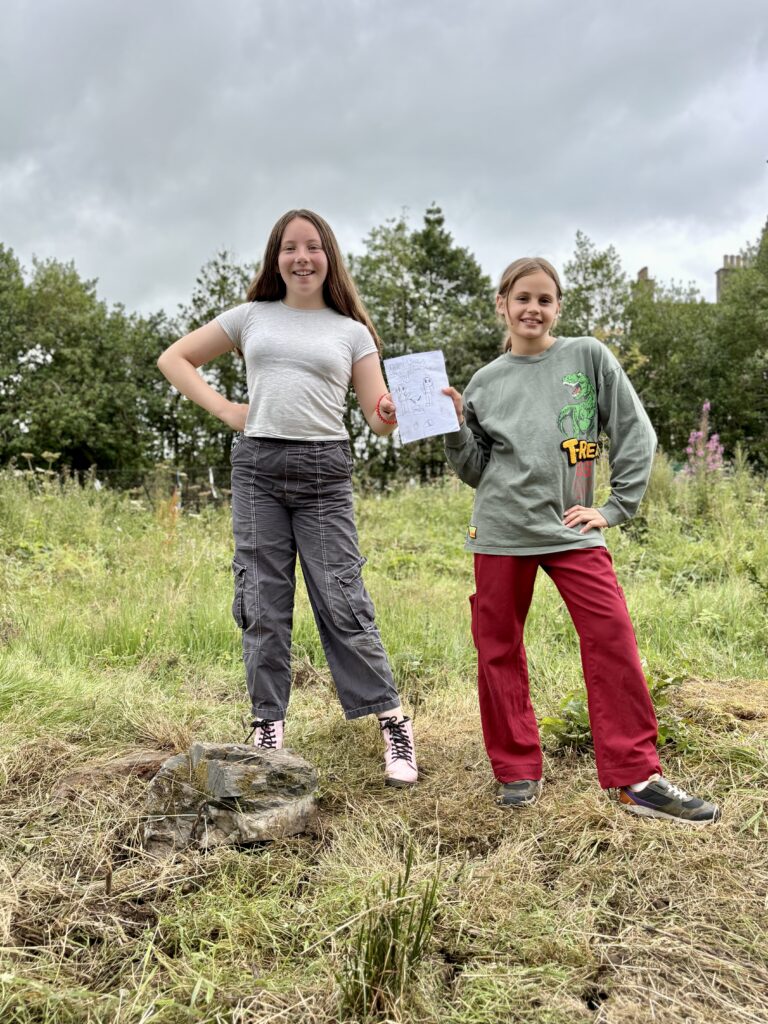
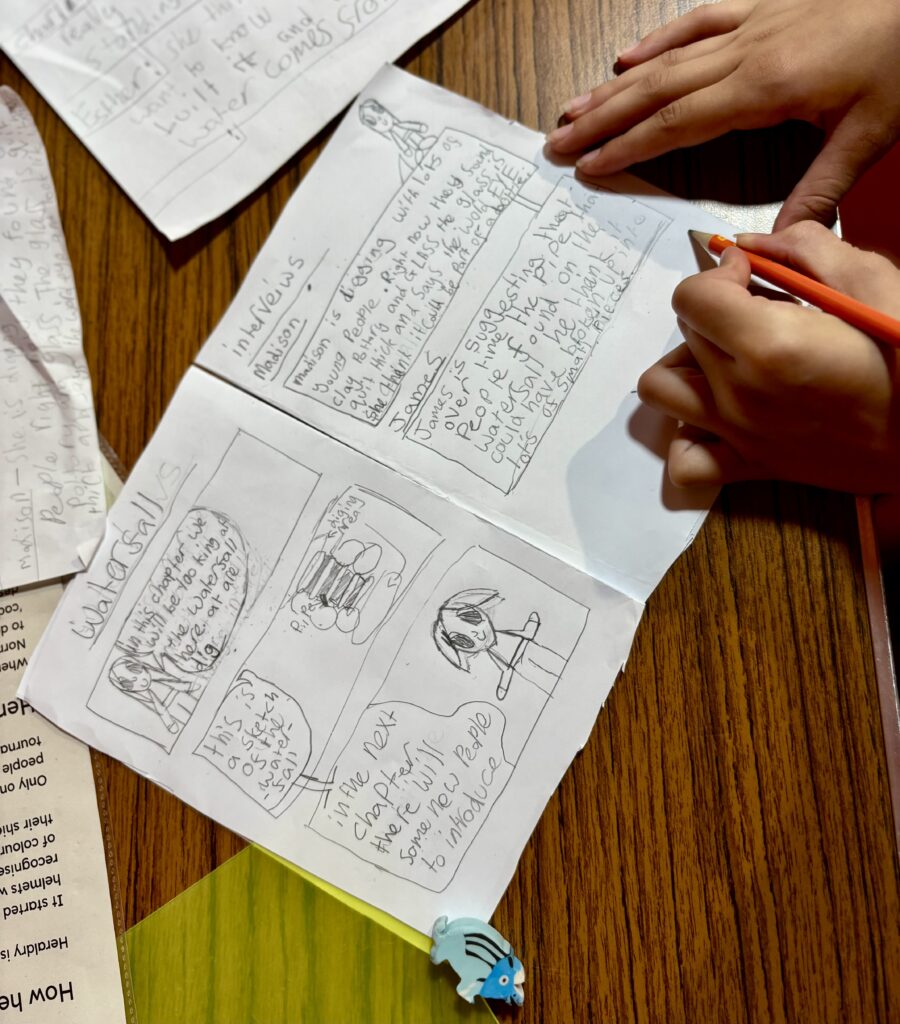
The young people interviewed each other about the project. This was a fantastic way for them to share their experiences, learning and interests. Some of the young people shared the project, finds and interviews in a comic book they made and gave out to the young people and SFAS volunteers.
The young people gave an incredible show and tour of the archaeology, project and finds to SFAS and the Bannockburn House Trust team. They shared their learning, achievement and exciting finds and theories from the dig. They brought everyone together for a brilliant time celebrating the successful week, and another young person brought cupcakes for everyone.
Future investigation
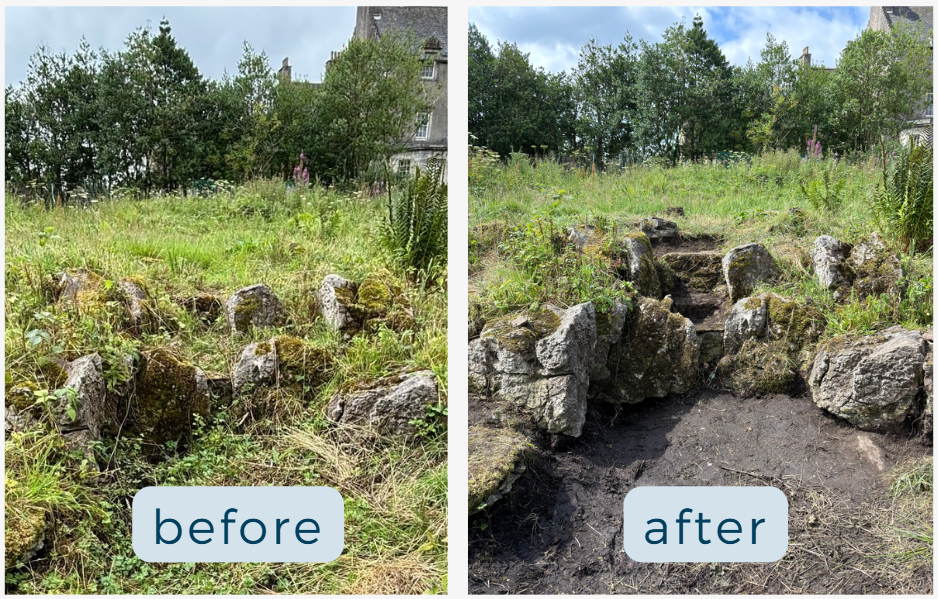
Our group investigated ‘Clementina’s Garden’, a Victorian water garden and rockery which is unrecorded and first appears on a map in 1930. Using archaeological excavation, we uncovered finds and exposed the ‘rock’ face to photograph the feature. We investigated one small part of the water garden and rockery, which takes up a much larger area. While we were excavating the garden, the young people were curious to find out more:
- Who built the garden?
- How was the garden made?
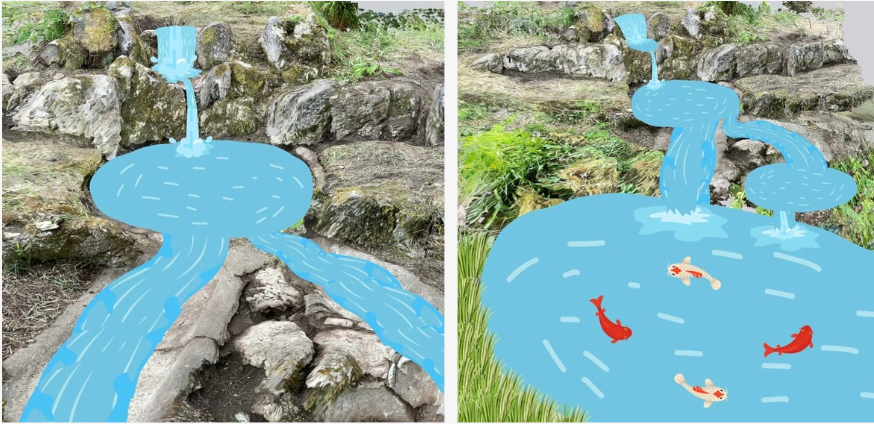
- What did the garden look like?
- Where did the water come from?
- How did our finds get here?
Fingers crossed for future projects to answer some of their questions…
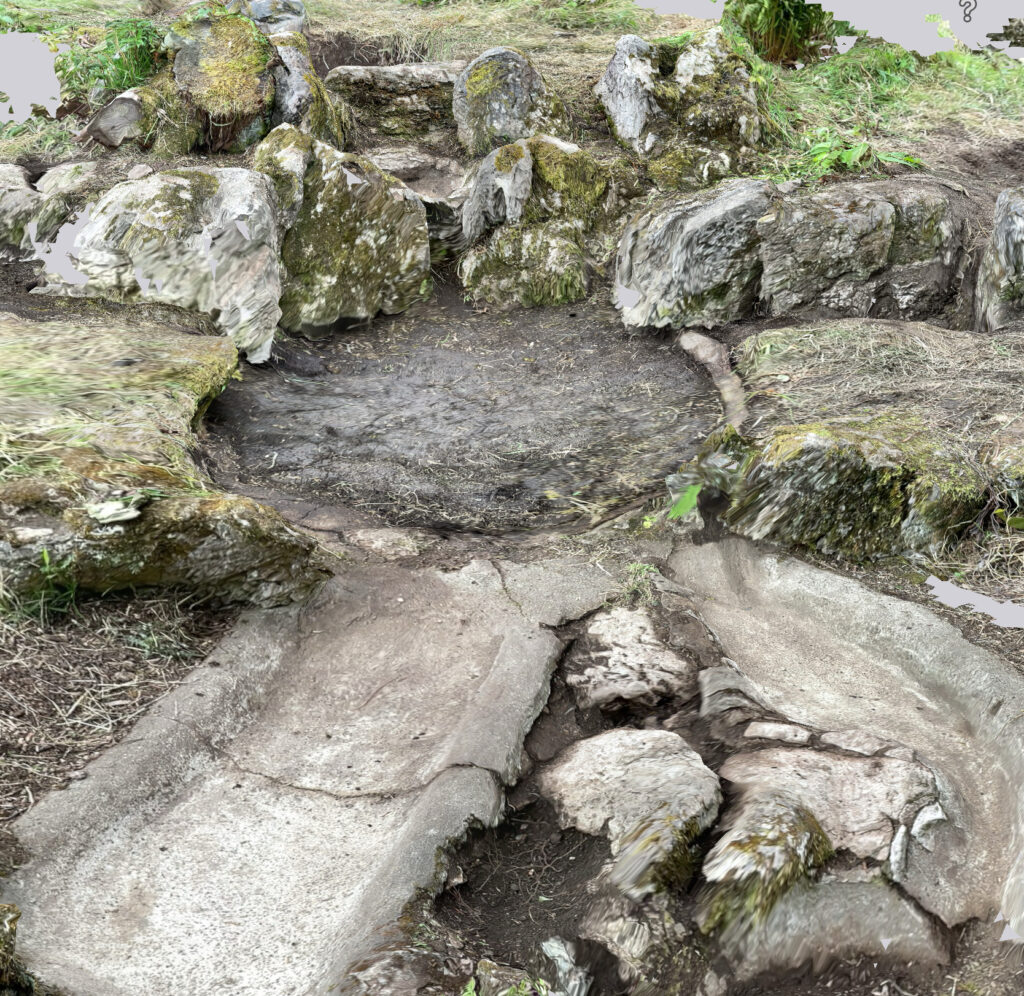
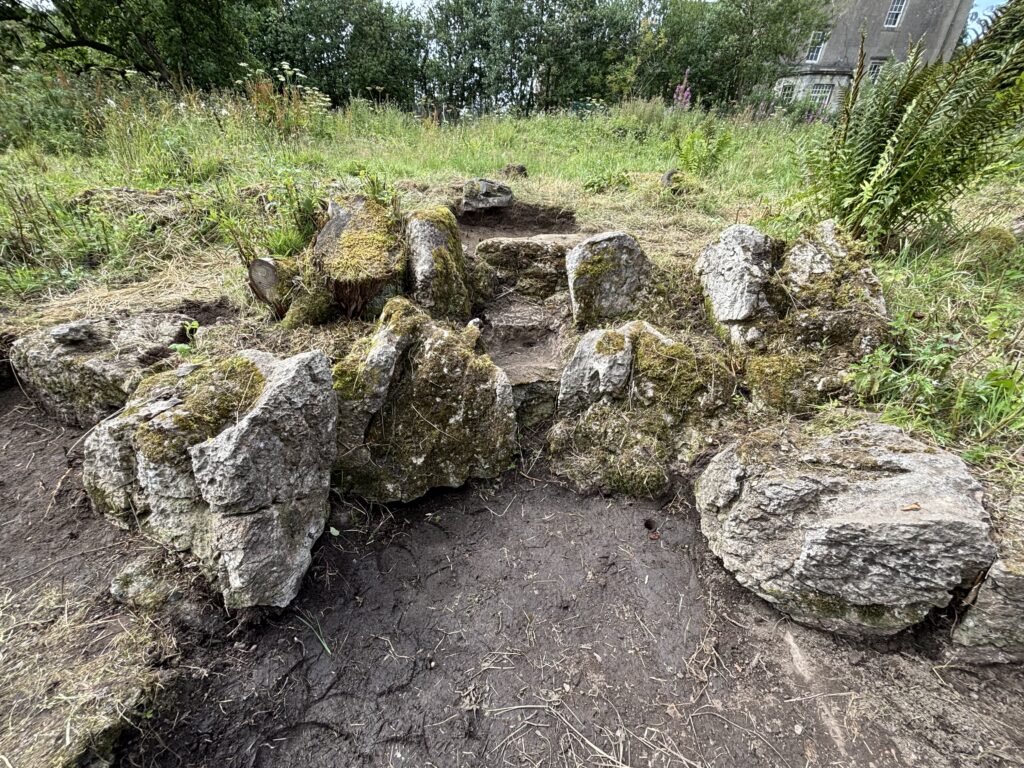
An interesting focus for further investigation is the material and structure of the garden. It looks like rock, but in places appears to be human-made. During the Victorian period, imported plants and ‘natural’ looking water gardens and rockeries boomed in popularity, leading to the creation of artificial rock gardens as this was cheaper than stone. The most successful creator of artificial rockwork was James Pulham, who invented ‘Pulhamite’, a material that looked like rock and even fooled some geologists. From the 1830s to the 1940s, his company designed and built rockeries, rock gardens and grottoes in parks and gardens all around the UK.
Could Clementina’s Garden be an example of a Victorian artificial rock garden?
Evaluation
Outcome 1: Participants will have a better understanding of archaeology, what archaeologists do, and the skills they need
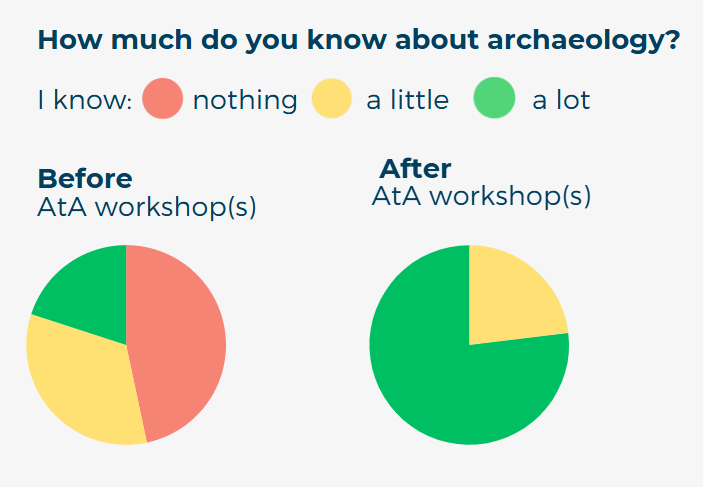
Outcome 2: Participants will have increased confidence in meta-skills, including communication skills

Outcome 3: Participants will have opportunity for intergenerational learning and collaboration
Outcome 4: Participants will develop archaeological skills
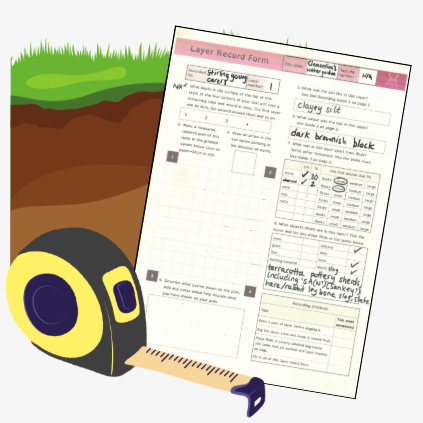
Heritage Hero Awards
Heritage Hero Awards | Archaeology Scotland
Each participant was awarded a Bronze Heritage Hero Award certificate. This award recognises and celebrates the unique and valued effort, contributions and time each young person put in to exploring, investigating and sharing the archaeology and heritage of the project site and past. Stirling Field and Archaeological Society and local volunteers attended the award ceremony, congratulating and applauding the young people’s achievements.
Quotes and Feedback
“First of all, I’ve got to say a massive thank you for the week you put on for the children. They had an absolute blast! (Participant 1) can only focus like that when (1)’s genuinely interested and (Participant 2) struggles with the crowd setting in general so (2) just coming in each day and taking part like that is really meaningful.” – Stirling Young Carers Officer
From participants:
- ‘I liked finding pieces of history that have been buried’
- ‘Digging was so fun and interesting’
- ‘I have loved being with my friends outside’
- ‘I felt accomplished after finding artefacts!’
- ‘I liked finding stuff that no one’s found, and digging where no one has’
- ‘Pottery is cool!’
- ‘I’ve had a great time, I’d like to do something like this again’
Acknowledgements
Thanks to all the staff and young people from Stirling Young Carers, and to the staff, members and volunteers from Stirling Field and Archaeological Society and Bannockburn House Trust.
Thanks to our funder Historic Environment Scotland.


Map: Reproduced with the permission of the National Library of Scotland. Stirlingshire, XVII.3 (Stirling) Survey date: 1858 to 1860, Publication date: ca. 1863, NLS Maps
Sources, further reading and related information:
- Home – Bannockburn House
- Our Families – Bannockburn House
- Bonnie Prince Charlie – Bannockburn House
- About – Stirling Archaeology
- The Pipe of Freedom, Thomas Stuart Smith 1815-1869 – The Stirling Smith Art Gallery and Museum
- Smith’s Pipe of Freedom on BBC Radio – The Stirling Smith Art Gallery and Museum
- Flowerpot Friday – 19th Century English Horticultural Terracotta – Wakefield Handmade
- Richard Sankey & Son Facebook Page
- Diagnostic Artifacts in Maryland (Marbles)
- The Pulham Legacy – Rock Gardens, Ferneries, Follies, Grottoes and Fountains
- Durability Guaranteed, Pulhamite rockwork –Its conservation and repair (English Heritage, 2008)
- Progression framework – Skills Development Scotland (Meta-skills)