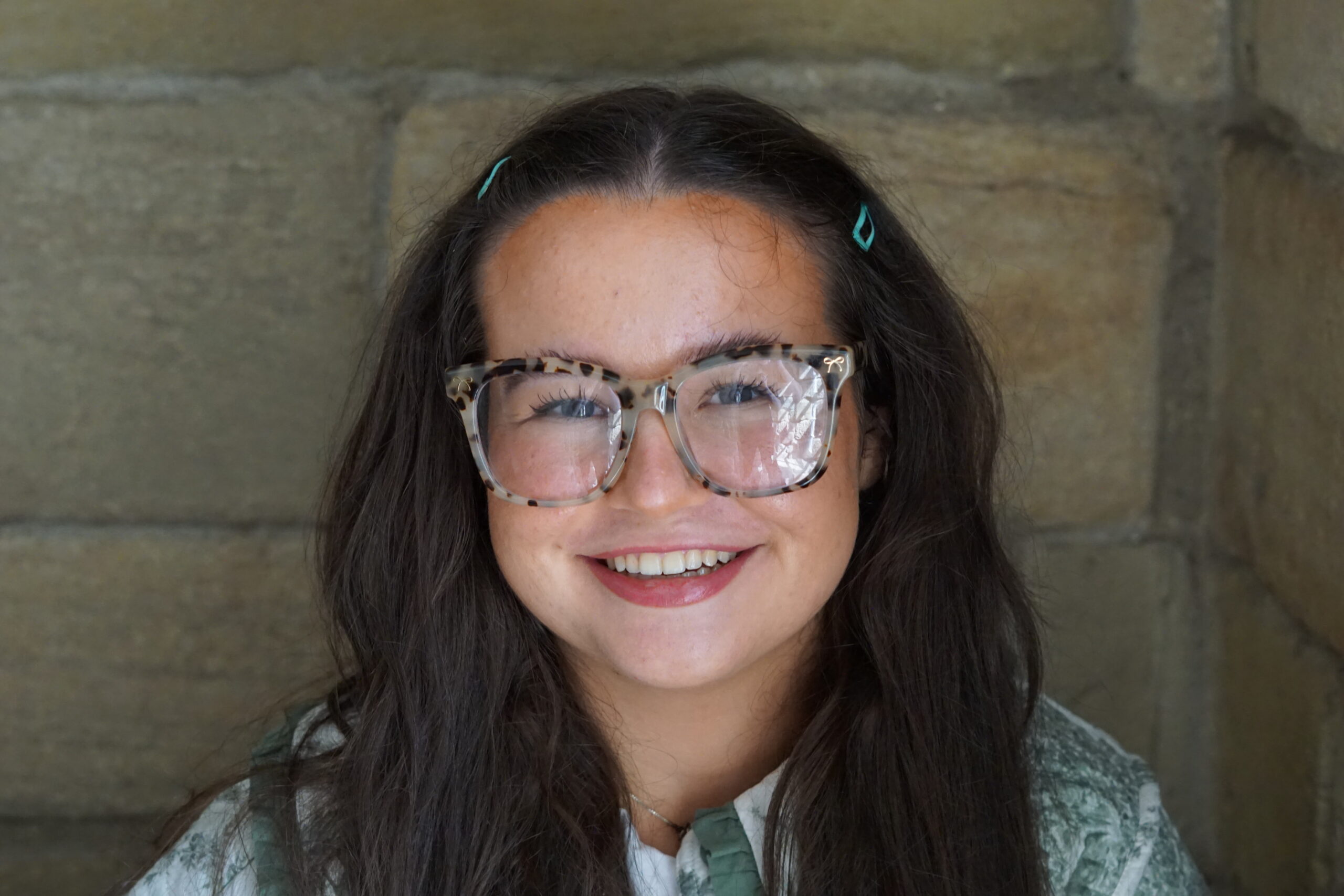
My name is Eva Miller and I am a fourth year MA Archaeology and History student at the University of Glasgow. This semester I was provided with the opportunity of contributing to Archaeology Scotland’s ‘Early Megalithic Monuments Project’ (EMMP), a research initiative celebrating the legacy of pioneering female archaeologist, Audrey Henshall. This project focuses on Scotland’s Early Neolithic chambered cairns, aiming to collate and interpret data on these remarkable sites whilst also highlighting the contributions of women to the field of archaeology. Through Archaeology Scotland’s Adopt-a-Monument scheme, and their theme for 2025 of female ‘Prehistoric Pioneers.
My role in the EMMP project has involved archival research, data collation and digital documentation, working closely with the project assistant, Eleanor Harrison. I explored a range of historical and archaeological records, verifying site details and contributing to the EMMP gazetteer (a key resource designed to support future publications, educational materials, and public engagement). This process required careful attention to historical accuracy and methodological consistency, as well as collaboration with other teams within Archaeology Scotland.
A highlight of this placement was participating in a research visit to the Historic Environment Scotland’s archives in Edinburgh in November. This visit allowed me to examine primary archival materials, cross reference records and gain hands-on experience in the care and management of historical data. This visit also underscored the importance of meticulous archival work in building a foundation for both academic research and public engagement. My academic interests have long focused on uncovering the overlooked voices and stories within archaeology and history, so being able to work with directly with original documents, site records and surveys felt both meaningful and deeply motivating. One of my favourite aspects of archival work is the way an archive connects us to people and stories we’ve never encountered before. Individuals we know some details about, until the documents and the records of their life’s work bring their lives into focus.
Before our visit, myself and Eleanor had no idea what we would discover, as the archive has largely not been digitised, so we had no idea what we would find in each of the archive boxes. As you often don’t when undertaking archival work. And that, I think is what makes archiving work so compelling. It offers the same sense of anticipation and discovery that you feel when trowelling into an unknown layer on a dig. The thrill of revealing something hidden, whether it’s beneath the soil or tucked away in a forgotten box. Both forms of discovery invite us into the unknown, reminding us that the past will always have secrets waiting to be discovered.
Through Audrey’s extensive archive (mainly her photographs of sites) I came across a photograph of a chambered cairn that sparked familiarity. Upon further research, I had realised that Audrey’s’ recording of a chambered cairn in Kilmartin in 1962, was the same chambered cairn I had come across by chance this Summer. I was then able to compare both photographs to assess the changes over time and analyse how people have interacted with this site. A further discovery I made when analysing Audrey’s archives was the survey of a site in Argyll called ‘Auchindrain’. Once again, I felt a shared link with Audrey Henshall as Auchindrain is a site I was introduced to in the spring, when I became a voluntary Tour Guide there, working closely with the site curator and archaeologist. Auchindrain is the oldest surviving farming township in Scotland, and my earlier work in Glencoe- where I helped record the memories and experiences of people working on their first archaeological dig- taught me a lot about how the stories of archaeological sites are shaped and shared. That experience helped me think carefully about how to approach Auchindrain in a way that acknowledges and respects the everyday people who lived and worked there, many of whom have been overlooked in traditional histories. For me, recognising and supporting those quieter, often forgotten voices became one of the most meaningful parts of my work on the EMMP project. It feels like a surreal moment to be a young woman navigating her role within the heritage sector and to find connections to a pioneering woman in the same discipline through the records left of her life’s works.
The EMMP project has not only strengthened my archival research and data management skills, but has also provided insights into how heritage projects can connect academic research with community engagement and education. It was particularly meaningful to contribute to a project that highlights the often unrecognised work of women in archaeology. Focusing on contemporary efforts to promote inclusive heritage practice. For me, this was the reason why I had applied for the placement. My Dissertation research focuses on avocational women in archaeology, the people that are typically marginalised within academia and their own communities, yet their work is vital and ground breaking to the field. So many of these women are trained in archiving/museum studies and have extensive archives of their own, but these archives typically remain unknown. Working with Audrey’s archive felt like a continuation of the work I’m currently undertaking. Piecing together the contributions of women whose influence in the field of archaeology is undeniable, even if history has not always given them the visibility they deserve. My time working on the EMMP reinforced something central to my research. Women’s archives are often the most powerful testimony to their labour, especially when official histories fail to record it. Opening the boxes in Audrey’s archive and seeing her handwriting, her photograph slides, her meticulous notes. These are the moments that felt like a continuation of the stories I have discovered in female avocational archaeologists, a reminder that all of these women’s contributions to archaeology live on through the traces they leave behind.
Working on the EMMP reinforced the value of collaborative, community-focused archaeology, where research, documentation and interpretation are not just academic exercises but tools for celebrating and preserving Scotland’s past. This experience has been both professionally enriching and personally rewarding, deepening my understanding of archaeological methodology whilst contributing to a national project with real impact. It has also been incredibly inspiring to work alongside such passionate and knowledgeable individuals, I have been continuously impressed by the dedication, expertise and support of everyone involved with the project and ‘Archaeology Scotland’ as a whole.
Supported by the Society of Antiquaries of Scotland’s Audrey Henshall Legacy Award.