At around 4 o’clock, on Friday 19th May, about 60 folk were starting to congregate at the Links Hotel in Montrose, Angus. This gathering, in bright unforecast sunshine, marked the opening of the 2023 Archaeology Scotland Summer School.
Since 1955, and almost every year since, members and friends of Archaeology Scotland (and its previous incarnations) have met to be guided to surprising, unique and intriguing archaeological places.

In 2023, based in Montrose, the Summer School would explore the ancient past of north Angus and the Mearns (now part of Aberdeenshire). Over two days, Saturday and Sunday, 13 sites would be visited. In the evenings of Friday, Saturday and Sunday, the Summer School presented three lectures which would try to orientate these monuments within a framework of knowledge. That was the aim, anyway!
This text is written by the man who led a small team which selected the hotel, the sites, the routes and the timetable. So you have to read this as a biassed account by someone who spent much of the previous 12 months wrestling with the choreography and cost of the endeavour and who, like a cook who cannot taste the taste of the food they cooked, was in no fit state to appreciate what those folk in the sunshine outside the Links Hotel were going to experience.
In planning the Summer School, we must have looked at somewhere in excess of 50 possible sites to visit. Just getting to this long list required a fairly deep immersion into the literature of the area and its archaeology. Over several reconnaissance visits, almost all of that initial list were knocked out. For some, there was nothing to see; for others, the coaches would not get to them; some were just too similar to each other (the ‘so what’ factor), and for many, the access route was too long or steep or too much like a broken leg waiting to happen. We had to discover key holders’ names and phone numbers from whom we could beg the use of a church hall for lunch or a toilet stop. Some places were locked, and these often looked the most interesting from a Summer School point of view; thus, finding the person who could let us in became the quest.
We obsessed with getting to one site in particular, the 5000-year-old Capo earthen long barrow. This amazing monument to late Neolithic architectural flamboyance was discovered in the 1960s. We got no further than the start of the woodland track to the site as Storm Arwen had splintered the mature pinewoods in winter 2021; huge torn trunks and fallen branches blocked the route. On our second visit, Forestry and Land Scotland’s contractors had cut and stacked the flattened forest to within 100 m of the barrow and by our third visit, the way in was secure.
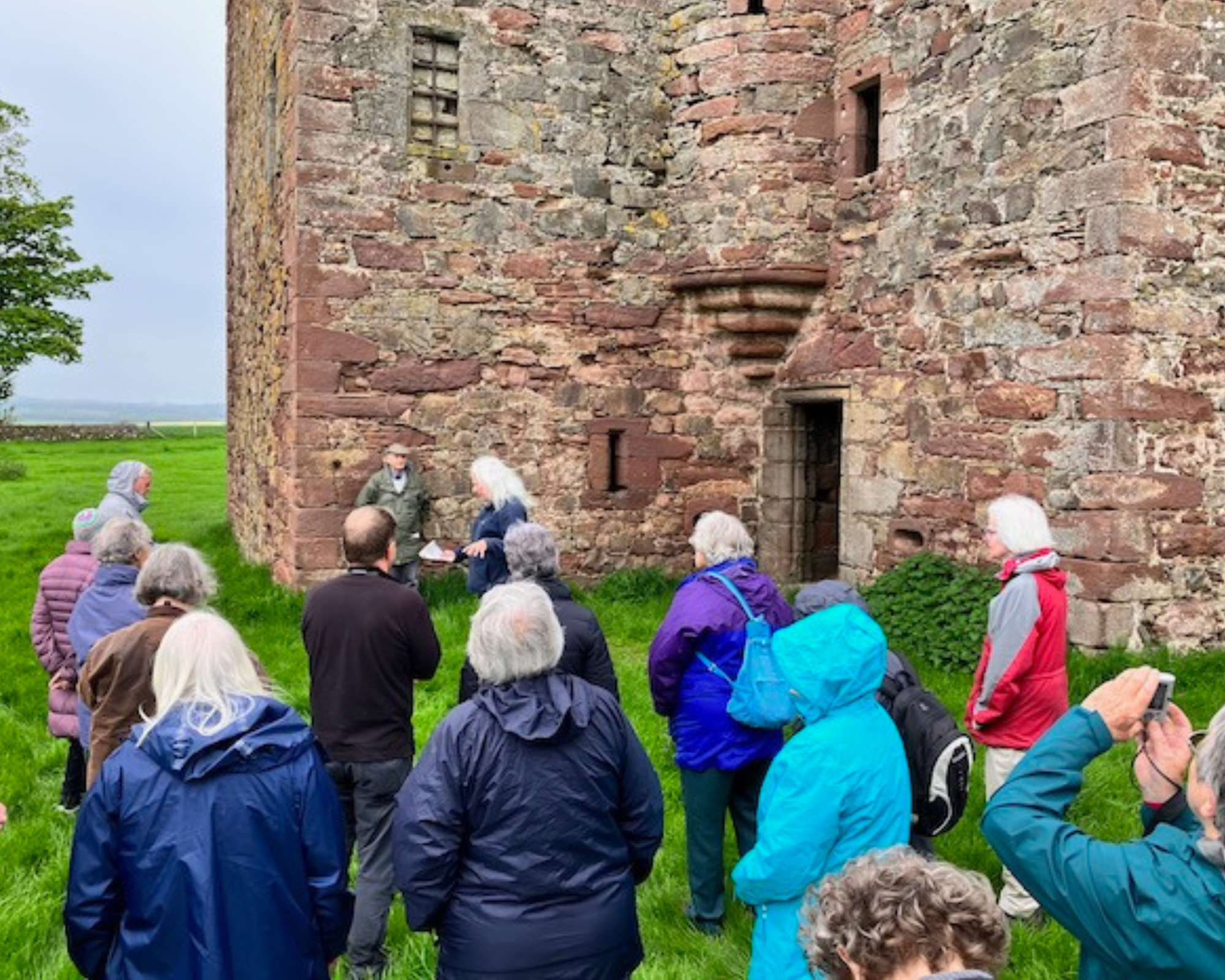
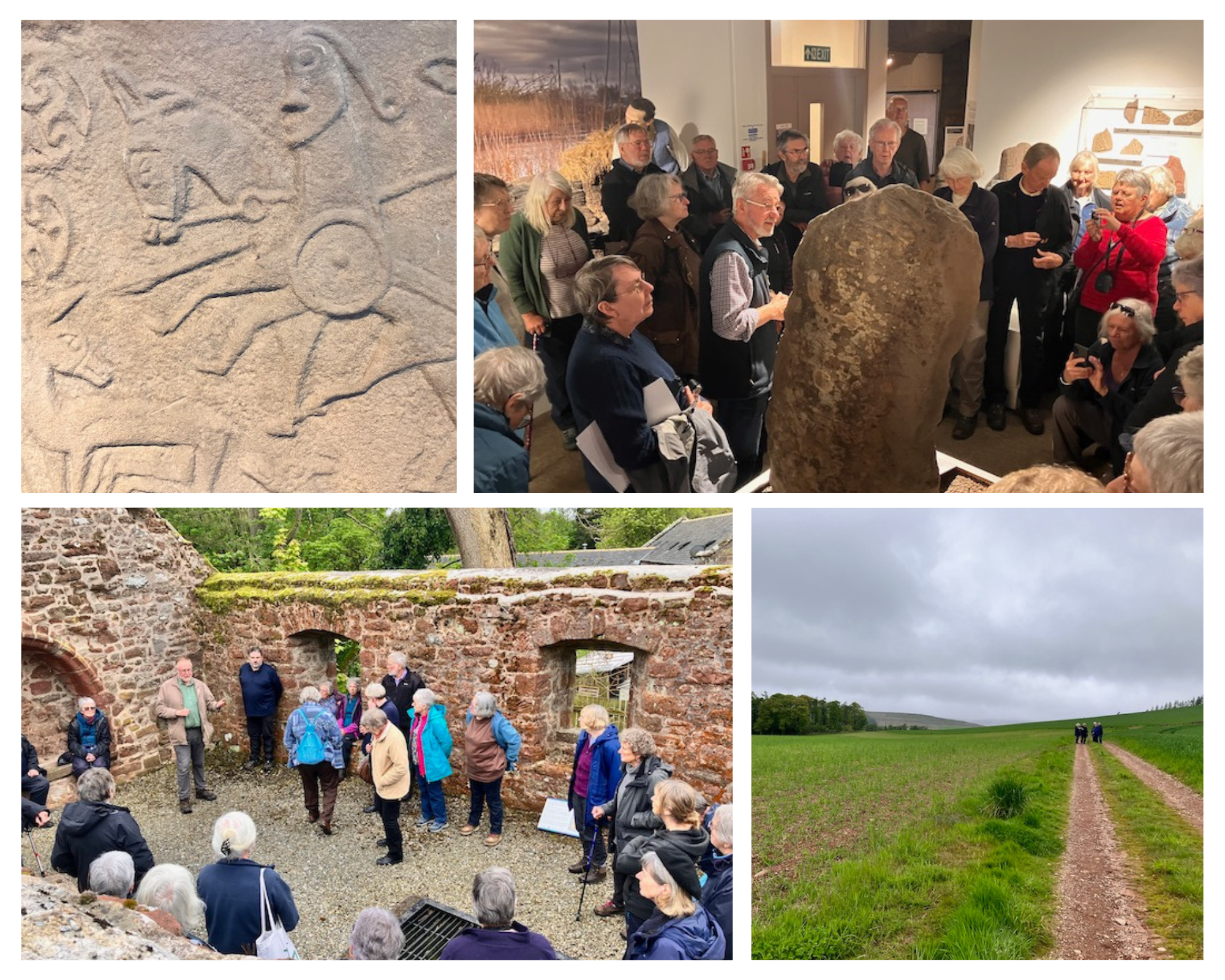
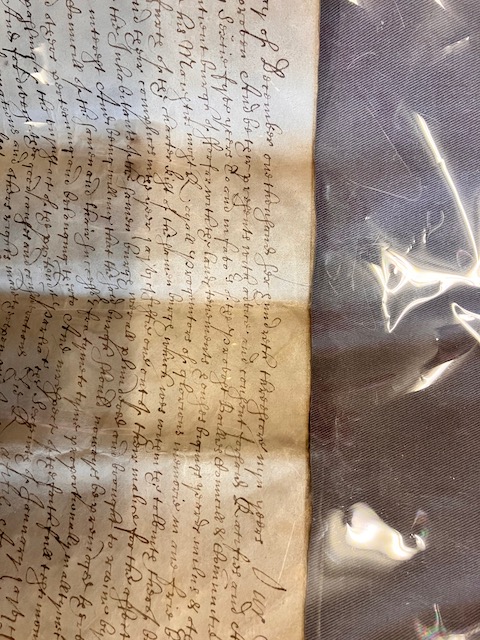
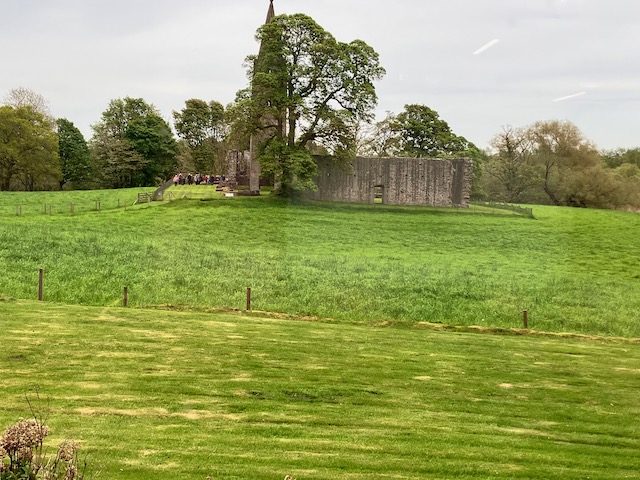
On Saturday, we discovered the preserved street plan of the medieval Cathedral precinct in Brechin, the probable Pictish monastery in Glamis, and, after a picnic in Glamis, we then drove on to the Meffan Museum in Forfar to look at the amazing Pictish stones on display. Nearby are Restenneth Priory and Angus’ archives; the priory was brought to life by Prof Richard Oram, and archive staff laid out some of their rare documents, including the hand-written confessions from the 17th-century Forfar witch trials. The day ended when we were welcomed on the farm by the owner to visit a well-preserved 17th-century tower house next door to her family’s home.
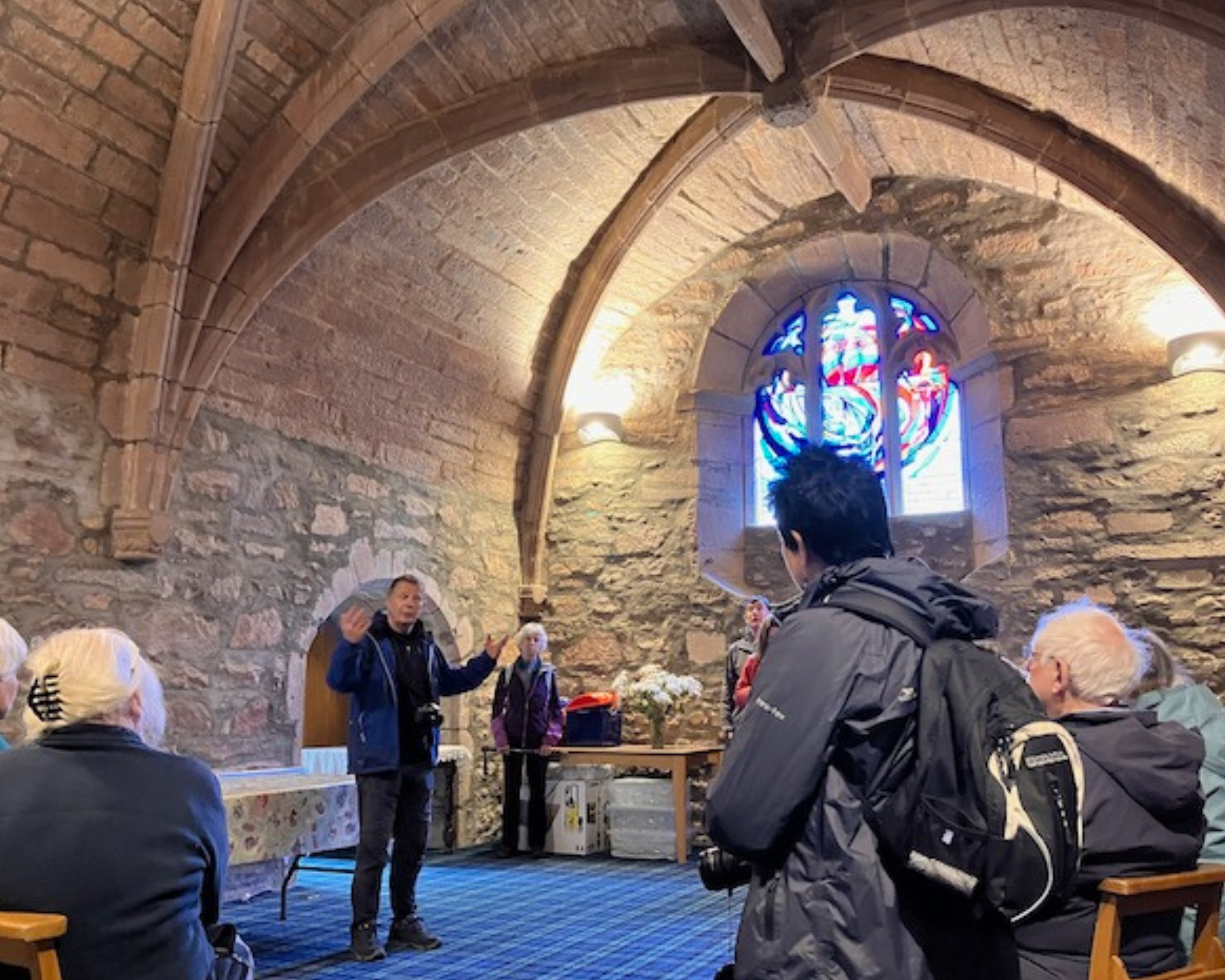
On Sunday, we stepped back into the 3rd millennium BC at Capo, then on to Stracathro to imagine Rome’s northernmost fort and then up an almost hidden valley to see the huge and enigmatic Green Castle. After lunch in Fettercairn, the tour looked at the early Christian church in the Mearns with places dedicated to St Palladius (Fordoun Parish Church, Auchenblae) and St Ternan (Arbuthnott Parish Church). Arbuthnott is also where the author Lewis Grassic Gibbon grew up and is buried. We popped into the Lewis Grassic Gibbon Centre for the exhibition and refreshments on our to St Ternan’s.
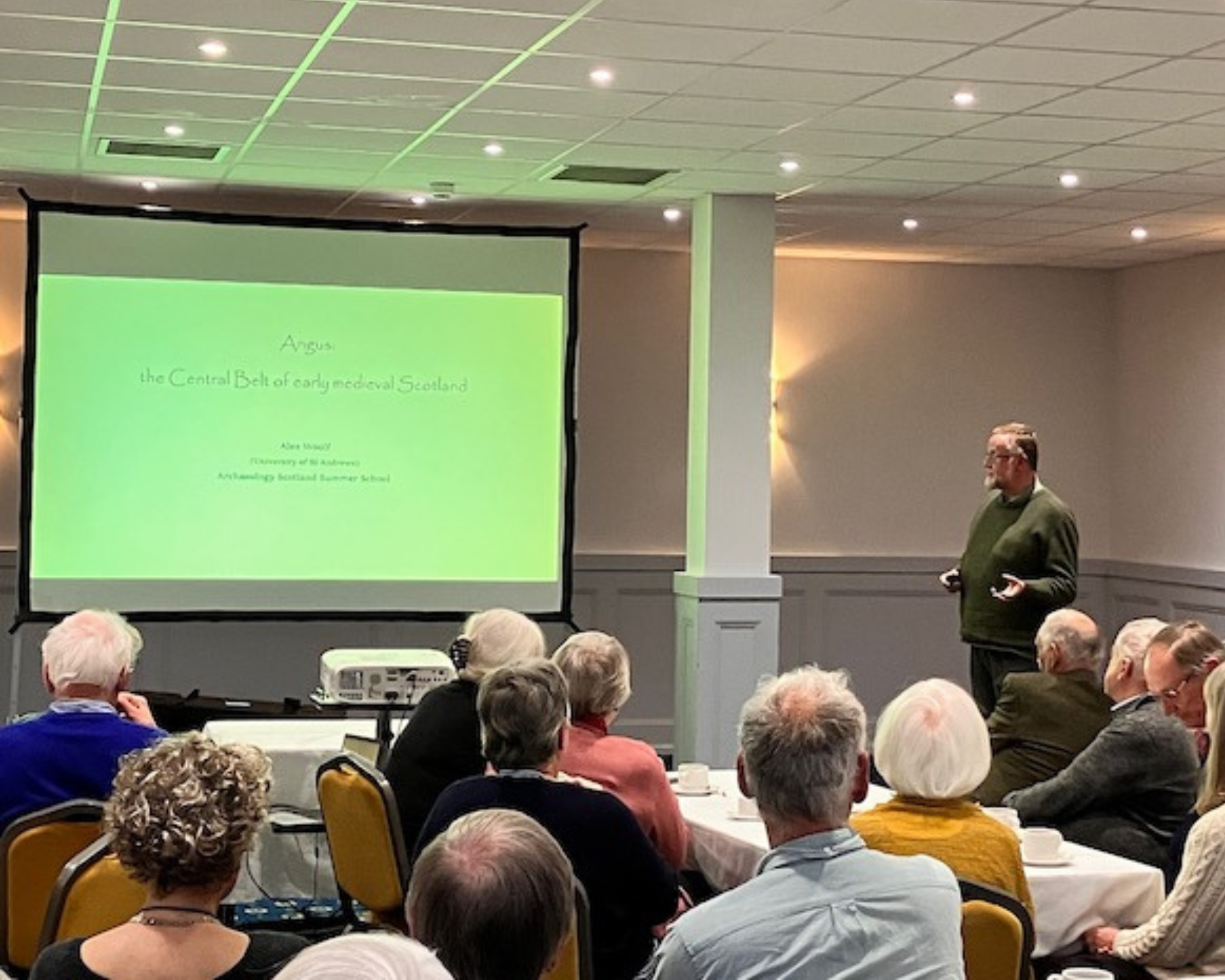
Lectures by Strat Halliday, Richard Oram and Alex Woolf provided the archaeological and historical contexts for the tour.
Angus Live kindly opened the museum in Montrose for the Archaeology Scotland Summer School, and on Monday morning, that was our last destination. The fellowship of the Summer School dispersed with a lot of laughter and farewells and promises to meet again in May 2024.