Type of AtA project: AtA 10 week course
Size of AtA group: 6 young people
Age range of groups: 11 – 15 years
Dates of project: July – September 2021
Location of project: Around the Citadel Youth Centre in Leith
Heritage Hero Award: Participants achieved Bronze Heritage Hero Awards
Aim of project:
The aim of the project was to encourage the intergenerational group to explore the heritage of the coast and waterways of Leith, in particular the area around the Citadel Youth Centre, and use historical sources to identify key sites of historical and archaeological interest. Find evidence of Cromwell’s 17th century Citadel fort. The group would record historic sites before creating a walking trail to share their discoveries with older members of the community.
Introduction to Archaeology
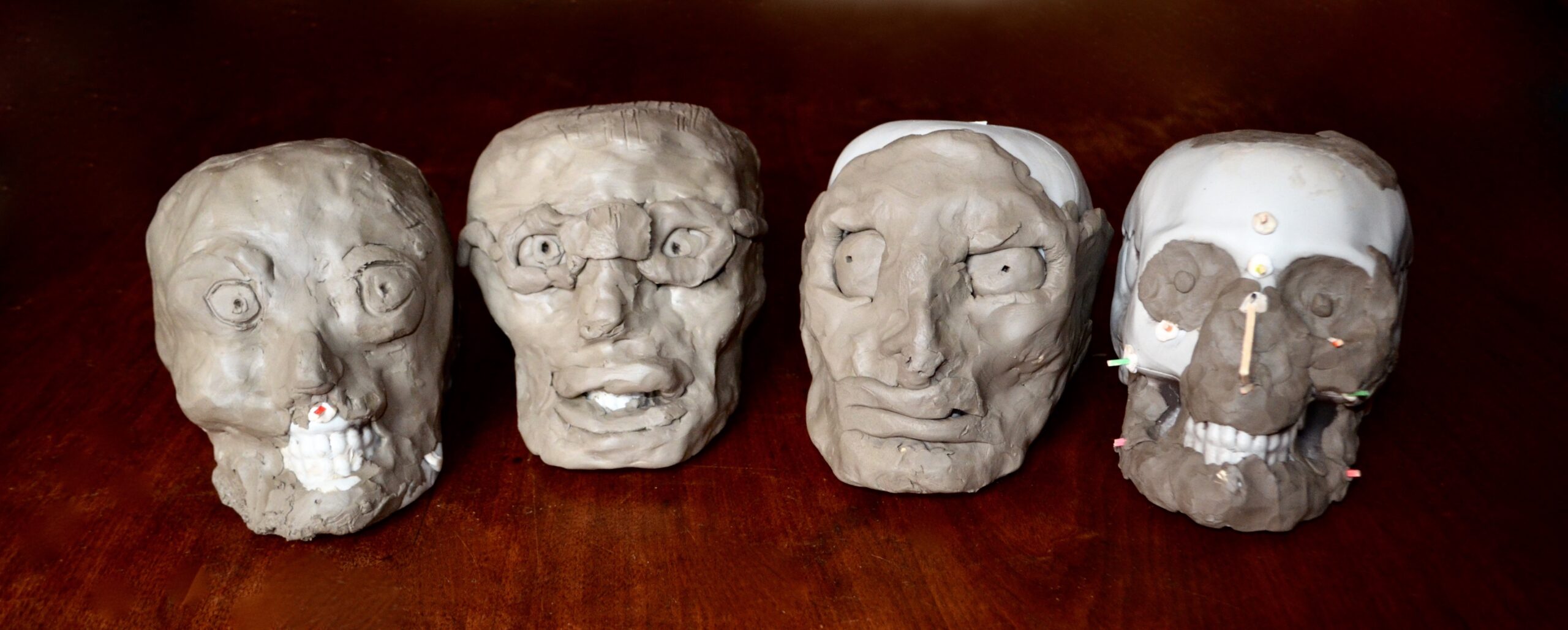
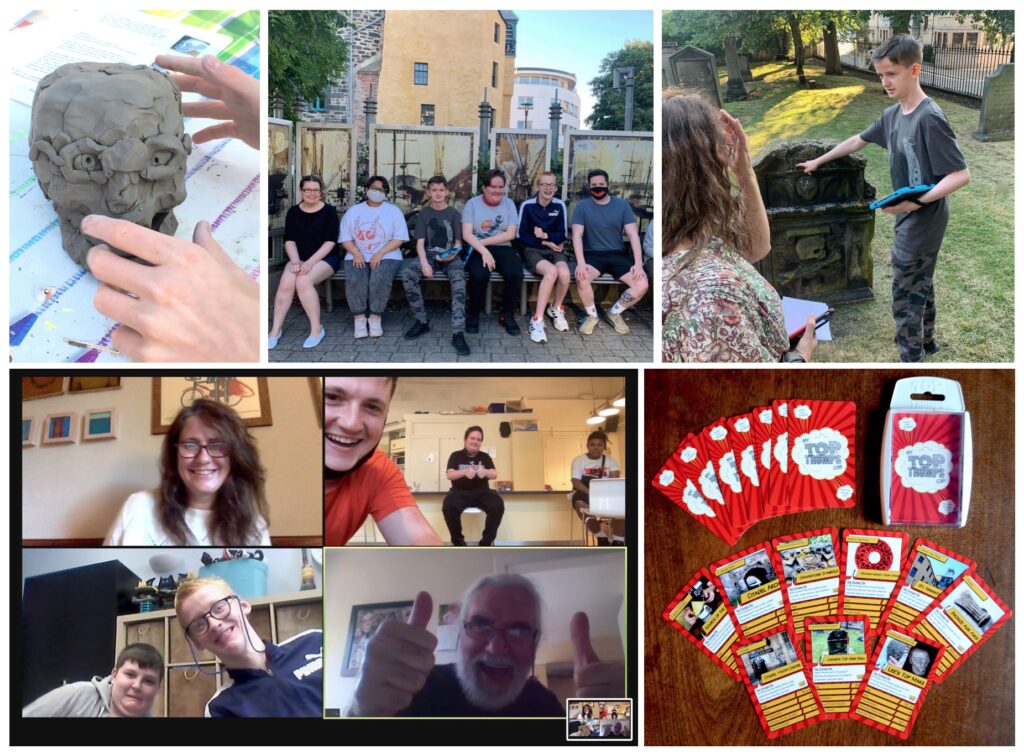
Participants took part in an ‘Introduction to Archaeology’ workshop. Following this, they learnt about the Edinburgh Trams excavations and the ‘Past Lives of Leith’ project including the facial reconstructions that were created. The group then created their own facial reconstructions.
Desk based Research
Participants looked at historic maps, photographs and other archival sources. Key sites were identified, including the arched entrance to the original Citadel fort, North Leith Burial Ground and the Citadel Youth Centre building.
Historic Building Recording
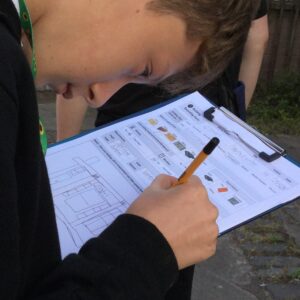
From 1846 to 1947, the Citadel Youth Centre building was a train station connecting Leith Old Docks to other parts of the city. Participants were given training in historic building recording and, with the support of Archaeology Scotland staff, recorded the walls of the Citadel building. They completed Elevation Recording Forms, sketching the elevation and taking photographs with scale.
Gravestone Recording
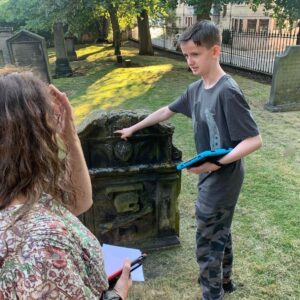
North Leith Burial Ground. Land for the burial ground was given to the people of North Leith in 1664 after their cemetery was destroyed to make way for the Citadel fort. The process of graveyard survey and gravestone recording was explained to students and the reasons for doing so, discussed. A plan of the burial ground was created and individual headstones numbered. In pairs, they recorded gravestones, completing gravestone recording forms, sketching and photographing gravestones.
Heritage Interpretation
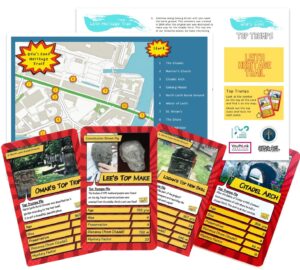
A walking trail around the heritage sites explored by the group was created and a game of Top Trumps cards designed to support the trail. The young people took photos for the Top Trump cards, chose the design and decided on the categories and scoring. The game was professionally produced and has been shared with the young people and older members of the community.
Feedback from participants
‘I enjoyed learning about the different ages of Leith. I also enjoyed learning about the gravestones and sincerely I enjoyed being here and meeting new people.’
Learning Outcomes and Skills
By engaging with this project participants:
- gained an understanding of archaeology and how archaeologists study the human past
- learned that we can find out about the past by looking at different types of evidence, historical and archaeological
- were able to interpret different types of historical and archaeological evidence
- understand the principles of building recording and gravestone recording and why they are important
- gained the skills required to complete gravestone recording and building recording tasks.
- gained skills in heritage interpretation
- have gained new knowledge and understanding of their local area, its history and archaeology.
Participants also developed a number of transferable workplace skills:
- Timekeeping- completing tasks on time
- Completing a task when asked
- Problem Solving – participants are able to consider and discuss why we are finding particular features and artefacts
- Good observational skills – noticing changes in features and soil types and using communication skills to discuss what these changes tell us
- An understanding of health and safety issues – site and tools/equipment
- Working individually and as a team to complete tasks