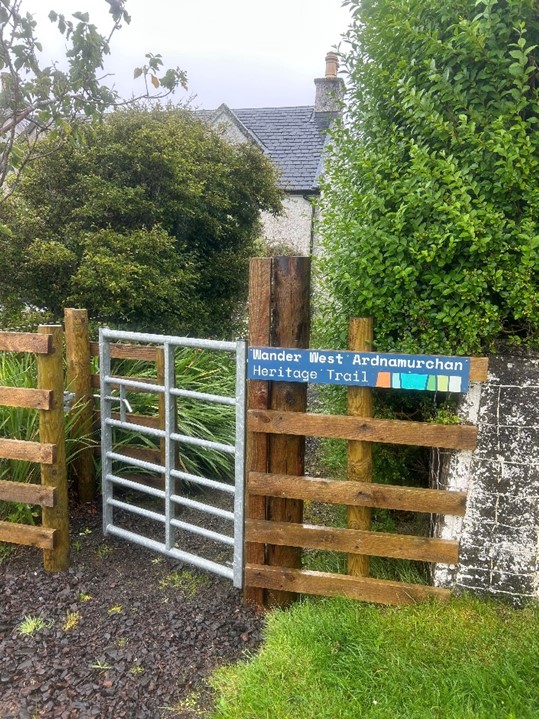
The sign for the Wander West Heritage Trail at Achnaha
It is my last day on Ardnamurchan and instead of excavating, I am sat in an unusual traffic jam. For once it isn’t sheep or cows brazenly blocking our path, but a kind local in a 4×4 helping to tow a tourist’s car out of the ditch by the side of the road. In the van with me is Katie Sanderson, who readers of our previous blog post will recognise from the survey of Erickson’s Cairn.
Katie is a Project Officer at Oxford Archaeology and a long-term member of the Ardnamurchan Transitions Project (ATP). In the vehicle ahead are two more long time members of the project: Indigo Ridgwell, fieldwork supervisor at Oxford Archaeology, and Charlotte Tooze, a former commercial archaeologist now history teacher. All three are deeply embedded in the last 10-15 years of archaeological work in Ardnamurchan, including Archaeology Scotland’s Real Wild West Project which ran from 2021 to 2023. The project worked across 10 different sites, investigating their history, ensuring their preservation and adding extra interpretation boards and sign, all with the involvement of the local community. One of the results of this project was the creation of a heritage trail, linking sites across Arndamurchan together, promoting the area’s heritage and encouraging people to explore more of the peninsula. Today we set out to follow parts of this trail, finishing out at Ardnamurchan Lighthouse: the western most point of mainland Britain. This project ran before I started working for Archaeology Scotland, but the others are familiar and helped to conduct some of the survey work.
Our first stop is Sanna Bay. The beach at Sanna is stunning, with white sands and clear sea. I am taking the others’ word for it, however, as the horizontal rain hammering down on us as we scramble to get coats and boots on feels a far cry from this postcard perfect image. Any ideas about walking to the beach are abandoned and we go straight towards the archaeological remains a little walk up from the coastline. First settled in the Bronze Age, Sanna was then the site of a crofting township in the 19th century. Sanna has also been home to some famous faces: the photographer MEM Donaldson lived at Sanna Bheag, while writer of Night Falls on Ardnamurchan, Alasdair MacLean, spent his childhood on a croft in Sanna. Soaked up to our knees from the long grass, and still being pelted with rain, we take “shelter” behind one of the larger structures. The walls of abandoned crofters’ houses sit alongside some still inhabited structures. We spot some where old and new appear to have been combined into one larger house. Unlike the sites we have discussed before on this blog, the use of these houses is still within living memory and the descendants of people who lived here are still living, and in many cases still living in Ardnamurchan.
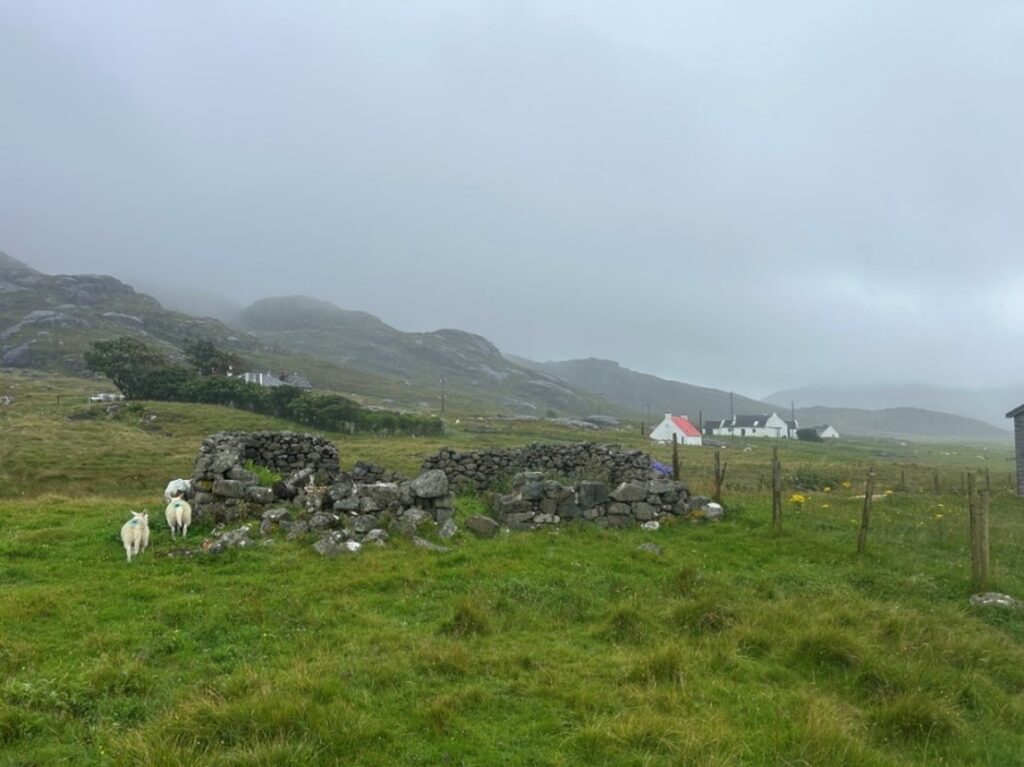
The remains of a crofter’s house at Sanna Bay
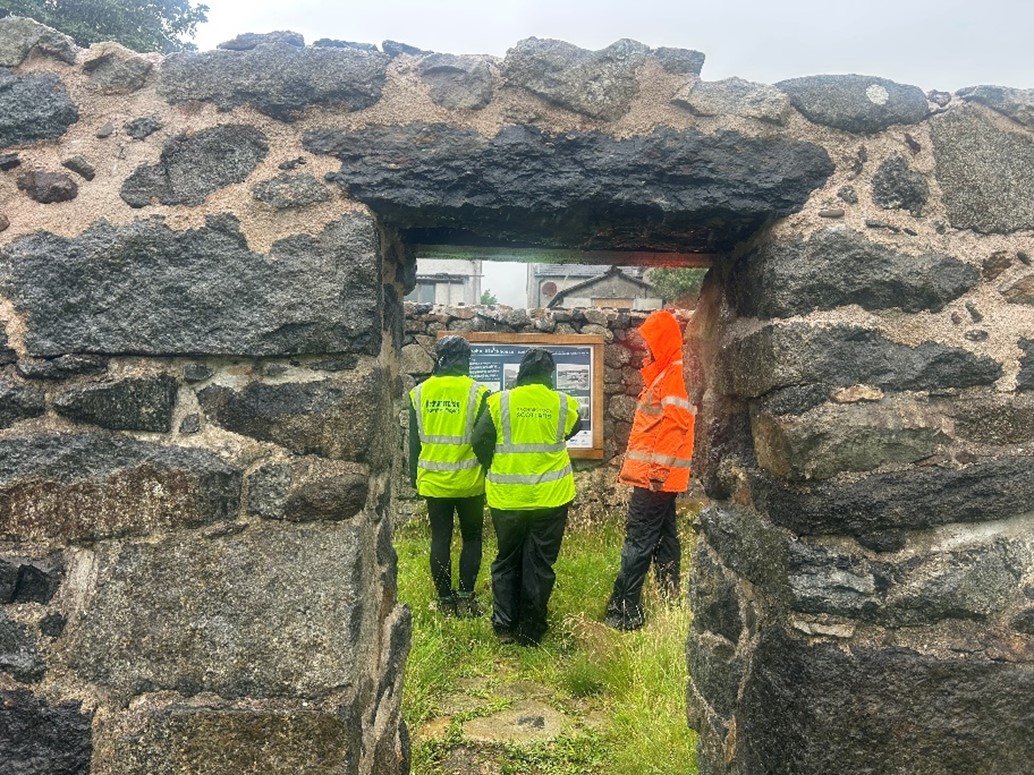
This connection is even more obvious up the road at Achnaha, around a mile inland from Sanna, where the remains of two Blackhouses (traditional croft houses with thatched rooves and earthen floors) have been preserved. While their rooves are long gone, the walls have been restored and information boards show examples of the houses would have been laid out, allowing you to imagine the structure as a home. These remains sit immediately behind a row of houses still inhabited, and Achnaha remains a strong crofting community. Perhaps because of this connection, or because of a subconscious desire for a cup of tea indoors, it is easy to imagine walking inside a cosy house that is full of life.
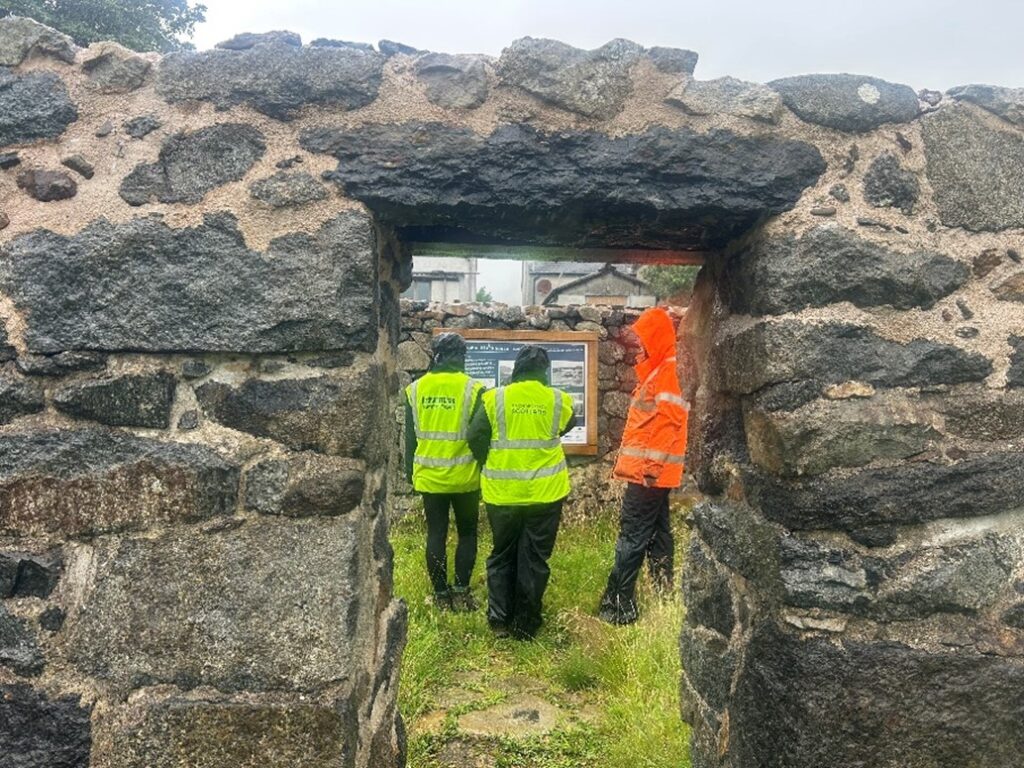
The Blackhouse at Achnaha
Next we stop at Fascadale, the site of an Icehouse that was central to salmon fishing here from the 19th century to the 1980s. Fishing boats and equipment were stored here, and salmon were brought in here to be iced and boxed ready for transport, some shipments going as far as London. Katie points out what remains of one of the ice fields in a large open area just inland from the icehouse. Ice was collected here in the winter as it formed from the pools of water that collected there. An early 20th century boat has been restored and is now on display within the icehouse. Inside it is dark and cold but alive with the chattering of swallows who are nesting in its roof. It is far bigger than I expected, as the main storage room is set partly underground, making for an impressive space.

The Icehouse at Fascadale (1)
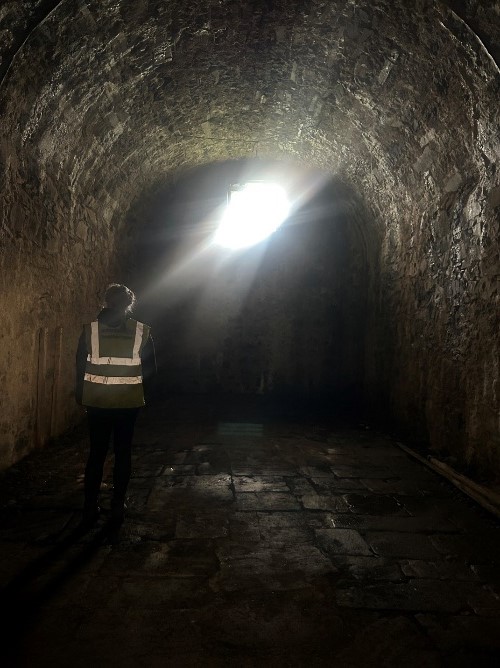
The Icehouse at Fascadale (2)
As we’ve travelled through these places, Katie, Indigo and Charlotte have reflected on their experiences with these sites, as well as working in Ardnamurchan more broadly. They’ve swapped stories of working on these sites, comparing how they looked last time they were here to how they are now. We reflect on the importance of this heritage trail and how being able to consider a whole landscape rather than just what is immediately in front of you is a key part of archaeology and heritage. This is something both Indigo and Charlotte said they learned from digging across multiple sites in the same landscape in Swordle Bay. They gained a new appreciation of change and continuity as well as what you can learn by placing a find, feature or site into the context of its surroundings, both in terms of space and time. We also discuss how this awareness of the bigger picture links into the purpose of conducting archaeology. For all of us, the fact that we are able to work on projects that involve people and give something back is hugely important. Katie adds how rewarding it is to feel like you are adding something to a place, rather than taking something away, either ahead of construction work or by simply taking archaeological material away for research that never reaches the local community.
We also discuss the connection to the work of Audrey Henshall. Henshall surveyed several sites across Ardnamurchan including Cladh Aindreis, Camas nan Gaell and Greadal Fhinn. The latter two were included as sites in the RWW trail, while Cladh Aindreis was included as part of the activity within Swordle Bay. For Charlotte, Katie and Indigo, Henshall wasn’t a name they were very familiar with, but all had been positively influenced more directly by female role models within archaeology. While there may not be the female “household” names in the same way as male archaeologists like Gordon Childe and Mortimer Wheeler, none of the three all had been taught by women through their careers and were in no doubt of the history of female experts in archaeology and all had been influenced more directly by women who taught them during their careers. “It’s really important to me that it isn’t tokenistic” Charlotte says, when discussing the legacies of 20th century female archaeologists, “But women have always been here and it’s about making them visible”.
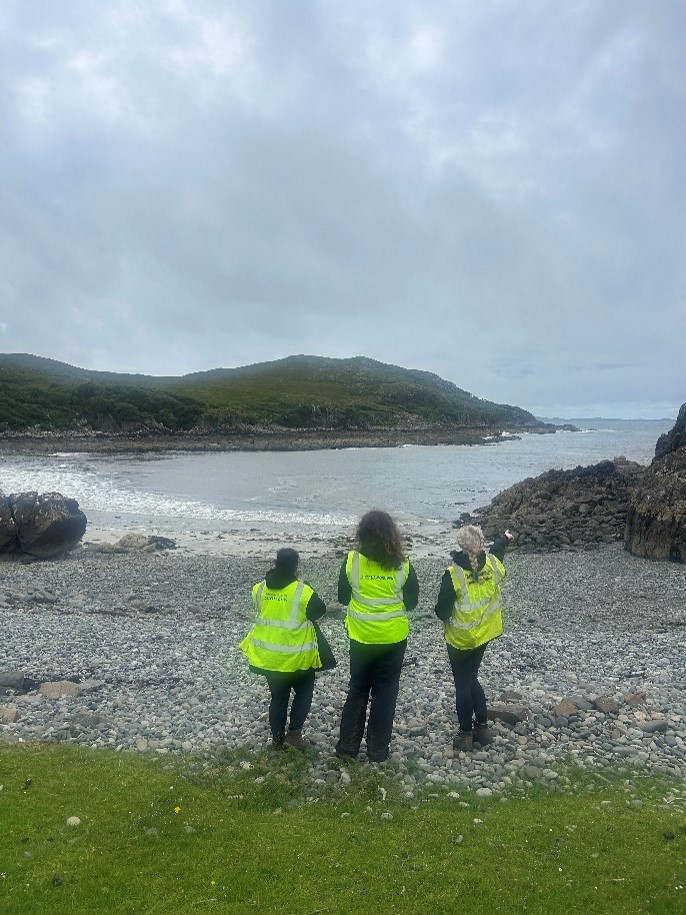
Charlotte, Indigo and Katie at Fascadale
The next day I set back out on the winding roads taking me off the peninsula. I surprise myself with how attached to the people I met and the place I am leaving after just a week. The wait for the Corran ferry is longer this time, the luck of the ferry times drawing out the journey and mirroring my reluctance to leave the peninsula behind. Back in the office a week later, I instinctively reach for the copy of The Chambered Tombs of Scotland sitting on the shelf. I leaf through for the entries for Ardnamurchan and stop on the site plan of Cladh Aindreis. The plan is simple but beautifully drawn and I can now colour it with all the elements of the site that this record can’t capture. The book is heavy in my hands with hundred more sites and the hundreds more stories behind them.
Supported by the Society of Antiquaries of Scotland’s Audrey Henshall Legacy Award.
For more information: Wander West Ardnamurchan: Home | Ardnamurchan