
Archaeology Scotland has been working with the Green Action Trust to support the Leven River Parks Programme in Fife on two projects over the last few months at Methil Mill and the Hidden Heritage project, which focused on Kirkland Manor and Kirkland House.
The work has involved engaging various audiences in the Leven and Methil area to explore the heritage they are interested in and conducting small archaeological excavations at three sites across the area.

Kirkland Manor was built by the Wemyss family in the 17th century and survived until it was demolished in the early 1960s. The aim of the project was to characterise the archaeological survival of the building, which we thought may have been buried beneath the surface in a small patch of green space just off Steelworks Brae in north Methil.
Over four days between the 29th of September and the 2nd of October, two test trenches, measuring 1m by 4m, were opened by 16 local volunteers while 10 pupils from the local high school, Levenmouth Academy, visited the site over two afternoons to help out.
Below the topsoil in trench 1 was a made ground deposit of loamy material that contained abundant fragments of modern material, including glass, plastic and some coins from the 1970s and 1980s.

Below this deposit was a series of building demolition deposits that covered the foundations of the manor house, which were found at a depth of 0.9m and defined by large sandstone blocks and bricks. These substantial foundations were relatively well preserved, and we think that the remains of the building survive below the surface in this area and that the sites warrant further investigation.
Kirkland House was a grand 19th-century stately home that survived until the mid-20th century. Mapping evidence suggested that the site lay buried beneath a scrubby bit of forest close to the river Leven at the bottom of Steelworks Brae, not far from the manor house. However, during the trial excavations, which saw four local volunteers excavate two small trenches over two days in late October, it was revealed that the site had been completely covered by the bing of the nearby Kirkland steelworks, and no trace of the former stately home was found.
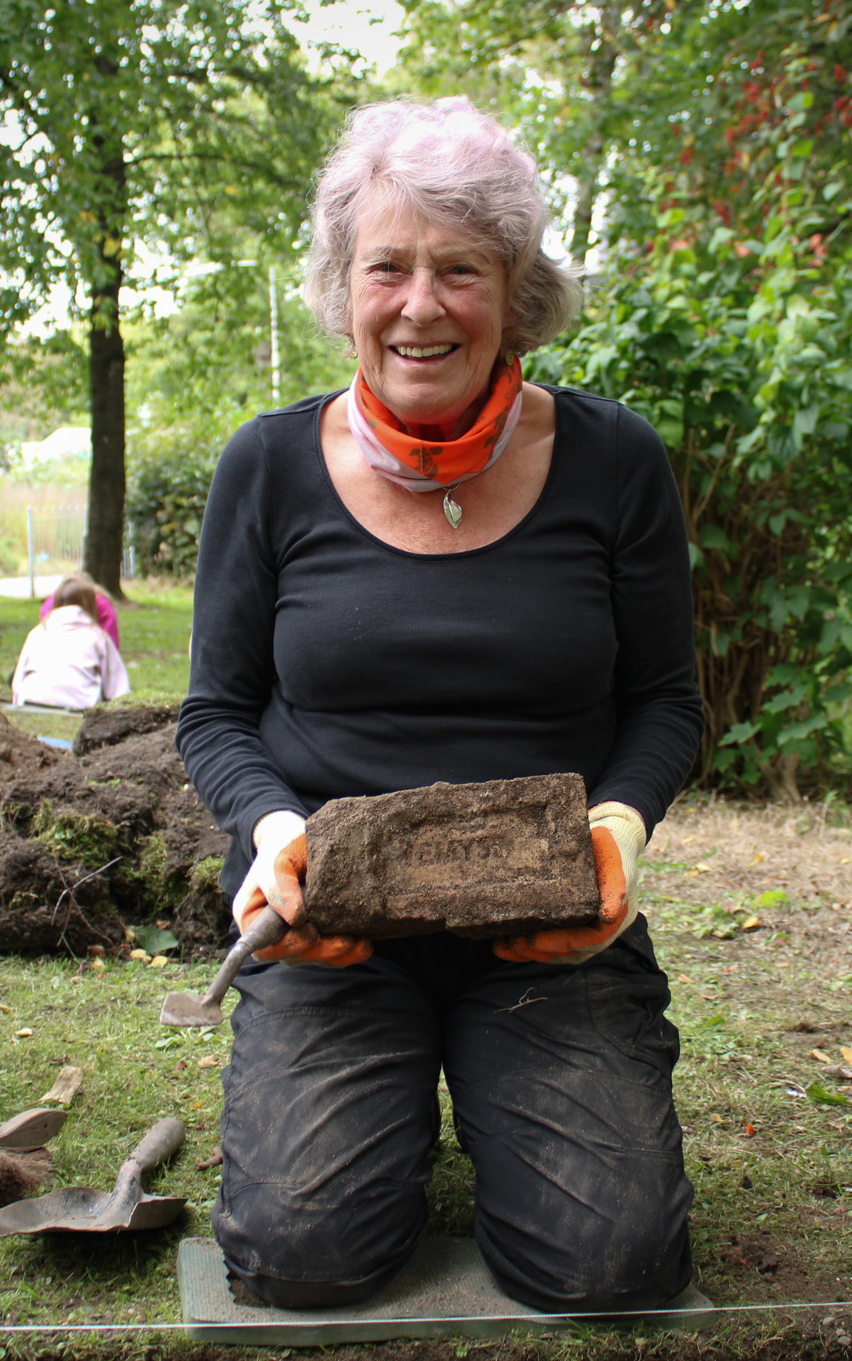
Finally, we undertook a small-scale archaeological evaluation at Methil Mill over three days in late October in really difficult, wet and stormy conditions. Nevertheless, a dedicated team of four local volunteers and pupils from Levenmouth Academy discovered some intriguing findings from this site.
The mill was thought to date to the 17th century having previously been excavated as part of the LVDT Methil Mill Community Excavation Project in 2004 when the mill and the millers cottage were investigated. During this project, several other buildings were identified, one of which formed the focus of our excavations. The building measures 9m in length and 4m in width and was built of rough stones held together with lime mortar. This seemed like a fairly old building, and we decided to investigate a possible entrance area as well as the interior of the structure. Within the interior we discovered a series of floor deposits, indicating a potted history of use and reuse. We also discovered an intriguing sequence of activity in the possible entrance area, including an earlier cobbled floor surface within which was a possible older wall alignment. Within this cobbled floor deposit one of the volunteers discovered a fragment of green glaze pottery, which may be medieval in date, pushing the date of the site back several hundred years.

The work we carried out as part of the Leven River Parks Programme greatly adds to our knowledge of the history and archaeology of the sites in this area. It is hoped that with further funding, there will be a sustained project here in the future.
Importantly, the work also engaged several members of the local community, many of whom had never been involved in archaeology before.

Feedback from the volunteers was great, and we would like to thank everyone who took part, especially given the weather conditions at Methil Mill, and all those who helped backfill the trenches at Kirkland Manor, including loads of local kids who just turned up and got stuck in.
We would also like to thank the landowners Fife Council and Wemyss Estate, as well as the team from Green Action Trust, for supporting the project.
Article by Paul Murtagh | Archaeology Scotland
November 2023
Your membership and donations play a crucial role in backing the work Archaeology Scotland does with and for communities across Scotland. Become a member or donate today.